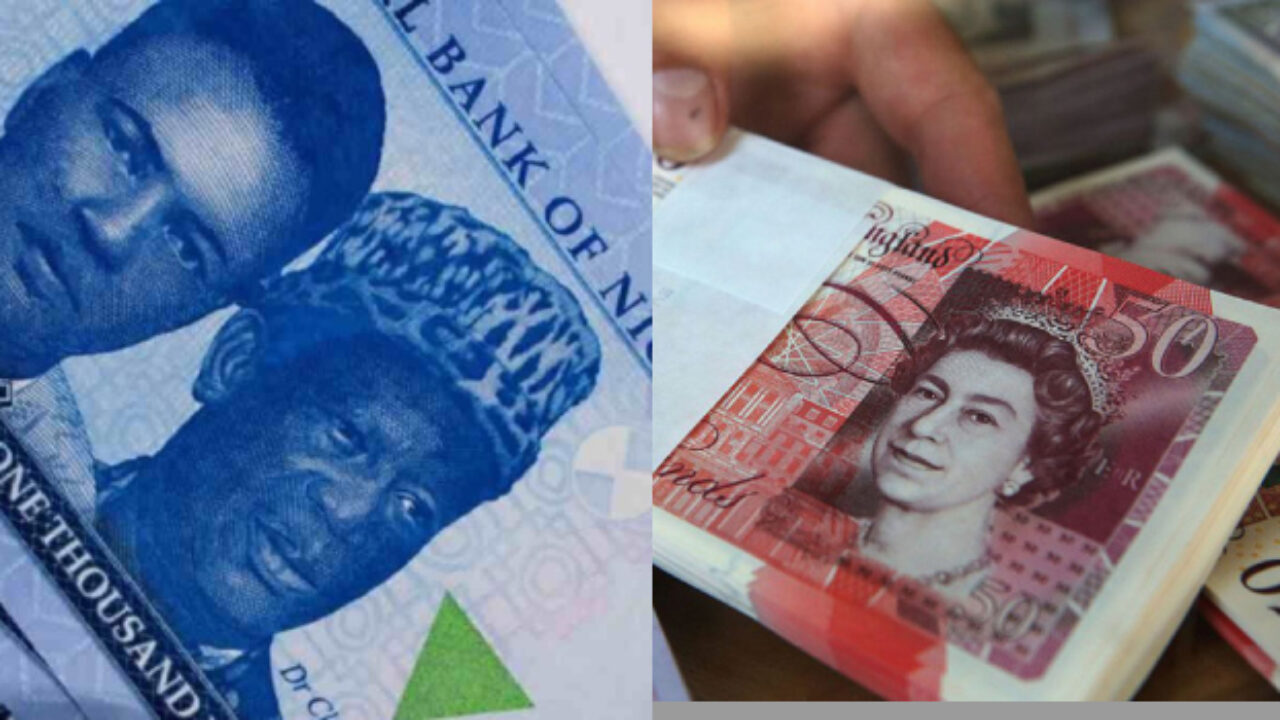
The Nigerian naira has breached a significant technical threshold against the British pound sterling, marking a modest but notable development in the currency’s performance as Africa’s largest economy continues to grapple with the aftershocks of sweeping monetary reforms.
The official interbank rate now hovers between N1,948 and N1,950 to the pound, reflecting what market analysts describe as a cautious strengthening trend that has emerged in recent weeks. On Friday, the naira traded at N1,945.8 against sterling at the Nigerian Foreign Exchange Market (NFEM), a figure that underscores the currency’s incremental gains in the formal exchange system.
This development represents a continuation of the naira’s gradual recovery from the sharp devaluation that accompanied the early days of President Bola Tinubu‘s administration, when his government implemented controversial but widely anticipated forex liberalization policies.
Those reforms, which began shortly after Tinubu assumed office in May 2023, initially sent the naira into freefall as the Central Bank of Nigeria (CBN) moved to unify multiple exchange rates and allow market forces greater influence over currency valuation.
Persistent Parallel Market Premium
Despite improvements in the official market, the parallel or “black” market tells a different story. Rates there remain substantially elevated, frequently breaching the N2,000-per-pound mark as persistent demand pressures and liquidity constraints continue to plague informal currency traders. This divergence highlights the ongoing challenges facing Nigeria’s foreign exchange architecture, even as authorities claim progress in their reform agenda.
However, there are signs of convergence. The spread between official and parallel market rates has contracted dramatically from approximately 20 percent to a current range of 5-10 percent, according to market data. Currency dealers and economists attribute this narrowing differential to the CBN’s determined efforts to consolidate exchange rate windows and its increasingly aggressive crackdown on unauthorized foreign exchange dealers.
Mixed Year-to-Date Performance
Year-to-date figures for 2025 paint a nuanced picture. The GBP/NGN pair has appreciated roughly 2.67 percent, indicating that despite recent naira gains, the pound has maintained an overall advantage in the exchange relationship. The pair has exhibited marginal volatility throughout the year, buffeted by both global economic headwinds and the domestic impact of Nigeria’s ongoing structural reforms.
Structural Support and Persistent Headwinds
The naira’s resilience has been bolstered by several key factors. Chief among these is the operational ramp-up of the Dangote Refinery, which has begun to reduce Nigeria’s dependence on imported refined petroleum products—historically one of the largest drains on the country’s foreign exchange reserves. Additionally, annual remittances from Nigerians abroad, estimated at approximately $20 billion, continue to provide crucial dollar inflows, supplementing contributions from the diaspora community.
Nevertheless, significant challenges remain. Speculative activities in the forex market continue to exert downward pressure on the naira, while capital outflows driven by investor concerns about Nigeria’s economic trajectory and policy consistency present ongoing obstacles to currency stability.
As Nigeria navigates this delicate phase of economic adjustment, market participants will be closely monitoring whether the naira’s recent performance against sterling represents the beginning of a sustainable trend or merely a reprieve in a longer journey toward exchange rate stability.
WHAT YOU SHOULD KNOW
The Nigerian naira has shown modest strengthening against the British pound, trading around N1,945-N1,950 in the official market—a recovery from earlier devaluation under President Tinubu’s reforms. While the gap between official and black market rates has narrowed significantly from 20% to 5-10% due to CBN interventions, the currency remains under pressure.
The naira is being supported by inflows from the Dangote Refinery and $20 billion in annual remittances but faces ongoing challenges from speculation and capital flight. The pound still holds a 2.67% year-to-date advantage, indicating the naira’s recovery remains fragile and subject to both domestic reforms and global economic conditions.