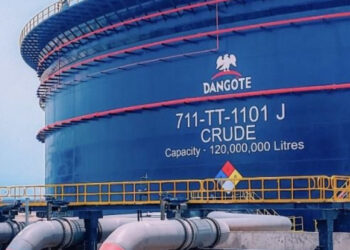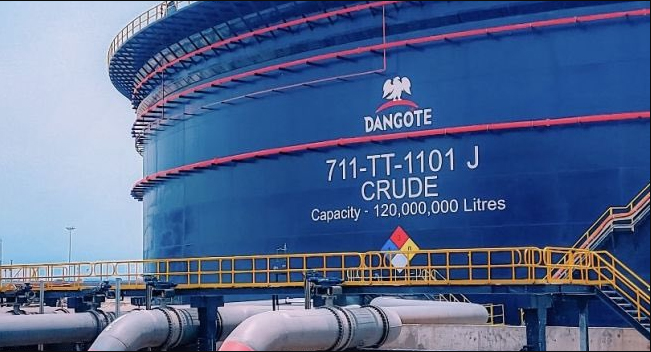
Management at Africa’s largest oil refinery has firmly rejected claims that operational failures forced it to dramatically reduce crude oil purchases, instead attributing the cuts to strategic market decisions while revealing a troubling pattern of internal sabotage.
The 650,000-barrel Dangote Refinery in Lagos has come under scrutiny after reports emerged that the facility slashed its crude oil procurement by more than half. Industry observers noted that October purchases were expected to fall below 300,000 barrels daily—a stark decline from peak volumes recorded in July and well below the plant’s operational capacity.
Management Pushes Back on Breakdown Claims
Devakumar Edwin, vice president of Dangote Industries Limited, categorically dismissed suggestions that mechanical failures were behind the reduced crude intake. Speaking during a facility tour with traditional rulers and select guests, Edwin insisted the adjustments reflected prudent responses to volatile global oil prices and inventory management practices.
“No factory runs at 100 percent every day without issues,” Edwin stated. “What matters is whether any problem affects final production.”
He emphasized that the refinery’s modern design allows for five-year intervals between turnaround maintenance cycles, contrasting sharply with older facilities requiring more frequent shutdowns. This contradicts industry intelligence reports suggesting the plant’s residue fluid catalytic cracker unit—critical for gasoline production—has been offline since late August and faces potential shutdown again in January.
Sabotage Allegations Surface
In a startling disclosure, Edwin revealed that the $20 billion facility has documented 22 separate sabotage incidents since commencing operations. According to management, these deliberate acts prompted a major organizational overhaul at the refinery.
“We have 22 incidents of sabotage. I have the dates, the unit where it was done, and when it was done. All is documented data,” Edwin declared, pointing to the facility’s comprehensive monitoring systems as evidence.
The alleged sabotage attempts included unauthorized valve operations and equipment tampering designed to trigger breakdowns. Edwin credited the refinery’s advanced safety systems for preventing catastrophic damage, noting that automated protections overrode malicious interventions.
“When somebody starts a fire somewhere, the fire protection system is so that it is immediately controlled,” he explained. “The same way, when they try to break down an instrument by opening a valve or adjusting some instruments, some other instrument overrules it and stops.”
Mass Layoffs Spark Union Dispute
The sabotage claims emerge against the backdrop of a contentious labor dispute. Last month, the refinery confirmed terminating what it described as “a small number of workers” for safety and operational efficiency reasons. However, the Petroleum and Natural Gas Senior Staff Association of Nigeria (PENGASSAN) alleged that more than 800 employees were affected.
Edwin vigorously denied any connection between the workforce reduction and union relations, insisting the reorganization was purely security-driven. He referenced a meeting with government ministers and security agencies in Abuja, where he emphasized that the company has “no issue with PENGASSAN.”
“The reorganization we did had nothing to do with PENGASSAN,” Edwin stressed, noting that the timing and planning of the staff changes predated any union concerns.
Industry Skepticism Remains
Despite management’s assurances, industry watchers remain dubious about the refinery’s ability to maintain high utilization rates going into 2026. The facility has faced persistent challenges since its launch, with critics initially questioning whether it would ever become operational.
Edwin acknowledged this skepticism, noting that detractors predicted the refinery would never be commissioned or begin production. “We went through all those phases,” he said, characterizing the ongoing criticism as part of a sustained campaign against the project.
The Dangote Refinery represents Nigeria’s most ambitious attempt to end decades of dependence on imported refined petroleum products despite being Africa’s largest crude oil producer. Its operational success—or struggles—will have significant implications for Nigeria’s energy security and economic development.
As the facility navigates these challenges, questions persist about whether production issues stem from teething problems typical of new industrial plants, deliberate sabotage, or more fundamental operational difficulties that management is reluctant to acknowledge publicly.
WHAT YOU SHOULD KNOW
The Dangote Refinery, Africa’s largest at 650,000 barrels per day capacity, has cut crude oil purchases by over 50% but attributes this to market strategy rather than operational failures. Management revealed 22 documented sabotage incidents that prompted a major staff reorganization—contradicting union claims that over 800 workers were fired due to labor disputes.
While the company insists its advanced systems have prevented serious damage and maintains the facility is performing as expected, industry skepticism persists about whether the refinery can sustain high production rates, with critical equipment reportedly offline since August.