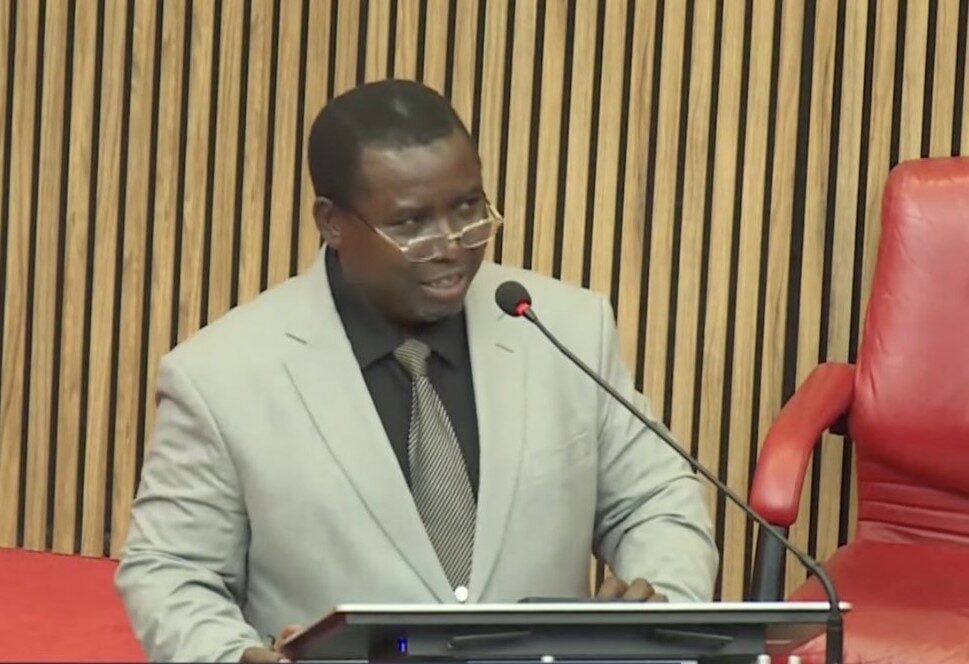
The newly confirmed Chairman of the Independent National Electoral Commission (INEC), Prof. Joash Amupitan, SAN, has vowed to restore public confidence in Nigeria’s electoral system, assuring that under his leadership, elections will be so transparent and credible that “even losers will congratulate winners.”
Speaking during his screening and subsequent confirmation by the Senate on Thursday, the Kogi-born Professor of Law emphasized that he would work closely with key government agencies such as the National Identity Management Commission (NIMC) and the Nigerian Communications Commission (NCC) to achieve his vision of credible polls.
“Our ultimate goal is to make elections so credible that even the loser will be able to congratulate the winner in good faith just as a judge delivers judgment and both sides accept it as fair and just,” Amupitan told lawmakers during his interaction.
His appointment was unanimously confirmed by the Senate after an exhaustive three-hour question-and-answer session. The Senate President, Godswill Akpabio, announced that Amupitan was approved without opposition and charged him to ensure that “every vote counts” in future elections.
With his confirmation, Amupitan officially succeeds Prof. Mahmood Yakubu, who served as INEC Chairman for a decade before stepping down on October 7, 2025.
Before the session commenced, Senate Leader Opeyemi Bamidele (APC, Ekiti Central) moved a motion to suspend Order 12 to allow “strangers” into the chamber—a motion seconded by Senator Abba Moro (PDP, Benue South). The Senate President noted that Amupitan had been cleared by the DSS, the National Security Adviser (NSA), and the Inspector-General of Police (IGP) following a comprehensive vetting process.
Addressing the senators, Amupitan clarified that he did not lead President Bola Tinubu’s legal team during the Presidential Election Petition Tribunal and was not affiliated with any political party’s legal representation.
“I did not lead the legal team of the President at the Tribunal, nor did I appear at the Court of Appeal or Supreme Court. I was not a member of any party’s team,” he said.
On the credibility of elections, Amupitan stressed the importance of internal reforms within INEC, including setting up an Ethics and Compliance Committee to monitor staff conduct and tackle corruption.
“One of the first things we must do at the Commission is to establish a credible internal mechanism to monitor the conduct and behaviour of officials,” he said.
Amupitan also pledged to audit the INEC Result Viewing (IReV) portal to address the technological failures that dented public confidence during the 2023 general elections. He explained that the Bimodal Voter Accreditation System (BVAS) and IReV were designed to ensure electoral integrity but suffered from miscommunication and operational glitches.
He added that the Supreme Court’s later clarification that IReV was not an electronic collation platform underscored the need for better communication with voters. “The IReV was meant to be a safeguard for comparison since manual collation remains in the law,” he said.
Amupitan stated that his administration would work with NIMC, NCC, and service providers to improve electoral technology, logistics, and transparency. He also backed the creation of an Electoral Offences Commission to prosecute electoral offenders and pledged to introduce a whistleblower policy to encourage reports of malpractice without fear.
On logistics and election security, he said, “We will work closely with the Joint Committee on Election Security to enhance the protection of materials, personnel, and voters, especially in high-risk areas.” He added that the Commission may deploy drones and other modern tools to improve material distribution across the country.
Amupitan further promised to ensure financial accountability within INEC, saying, “INEC funds will be used only for the purposes for which they are appropriated. We will cut costs where possible without compromising efficiency.”
He concluded by pledging that his tenure will be guided by integrity, accountability, and transparency, ensuring that elections “truly reflect the will of the people.”
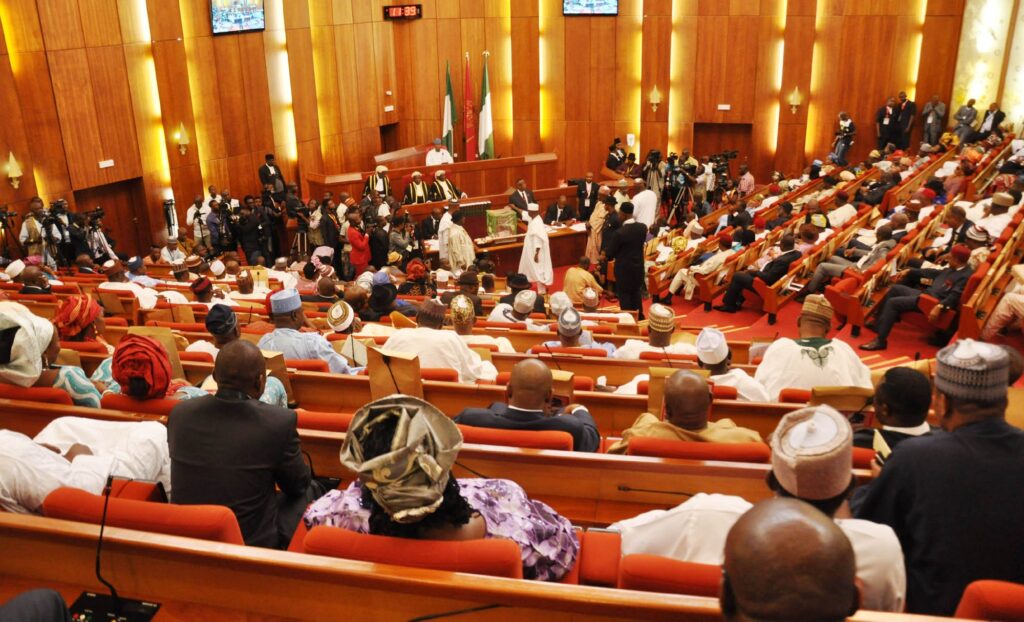
Senate Stands Down Electoral Act Amendment
Meanwhile, the Senate on Thursday stood down the proposed amendments to the 2022 Electoral Act following disagreements during the plenary session.
The bill, presented by Senator Simon Lalong (Plateau South), Chairman of the Senate Committee on Electoral Matters, had proposed major electoral reforms, including conducting presidential and governorship elections in November 2026, ahead of the 2027 election year.
Lalong said the proposal was not just an amendment but “a comprehensive reform” aimed at correcting the flaws of the 2023 elections. “Nigerians expect us to respond not with patchwork corrections, but with a holistic, future-facing law that restores faith in our elections,” he said.
However, debates turned heated when Senator Titus Zam (Benue North East) urged that the bill be passed for second reading, prompting Senate President Akpabio to question whether lawmakers fully understood the proposed amendments.
Akpabio recalled his own experience in the 2019 elections, alleging electoral injustice and misuse of power by election officials. He narrated how the returning officer in his senatorial race, a university professor, was unfairly jailed despite following the law.
“If the returning officer was really helping Senator Akpabio, how come he couldn’t manipulate the collation centre or the headquarters that handled the final results? Clearly, something went wrong, and justice was misplaced,” Akpabio said.
He added that extended campaign timelines and political appointments had disrupted governance, urging reforms that would “restore accountability and prevent manipulation.”
Following the intense exchanges, Senator Opeyemi Bamidele moved a motion to stand down the bill for further consultation—a motion seconded by Senator Abba Moro.
What You Should Know
Professor Joash Amupitan, a respected legal scholar and former Deputy Vice-Chancellor at the University of Jos, has officially assumed office as INEC Chairman, succeeding Prof. Mahmood Yakubu.
His appointment comes amid rising calls for electoral reforms following the 2023 elections. Amupitan’s first major pledge is to restore public trust in Nigeria’s electoral process through transparency, technological innovation, and strict accountability within INEC.