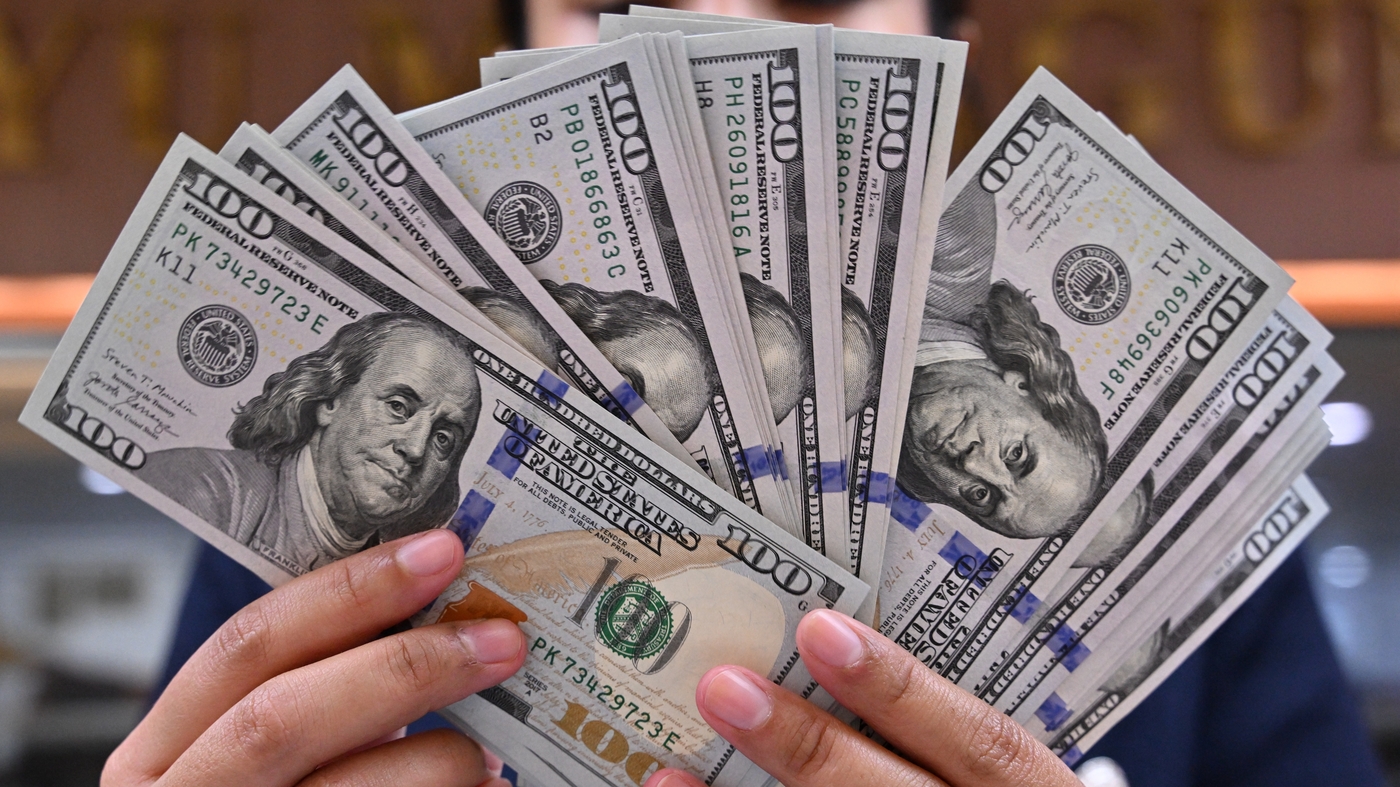
The U.S. dollar maintained a cautious upward trajectory on Monday, reflecting market anticipation ahead of what promises to be a pivotal week for monetary policy signals.
With more than 18 Federal Reserve officials scheduled to speak throughout the coming days, traders are positioning themselves for potential shifts in the central bank’s easing narrative following last week’s resumption of rate cuts.
The greenback’s modest 0.05% gain to 97.66 against a basket of major currencies suggests markets remain largely aligned with the Fed’s current messaging, which has increasingly emphasized labor market concerns as the primary driver behind policy decisions.
This positioning comes after the central bank’s recent pivot back to an accommodative stance, marking a significant shift from its previous tightening cycle.
Labor Market Data Provides Mixed Signals
Recent economic indicators have painted a nuanced picture of the U.S. economy’s health. Last week’s unemployment claims data showed a welcome decline in new filings, effectively reversing a concerning spike from the previous week. However, the temporary nature of such weekly fluctuations has left analysts cautious about drawing broader conclusions regarding labor market momentum.
“The lack of significant data until Friday’s core Personal Consumption Expenditures (PCE) inflation release leaves investors open to rethinking Fed rate cuts and the plan ahead,” explained Bob Savage, head of markets macro strategy at BNY Mellon. This data vacuum has effectively elevated the importance of Fed communications, with market participants hanging on every word from central bank officials.
Spotlight on Key Fed Speakers
The week’s speaker lineup includes several influential voices, with particular attention focused on Chair Jerome Powell alongside more hawkish members such as Cleveland Fed President Beth Hammack and St. Louis Fed President Alberto Musalem. Both Hammock and Musalem had expressed reservations about aggressive easing before the recent Fed meeting, making their upcoming comments especially significant for gauging internal committee dynamics.
Adding intrigue to the week’s events is newly appointed Fed Governor Stephen Miran, who made headlines with his dissenting vote favoring a more aggressive 50-basis-point rate cut. Miran, who defended his independence as a policymaker on Friday, is scheduled to deliver a detailed explanation of his policy stance on Monday. Market observers suggest his lone dissent may have been a strategic move by the broader Federal Open Market Committee to demonstrate unity while maintaining institutional independence.
Political Pressure Adds Complexity
The Fed’s deliberations are occurring against a backdrop of political commentary, with President Donald Trump publicly urging the central bank to pursue more aggressive rate cuts. This external pressure underscores the delicate balance the Fed must maintain between economic considerations and political independence—a dynamic that could influence both market expectations and policy outcomes.
Global Currency Movements Reflect Broader Trends
Beyond U.S. dollar movements, global currency markets are reflecting their own regional monetary policy dynamics. The euro remained relatively stable at $1.1748, while the Swedish krona weakened 0.10% to 9.4140 ahead of Tuesday’s Riksbank meeting. Analysts at Citi expect this to potentially mark the final rate cut in Sweden’s current easing cycle.
Meanwhile, the Japanese yen retreated slightly to 148.06 per dollar, giving back some of last week’s gains that were driven by increasingly hawkish rhetoric from the Bank of Japan. Sterling faced particular pressure, falling to a two-week low of $1.3453 amid concerns over UK fiscal policy following a surge in public borrowing and challenging decisions facing the Bank of England.
Market Outlook Hinges on Fed Clarity
As markets navigate this information-sparse week before Friday’s crucial PCE data release, the emphasis on Fed communications reflects broader uncertainty about the pace and extent of future policy easing. The central bank’s messaging will be critical in shaping expectations, particularly given the ongoing debate between those favoring more aggressive cuts and officials advocating for a more measured approach.
With domestic economic data providing mixed signals and global monetary policy diverging across major economies, this week’s Fed communications could prove pivotal in determining whether the dollar’s current trajectory represents a temporary pause or the beginning of a more sustained directional move.
For now, traders appear content to wait for clearer guidance from the central bank’s key decision-makers before making significant positioning changes.
WHAT YOU SHOULD KNOW
The U.S. dollar’s fate this week hinges on speeches from 18+ Federal Reserve officials, as markets desperately seek clarity on future rate cuts following the Fed’s recent policy shift.
With limited economic data until Friday’s crucial inflation report, Fed communications have become the primary market driver—particularly given internal disagreement within the committee and external political pressure from President Trump for more aggressive cuts.
The dollar’s current stability reflects uncertainty rather than confidence, making this week’s Fed messaging critical for determining the currency’s next major move.