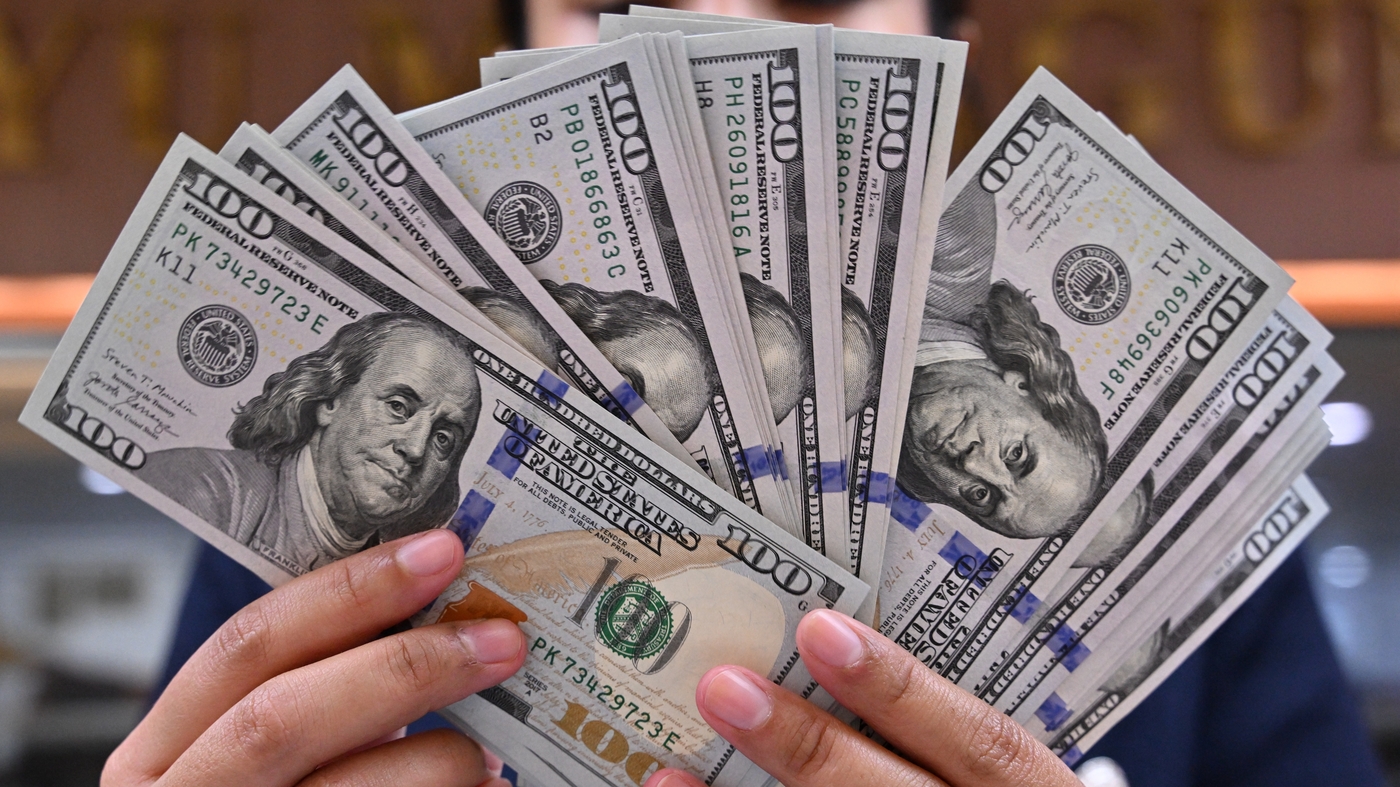
The U.S. dollar staged a recovery on Wednesday as currency traders positioned themselves ahead of what could be a pivotal press conference by Federal Reserve Chair Jerome Powell, whose comments may determine whether the greenback continues its steep decline or finds footing after hitting multi-year lows.
The dollar’s modest gains came as investors sought clarity on the central bank’s monetary policy trajectory, with markets having already priced in aggressive rate cuts through 2026. The currency had tumbled to a four-year low against the euro just a day earlier, reflecting widespread expectations that the Fed will embark on an extended easing cycle.
Political Undercurrents Complicate Fed Decision
The Federal Reserve’s two-day policy meeting, which began Tuesday, has been overshadowed by unprecedented political drama. The deliberations are taking place with a new Trump administration appointee joining the board, while another policymaker—Fed Governor Lisa Cook—narrowly avoided removal after a federal appeals court blocked her firing on Monday.
The political maneuvering has raised questions about the central bank’s independence at a critical juncture for monetary policy. President Trump’s broader efforts to reshape key economic institutions have created an atmosphere of uncertainty that extends beyond traditional market considerations.
Market Expectations vs. Reality
Currency markets have positioned for substantial Fed accommodation, with traders pricing in 68 basis points of rate cuts by year-end and a total of 147 basis points through 2026. While a 25-basis-point cut at this week’s meeting is virtually certain, speculation persists about whether policymakers seriously considered a more aggressive 50-basis-point reduction.
“The real story is not the size of the move this week, but how Powell frames the path,” said Laura Cooper, senior macro strategist at Nuveen. Her assessment reflects the market’s focus on forward guidance rather than immediate policy adjustments.
The dollar index, which measures the greenback against six major currencies, rose 0.20% to 96.84 on Wednesday after touching its lowest level since early July. Despite the modest recovery, the index remains down nearly 11% year-to-date, with many investors still betting on further weakness.
Currency Cross-Currents
The euro retreated 0.25% to $1.1838 after reaching a four-year high above $1.187 on Tuesday. Sterling also pulled back slightly, dropping 0.13% to $1.3630, though it remained near 2½-month highs following British inflation data that met market expectations.
In Asia, currency movements reflected regional political developments. The Japanese yen strengthened to a one-month high of 146.22 per dollar ahead of the Bank of Japan’s policy meeting, where officials are expected to maintain current rates. The yen’s strength may reflect anticipation of Japan’s upcoming leadership transition, with the ruling Liberal Democratic Party set to choose a new leader on October 4.
“The more moderate Shinjiro Koizumi entering the LDP leadership race against Sanae Takaichi, who is seen as yen bearish for her views on loose monetary and fiscal policy,” may be supporting the Japanese currency, according to Chris Turner, head of forex strategy at ING.
Economic Data Adds Complexity
Tuesday’s retail sales data showed stronger-than-expected consumer spending, providing a mixed signal for policymakers weighing rate cuts. While the robust spending data might typically argue against aggressive easing, concerns about labor market softening and rising prices continue to support the case for accommodation.
Thierry Wizman, global forex and rates strategist at Macquarie Group, expects Powell to strike a balanced tone. “He’ll highlight again the downside risk to employment growth but refrain from signaling a long string of cuts after September,” Wizman predicted. Such positioning “could rally the dollar, hurt gold, and cause a tremor tomorrow in the tectonic drift higher in tech stocks.”
High Stakes for Market Direction
The outcome of Powell’s press conference carries implications far beyond currency markets. Cooper warned that “a hawkish cut risks deflating the risk rally in the near term,” suggesting that any indication of a more measured approach to rate cuts could trigger broader market volatility.
As global investors await Powell’s remarks, the Federal Reserve finds itself navigating not only traditional economic considerations but also an increasingly politicized environment that threatens to complicate future policy decisions.
The chair’s ability to maintain the central bank’s credibility while managing market expectations may prove crucial for both the dollar’s trajectory and broader financial stability.
WHAT YOU SHOULD KNOW
The U.S. dollar’s future hinges on Fed Chair Jerome Powell‘s Wednesday press conference, where markets expect him to signal the pace of upcoming rate cuts. With 68 basis points of cuts already priced in by year-end, any indication that the Fed will be less aggressive than expected could strengthen the dollar and trigger broader market volatility.
The backdrop is complicated by political interference from the Trump administration, including attempts to remove Fed officials, raising concerns about central bank independence at a critical monetary policy juncture.