Nigeria has taken a major step toward harnessing its vast natural gas wealth with the signing of a transformative $500 million financing agreement that could reshape the country’s energy landscape and economic trajectory.
The African Export-Import Bank (Afreximbank) and the Midstream and Downstream Gas Infrastructure Fund (MDGIF) formalized the landmark memorandum of understanding on the sidelines of the Intra-African Trade Fair in Cairo, with Cedrus Group Africa facilitating the historic deal.
A Four-Year Investment Strategy
The agreement outlines an ambitious four-year funding plan designed to accelerate critical midstream and downstream gas infrastructure projects across Nigeria. Beyond the direct financial commitment, Afreximbank will provide crucial credit risk guarantees to encourage private sector investment in local gas development—a move that could multiply the deal’s impact significantly.
Both institutions have committed to establishing a project preparatory facility and comprehensive capacity-building programs, addressing one of Nigeria’s persistent challenges: ensuring projects are technically sound and commercially viable before reaching financial close.
Addressing Nigeria’s Gas Paradox
The timing of this agreement highlights a striking paradox in Nigeria’s energy sector. Despite possessing Africa’s largest proven natural gas reserves, the country has struggled to convert this natural wealth into economic prosperity. Infrastructure gaps, chronic financing challenges, and regulatory uncertainty have created a development bottleneck, leaving billions of cubic feet of gas flared annually while industries and households face energy shortages.
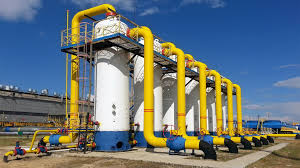
Minister of State for Petroleum Resources (Gas) Ekperikpe Ekpo emphasized the transformative potential of the partnership. “We are creating a pipeline of bankable projects, supported by feasibility studies, project preparation, and risk-sharing mechanisms, that will accelerate investment in pipelines, processing facilities, LNG, and other critical infrastructure,” he stated.
Alignment with Presidential Vision
The initiative directly supports President Bola Tinubu‘s economic agenda, which positions Nigeria’s gas industry as a cornerstone for industrialization and sustainable growth. This strategic focus represents a deliberate shift from the country’s traditional crude oil dependence toward a more diversified energy portfolio.
MDGIF Executive Director Oluwole Adama stressed that the partnership operates “anchored on our statutory mandate under the Petroleum Industry Act,” ensuring alignment with Nigeria’s evolving regulatory framework and national energy policy.
Multi-Stakeholder Approach
The deal’s structure reflects a sophisticated multi-stakeholder approach. Afreximbank brings deep expertise in trade and project finance, while MDGIF provides national investment reach and policy alignment. Cedrus Group Africa will serve as adviser and structuring partner, responsible for translating the agreement’s objectives into measurable outcomes.
Kanayo Awani, Executive Vice President of Intra-African Trade and Export Development at Afreximbank, described the MoU as “a milestone in Africa’s transformation journey,” noting the potential for impact beyond Nigeria’s borders across the West African sub-region.
Environmental and Economic Dividends
The agreement arrives at a critical juncture for Nigeria’s environmental commitments. The country has pledged to end routine gas flaring by 2030 under global climate agreements, and expanded midstream and downstream processing facilities could transform currently wasted gas into valuable economic assets.
Industry analysts anticipate that increased investment in liquefied natural gas facilities, gas-to-power projects, and petrochemical plants will create a dual benefit: reducing harmful emissions while establishing value-added industries that generate employment across multiple sectors.
Market Implications
Financial market observers view this as one of the most significant financing commitments for Nigeria’s gas sector in recent years. The agreement’s success could establish a template for similar large-scale infrastructure financing across Africa, potentially attracting additional international investment to the continent’s energy sector.
If successfully implemented, the $500 million initiative could accelerate Nigeria’s economic transformation from a crude oil-dependent economy to a diversified, gas-driven industrial hub—a transition that economists argue is essential for long-term economic stability and growth.
Looking Forward
The true test of this agreement will be in its execution. Nigeria’s energy sector has witnessed numerous ambitious announcements over the years, but implementation has often fallen short of expectations. However, the multi-institutional structure, combined with Afreximbank’s strong track record and the involvement of specialized advisory services, suggests a more robust framework for success.
As Minister Ekpo concluded, “We are not just raising money; we are creating the framework for sustainable gas development that supports jobs, industries, and Nigeria’s future prosperity.” The next four years will determine whether this ambitious vision becomes Nigeria’s energy reality.
WHAT YOU SHOULD KNOW
Nigeria has secured a game-changing $500 million financing deal to finally unlock its massive natural gas reserves—Africa’s largest—which have remained largely untapped despite the country’s energy needs.
This four-year partnership between Afreximbank and Nigeria’s gas infrastructure fund could transform the nation from an oil-dependent economy into a diversified, gas-powered industrial hub while creating jobs and reducing environmental waste from gas flaring.
The critical factor that makes this different from previous announcements is the structured, multi-institutional approach with built-in risk guarantees and technical support—addressing the financing and expertise gaps that have historically prevented Nigeria from capitalizing on its gas wealth.