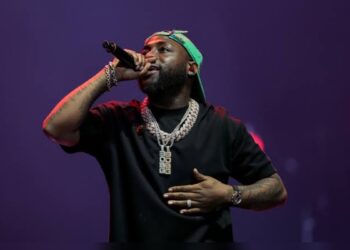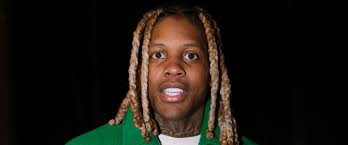
Grammy Award-winning Chicago rapper Lil Durk finds himself at the center of a judicial standoff as federal prosecutors and co-defendant attorneys push to delay his blockbuster murder-for-hire trial by three months, despite the artist’s apparent desire to proceed as originally scheduled this October.
Court documents filed on Friday reveal a complex legal maneuvering around one of the music industry’s most closely watched criminal cases, where the artist, whose real name is Durk Devontay Banks, stands accused of conspiring to murder a rival rapper in a plot that resulted in a shooting death near the Beverly Center shopping mall in August 2022.
The joint motion, signed by attorneys representing co-defendants Deandre Dontrell Wilson, Asa Houston, and David Brian Lindsey, argues the case’s unprecedented complexity necessitates additional preparation time. However, in an unusual twist that underscores the high-stakes nature of these proceedings, Banks himself appears to reject the delay, with court filings explicitly stating, “Defendant Banks does not join in the stipulation to continue the trial in this matter.”
This disagreement highlights a fundamental tension in multi-defendant federal cases, where individual defendants may have conflicting strategic interests despite being tried together. Federal prosecutors have indicated they believe Banks should be compelled to accept the delay, arguing that a three-month postponement constitutes a “reasonable period” that would not violate his constitutional right to a speedy trial.
The charges paint a disturbing picture of how federal prosecutors allege Banks transformed his music collective into something far more sinister. According to the Justice Department, Banks is accused of orchestrating a murder-for-hire plot targeting rival rapper Quando Rondo that instead resulted in the death of Rondo’s associate Saviay’a Robinson, known as Lul Pab.
Prosecutors contend that Banks’ Only the Family (OTF) collective operated as what they term a “hybrid organization”—functioning publicly as a group of Chicago rappers while allegedly serving as a criminal enterprise carrying out violent acts at Banks’ direction. The alleged motive traces back to the 2020 killing of rapper King Von, a close Banks associate and frequent collaborator, with prosecutors claiming the 2022 Los Angeles shooting was orchestrated as retaliation.
The case initially attracted additional scrutiny when prosecutors cited Banks’ own lyrics as evidence, quoting from a song called “Wonderful Wayne & Jackie Boy” that allegedly referenced the shooting. However, in a development that illustrates the complex intersection of artistic expression and criminal prosecution, the government was forced to file a new indictment removing those lyrics after Banks’ defense team demonstrated the verses were recorded seven months before the incident occurred.
The current motion to postpone represents just the latest development in what has become a protracted legal battle. Banks has been denied bail multiple times despite proposing packages worth millions of dollars, with judges citing concerns about community safety and his alleged influence over others.
The rapper’s apparent opposition to the delay could signal several strategic considerations. Criminal defense experts often note that defendants facing serious charges may prefer to proceed quickly rather than allow cases to develop momentum through extended pre-trial detention. Alternatively, Banks’ legal team may believe they have stronger prospects with the current evidence and witness lineup than they would after additional months of prosecution preparation.
The motion’s selective support among co-defendants also reveals the complex dynamics at play. While three co-defendants joined the postponement request, the filing notably omits any mention of Keith Jones and Kavon London Grant’s positions on the delay, suggesting potential disagreement within the defense camp about trial timing.
This case represents more than just another celebrity criminal prosecution—it touches on fundamental questions about how federal authorities investigate and prosecute alleged criminal enterprises that intersect with legitimate business operations. The government’s characterization of OTF as a “hybrid organization” could set precedents for how prosecutors approach similar cases involving entertainment industry figures.
The case has also reignited debates about the use of rap lyrics in criminal prosecutions, even as prosecutors have backed away from their initial reliance on Banks’ musical content. Legal advocates have long argued that such evidence unfairly prejudices juries against defendants while potentially chilling artistic expression.
If the postponement motion is granted, the trial would be pushed from October to January, marking another delay in proceedings that have already stretched across multiple court sessions. Banks retains the option to oppose the motion formally or seek to have his case severed from his co-defendants, allowing him to proceed with the original trial schedule independently.
The federal judge overseeing the case will ultimately determine whether the claimed complexity justifies additional delay or whether Banks’ right to a speedy trial takes precedence. That decision could significantly impact not only the immediate proceedings but also the broader dynamics of how multi-defendant federal cases are managed when individual defendants have conflicting interests regarding timing.
As this high-profile case continues to unfold, it serves as a stark reminder of how quickly success in the music industry can intersect with serious federal criminal allegations, potentially transforming chart-topping artists into defendants facing decades in federal prison.
WHAT YOU SHOULD KNOW
Federal prosecutors claim Durk transformed his music collective OTF into a criminal enterprise that orchestrated a retaliatory killing in Los Angeles, resulting in an innocent man’s death.
The most significant development in this high-profile case is the unusual split between co-defendants over trial timing—while prosecutors and most co-defendants want a three-month delay, citing case complexity, Lil Durk himself opposes the postponement and wants to proceed with the October trial date.
This rare disagreement in a federal murder-for-hire case suggests conflicting defense strategies and could force the court to either compel Durk to accept the delay or allow him to be tried separately.