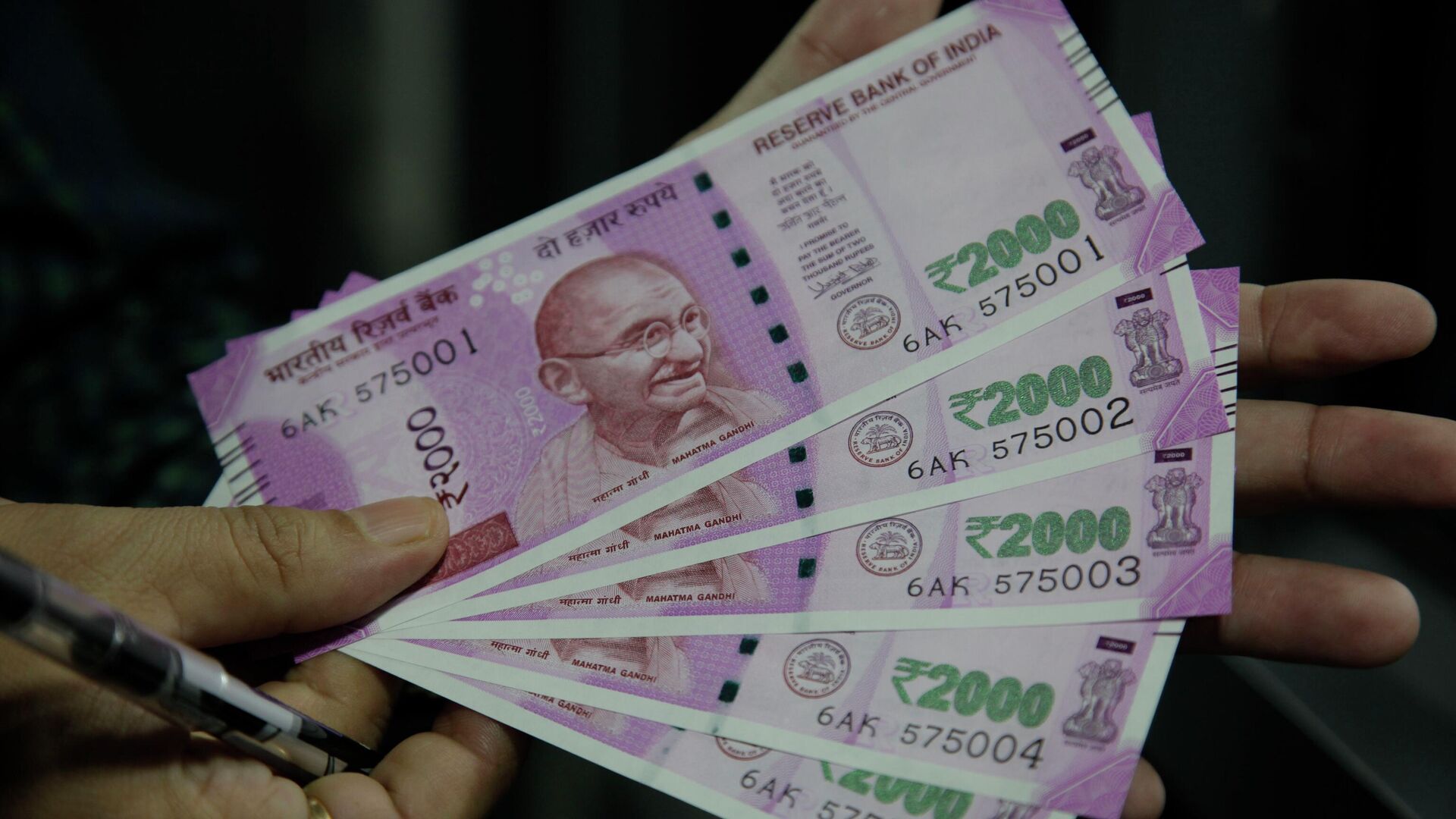
The Indian rupee staged a modest recovery on Tuesday, climbing 0.2% against the U.S. dollar to close at 88.0050 as offshore traders unwound positions and domestic equity markets extended their recent rally.
The currency touched an intraday high of 87.9550 on the interbank order-matching system, approaching a critical technical threshold that market participants are watching closely. The 87.95 level has emerged as a key battleground for traders, representing the previous record high before the rupee breached that barrier last Friday in a move that signaled fresh weakness for the Indian currency.
“I will be very surprised if we break below 87.95 and hold,” said a currency trader at a private bank, speaking on condition of anonymity. “That would nullify the immediate upside bias, which doesn’t make sense considering the current news flow.”
The rupee’s recovery began in offshore non-deliverable forward markets before domestic trading commenced, with local markets subsequently following the international lead, according to banking sources. This sequence suggests that global positioning adjustments, rather than domestic fundamentals, may have been the primary driver of Tuesday’s gains.
Foreign exchange salespeople pointed to a confluence of factors supporting the rupee’s modest rebound. “The recovery in Indian equities was helping the rupee at the margin, and maybe there is a one-off inflow via foreign banks,” explained an FX salesperson at a major private lender.
Indian equity markets indeed provided a tailwind, with major indices building on Monday’s strong performance. However, banking sources noted that the correlation between stock market movements and rupee performance has weakened in recent months, suggesting the currency is increasingly driven by other factors, including global risk sentiment and Federal Reserve policy expectations.
The relationship becomes more pronounced, however, when the rupee trades near historical extremes. “When the currency trades at record or near-record levels, its sensitivity to stock market swings increases, adding to intraday volatility,” explained one senior banker.
Tuesday’s rupee movement came against a backdrop of cautious trading across Asian currency markets, with regional peers holding steady as investors positioned ahead of crucial U.S. economic data releases. Market participants are particularly focused on August employment figures and inflation data, both scheduled for release before the Federal Reserve’s September 16-17 policy meeting.
These data points are expected to provide critical insights into the Fed’s likely trajectory for interest rate cuts this year, a factor that has significant implications for emerging market currencies, including the rupee. Lower U.S. rates typically reduce the dollar’s appeal and can boost flows to higher-yielding emerging market assets.
While Tuesday’s gains provided some relief for the rupee, the currency remains under pressure from broader structural factors, including India’s current account dynamics and global risk sentiment. The ability to hold above the 87.95 technical level in the coming sessions will likely serve as an important test of whether this recovery has staying power or represents merely a temporary correction in the currency’s recent downtrend.
Market participants will be closely monitoring both domestic equity performance and global developments, particularly from the U.S., as they assess the rupee’s near-term direction in what continues to be a challenging environment for emerging market currencies.
WHAT YOU SHOULD KNOW
The Indian rupee’s modest recovery to 88 per dollar is primarily driven by technical factors—offshore traders trimming positions and equity market gains—rather than fundamental strength.
The critical level to watch is 87.95; if the rupee breaks and holds below this threshold, it could signal further weakness ahead. With upcoming U.S. jobs and inflation data likely to influence Federal Reserve policy, the rupee’s near-term fate largely depends on global factors rather than domestic fundamentals.