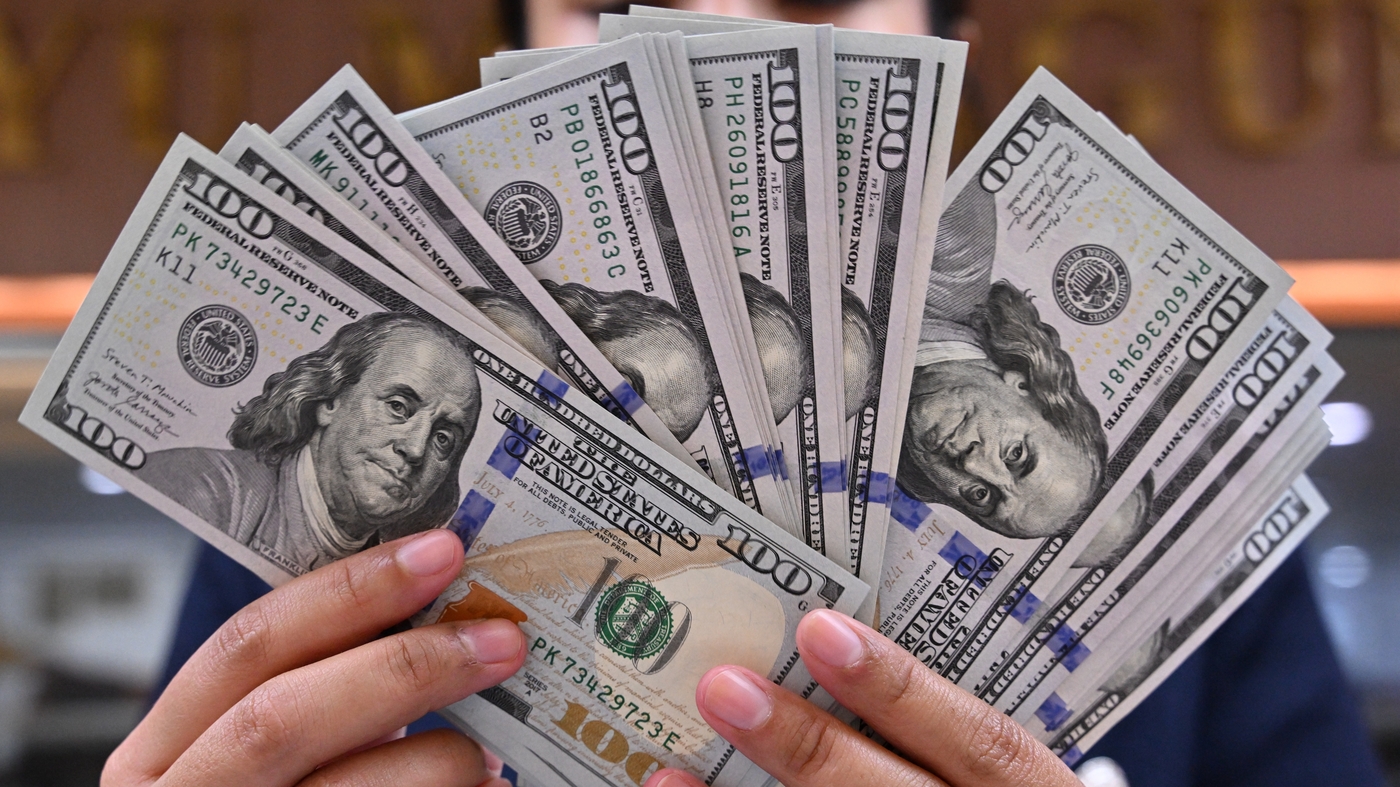
The U.S. dollar tumbled to its lowest level in two weeks on Wednesday, succumbing to a perfect storm of dovish inflation data and escalating political uncertainty as President Donald Trump renewed his assault on Federal Reserve independence.
The dollar index, which tracks the greenback against a basket of major currencies, slumped to 97.76—its weakest showing since July 28. The decline extended Tuesday’s 0.5% sell-off, as markets digested July’s surprisingly tame inflation reading that has all but guaranteed a September rate cut from the Federal Reserve.
Inflation Cools, Rate Cut Bets Soar
Tuesday’s consumer price data delivered exactly what dovish investors hoped for. U.S. inflation rose only marginally in July, meeting economist forecasts and providing little evidence that Trump’s aggressive tariff policies are meaningfully pushing up consumer prices—at least for now.
The benign inflation print sent traders scrambling to price in monetary easing. According to LSEG data, markets are now assigning a 98% probability that the Fed will cut rates next month, up from more modest expectations just weeks ago.
“The U.S. CPI release turned out to be a dollar-negative event,” said Francesco Pesole, a strategist at ING. “The September Fed cut remains firmly priced in.”
Pesole acknowledged that while core inflation’s acceleration is “far from ideal,” it’s not alarming enough to overshadow mounting concerns about labor market deterioration—a key factor likely to influence Fed policy in the coming months.
Trump’s Fed Feud Intensifies
Adding to the dollar’s woes were fresh signs that Trump is ramping up his campaign to exert greater control over supposedly independent institutions. White House spokeswoman Karoline Leavitt revealed on Tuesday that the president is considering legal action against Fed Chairman Jerome Powell, ostensibly over his handling of renovations at the central bank’s Washington headquarters.
The threatened lawsuit represents the latest salvo in Trump’s ongoing war with Powell, whom he has repeatedly criticized for failing to ease monetary policy more aggressively. The president’s attacks on Fed independence are raising red flags among investors who view central bank autonomy as crucial for maintaining dollar credibility.
Trump also trained his fire on Goldman Sachs CEO David Solomon, questioning the Wall Street titan’s leadership after the bank predicted that U.S. tariffs would damage economic growth—a forecast that has so far proven overly pessimistic.
Currency Winners and Losers
The dollar’s weakness proved to be other currencies’ gain. The euro surged 0.3% to $1.1709, briefly touching its highest level since July 28, while sterling climbed 0.4% to $1.3562, marking its strongest performance since July 24.
Britain’s currency strength came despite mixed economic signals from across the Atlantic. While the UK’s labor market showed further signs of softening on Tuesday, wage growth remained robust—a dynamic that helps explain the Bank of England’s cautious approach to rate cuts.
Pacific Currencies Rally on RBA Move
Antipodean currencies also benefited from dollar weakness, with the Australian dollar gaining 0.35% to $0.6552 and the New Zealand dollar jumping 0.5% to $0.5986.
The Reserve Bank of Australia delivered an expected rate cut on Tuesday and signaled that additional policy easing may be necessary as the economy loses momentum, creating challenges for meeting inflation and employment targets.
Crypto Markets Show Mixed Signals
In digital asset markets, bitcoin’s march toward record highs hit a speed bump, with the leading cryptocurrency trading 0.34% lower at $119,809. However, Ethereum continued its impressive run, scaling a nearly four-year high of $4,679.
“Ethereum’s quiet breakout is being fueled by real-world adoption and capital confidence,” noted Gracie Lin, Singapore CEO of crypto exchange OKX. She pointed out that on OKX’s platform, ether has now overtaken bitcoin as the most actively traded asset over the past month—a significant shift in crypto market dynamics.
Looking Ahead
The confluence of dovish Fed expectations and political uncertainty surrounding central bank independence suggests the dollar may face continued headwinds in the near term. Markets will be closely watching for any further escalation in Trump’s institutional battles while also parsing upcoming economic data for clues about the Fed’s September policy decision.
For currency traders, the message is clear: the era of dollar dominance may be facing its most serious challenge in months, as both monetary policy and political factors align against the greenback.
WHAT YOU SHOULD KNOW
The U.S. dollar hit a two-week low as mild July inflation data virtually guaranteed a Federal Reserve rate cut in September (98% probability), while President Trump’s threats to sue Fed Chair Jerome Powell over institutional independence further weakened investor confidence in the currency.
This double blow—dovish monetary policy expectations plus political uncertainty—is creating significant headwinds for the dollar while boosting rival currencies like the euro and sterling.