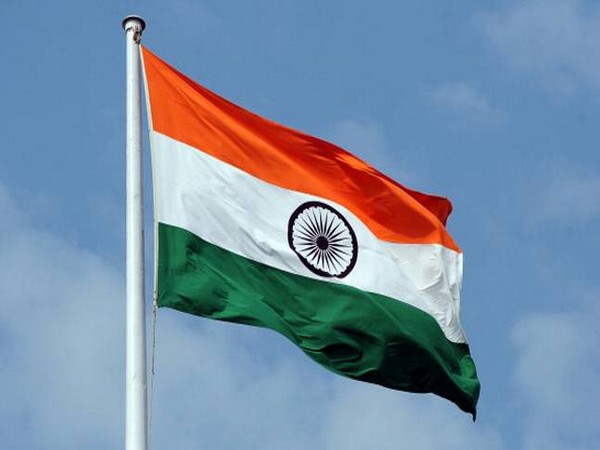
India’s financial markets were thrown into disarray on Thursday as the rupee careened toward historic lows and major stock indices posted sharp declines, following President Donald Trump’s announcement of sweeping 25% tariffs on Indian goods that caught analysts off guard with their severity.
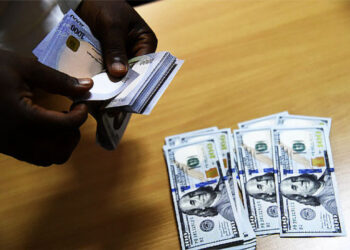
The Indian rupee, already under pressure from global economic headwinds, plummeted to 87.74 against the dollar—its weakest level in over five months—before recovering slightly as the Reserve Bank of India (RBI) appeared to intervene with dollar sales to stem the currency’s freefall. The rupee now hovers perilously close to its all-time low of 87.95, reached in February amid previous market volatility.
India’s premier equity benchmarks reflected investor anxiety, with both the Nifty 50 and BSE Sensex posting losses of approximately 0.6% as traders absorbed the implications of the unexpected trade escalation between the world’s largest democracy and its most powerful economic partner.
The tariff announcement has sent shockwaves through India’s economic establishment, with leading economists projecting the measures could strip as much as 40 basis points from the nation’s GDP growth in the fiscal year 2025-26. The sobering assessment comes as India, one of the world’s fastest-growing major economies, faces the prospect of sustained economic headwinds.
“The magnitude of these tariffs was beyond what most market participants had anticipated,” said one senior economist who requested anonymity. “We’re looking at potential knock-on effects across multiple sectors, from textiles to pharmaceuticals, that could reverberate through the economy for quarters to come.”
Currency strategists are now closely watching the critical 88.00 level against the dollar, which represents both a psychological barrier and a potential flashpoint for further RBI intervention. Brad Bechtel, head of global foreign exchange at investment bank Jefferies, characterized the level as “a big focus for RBI” while speculating on the central bank’s next moves.
“The question becomes whether they allow the currency to depreciate through that level to offset the impact of tariffs or if they fight to maintain currency ‘stability,'” Bechtel explained. His assessment suggests that if the rupee breaks through 88.00, the next critical threshold to monitor would be the 90.00 level – a milestone that would represent uncharted territory for the Indian currency.
The trade tensions add another layer of complexity to India’s economic narrative, as policymakers must now balance supporting export competitiveness through a weaker currency against the inflationary pressures that typically accompany depreciation. The RBI’s apparent intervention Thursday suggests authorities remain committed to preventing excessive volatility, even as market forces push toward further weakness.
The broader implications extend beyond immediate market movements, as India’s export-dependent sectors brace for reduced competitiveness in one of their largest markets. With Trump’s administration signaling potential additional penalties could follow, the uncertainty surrounding trade relations threatens to cast a shadow over India’s medium-term economic prospects.
As markets closed on Thursday, investors and policymakers alike were left grappling with a new reality where the previously robust India-U.S. economic relationship faces its most significant test in years, with the full economic impact of this trade escalation yet to be fully understood.
WHAT YOU SHOULD KNOW
India’s economy faces immediate pressure after President Trump imposed unexpected 25% tariffs on Indian goods. The rupee dropped to a five-month low near its record weakness of 87.95, while major stock indices fell 0.6%.
Economists warn these tariffs could cut India’s GDP growth by up to 40 basis points in 2025-26, with the threat of additional penalties creating further uncertainty. The Reserve Bank of India intervened to support the currency, but analysts expect continued volatility as the rupee approaches the critical 88.00 level.
This trade escalation represents the most significant challenge to India-U.S. economic relations in years, with potential long-term impacts on India’s export-dependent sectors.