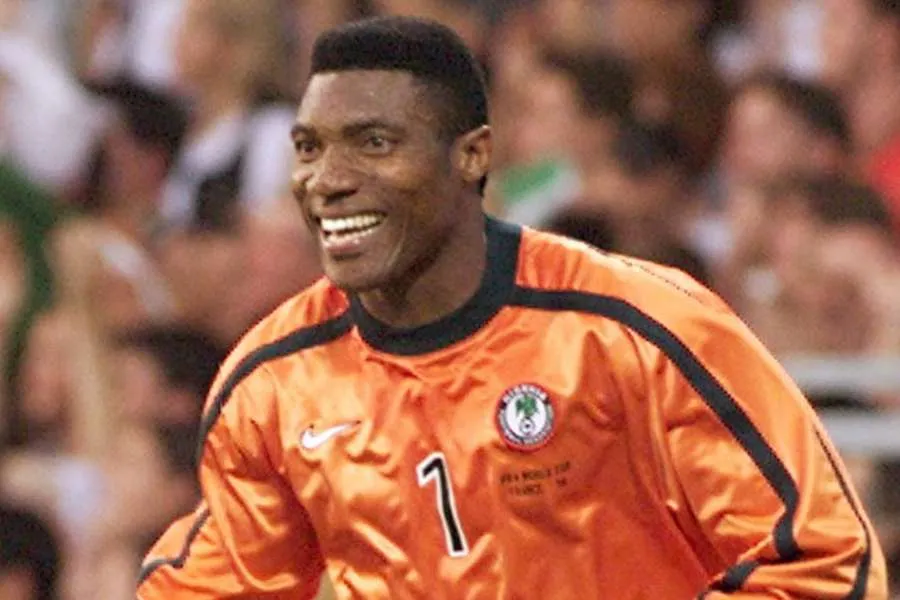
Nigeria and the global football community on Thursday mourned the passing of Peter Rufai, the iconic Super Eagles goalkeeper known as “Dodo Mayana,” who died at 61 in Lagos after a prolonged illness.
Renowned for his agility, fearless saves, and leadership, Rufai’s legacy transcends the pitch.
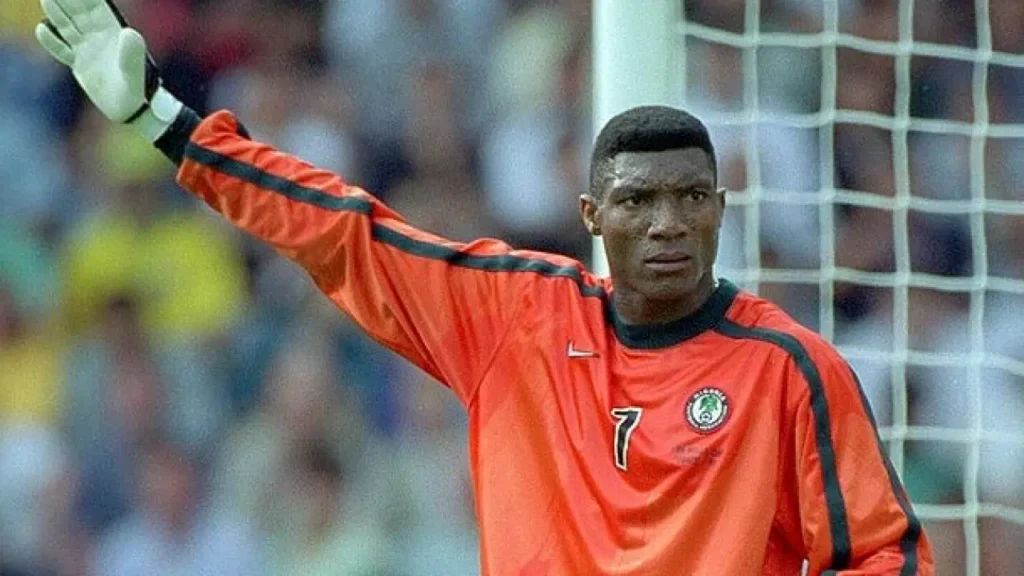
Here are 10 key facts about the football legend who left an indelible mark on Nigerian sports.
- Royal Roots in Idimu: Born on August 24, 1963, in Oshodi, Lagos, Rufai was the son of a tribal king in Idimu. In 1998, he declined royal succession to pursue his football career, choosing the goalpost over a throne, a decision that defined his commitment to the sport.
- Two-Decade Career: Rufai’s 20-year professional journey (1980–2000) spanned clubs in Nigeria (Stationery Stores, Femo Scorpions), Benin (AS Dragons FC), Belgium (K.S.C. Lokeren, K.S.K. Beveren), the Netherlands (Go Ahead Eagles), Portugal (S.C. Farense, Gil Vicente), and Spain (Hércules CF, Deportivo La Coruña). His versatility shone across diverse leagues.
- 1994 AFCON Glory: Rufai was pivotal in Nigeria’s 1994 Africa Cup of Nations (AFCON) victory in Tunisia, the country’s first on foreign soil. His heroics between the posts helped secure the title, cementing his status as a national hero.
- World Cup Pioneer: As Super Eagles captain, Rufai led Nigeria in their debut FIFA World Cup in 1994, reaching the Round of 16. He also played in 1998, earning 65 caps over 17 years. His leadership defined Nigeria’s golden football era.
- Rare Scoring Goalkeeper: On July 24, 1993, Rufai made history by scoring a penalty in a 6–0 AFCON qualifier win against Ethiopia, a rare feat for a goalkeeper. This moment showcased his boldness and unpredictability.
- European Trailblazer: Rufai’s stint at S.C. Farense in Portugal (1994–96) contributed to the club’s first-ever UEFA Cup qualification in 1994–95. His performances in Europe, including at Deportivo La Coruña, earned him the 1994 Nigerian Footballer of the Year award.
- Staruf Football Academy: In 2010, Rufai founded the Staruf Football Academy in Lagos to nurture young talent. Emphasizing education alongside athletics, he mentored goalkeepers like Vincent Enyeama, leaving a lasting legacy in youth development.
- Global Recognition: Rufai’s Wikipedia biography, available in 21 languages, reflects his worldwide impact. His charisma and discipline made him a role model, inspiring fans and players across Africa and beyond.
- Enduring Legacy: Tributes from President Bola Tinubu, who called him a “patriotic sportsman,” Lagos Governor Babajide Sanwo-Olu, and the Nigeria Football Federation (NFF) highlight his contributions. On X, fans like @JollofBallers mourned “Dodo Mayana” as a “giant of Nigerian football.”
- Tragic Timing: Rufai’s death coincided with the loss of Liverpool’s Diogo Jota, marking July 3, 2025, as a somber day for football. His passing joins other 1994 squad losses, urging renewed focus on grassroots football to honor his legacy.
Rufai’s life, marked by resilience and dedication, continues to inspire Nigeria’s football aspirations.