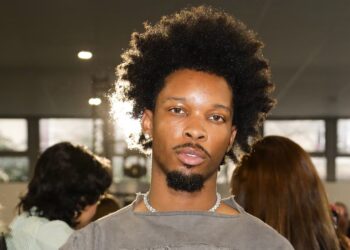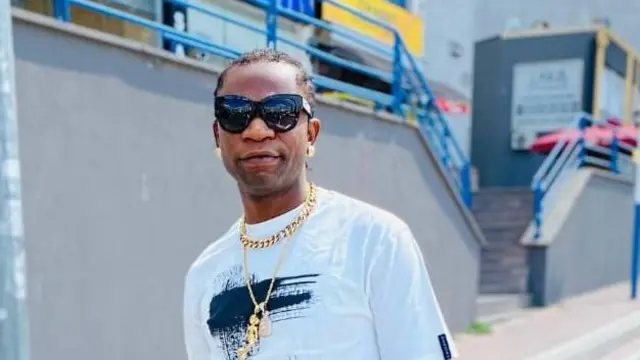
Controversial Nigerian artist Darlington Okoye, professionally known as Speed Darlington, has publicly refused to honor a summons from the National Agency for the Prohibition of Trafficking in Persons (NAPTIP), escalating a dispute that began with comments he made during a live social media broadcast.
The artist finds himself at the center of a legal storm after NAPTIP issued a wanted notice last Friday, citing allegations of cyberbullying, cyberstalking, and rape. The charges stem from a live Instagram video in which Speed Darlington claimed to have engaged in sexual activity with a 15-year-old girl—a statement that triggered widespread public outrage and drew the attention of law enforcement agencies.
In a defiant video response posted on Monday, the musician categorically rejected the agency’s authority and accused NAPTIP of exploiting his celebrity status for publicity. “This video is for NAPTIP. All this wanted posted and blasted everywhere. I want you to take that shit down. I am not coming,” Speed Darlington declared in his characteristic confrontational style.
The artist maintained his innocence, characterizing his controversial statements as merely “irresponsible talk” rather than criminal conduct. He dismissed the charges as baseless, repeatedly demanding evidence and questioning the identity of any complainants. “I have not committed any crime. All I did was speak. Irresponsible talk is not a crime,” he insisted.
Perhaps most audaciously, Speed Darlington set a financial condition for any potential cooperation with the investigation, demanding ₦2.5 million plus travel expenses for both himself and his assistant. “₦2.5m is what I charge for an appearance. Una, go pay me ₦2.5m plus round-trip tickets for me and my PA because I call that appearance because you guys have no evidence,” he stated, treating the serious legal matter as a paid entertainment engagement.
The musician’s response reveals his belief that NAPTIP’s actions are politically motivated, claiming the agency is attempting to boost its public profile by targeting a high-profile figure. “Una wants to use me to collect social media clout… ‘We are doing our job; we summoned a celebrity. ‘I was born here, and I know the psychological game when you want to use my name to blow,” he alleged.
Speed Darlington also aimed at his critics, particularly targeting unmarried women in their twenties and thirties, whom he blamed for pressuring NAPTIP to take action against him. He questioned the specific charges, asking, “Which one is cyberstalking? Who did I stalk? Did I post to anyone? Cyberbullying? Who did I bully?”
This latest development represents a significant escalation in what has become a high-profile test of Nigeria’s commitment to protecting minors and enforcing laws against online harassment. NAPTIP’s decision to publicly announce the wanted status suggests the agency views the case as serious enough to warrant public attention, despite Speed Darlington’s claims of a publicity stunt.
The standoff raises important questions about celebrity accountability in Nigeria’s digital age, where social media platforms have become stages for increasingly provocative content. It also highlights the challenges law enforcement agencies face when dealing with public figures who command significant online followings and are willing to openly defy legal processes.
As this story continues to unfold, the public will be watching to see whether NAPTIP will escalate its enforcement actions or whether Speed Darlington’s gamble in publicly refusing cooperation will influence the agency’s next steps. The outcome could set important precedents for how Nigeria handles cases involving alleged crimes committed through social media platforms.
WHAT YOU SHOULD KNOW
Nigerian musician Speed Darlington is openly defying law enforcement after being declared wanted by NAPTIP for alleged rape, cyberbullying, and cyberstalking charges stemming from his claim of having sex with a 15-year-old girl on Instagram Live. Rather than cooperating with the investigation, he’s demanding ₦2.5 million to appear before authorities and dismissing the charges as a publicity stunt by the agency.