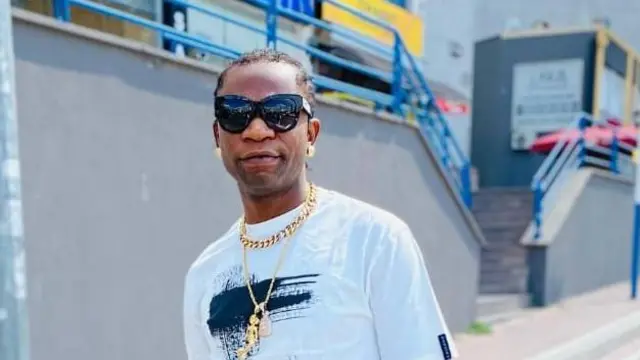
Nigeria’s National Agency for the Prohibition of Trafficking in Persons (NAPTIP) has escalated its investigation into controversial entertainer Darlington Okoye, professionally known as Speed Darlington, by declaring him wanted on multiple serious charges, including rape, cyberbullying, and cyberstalking.
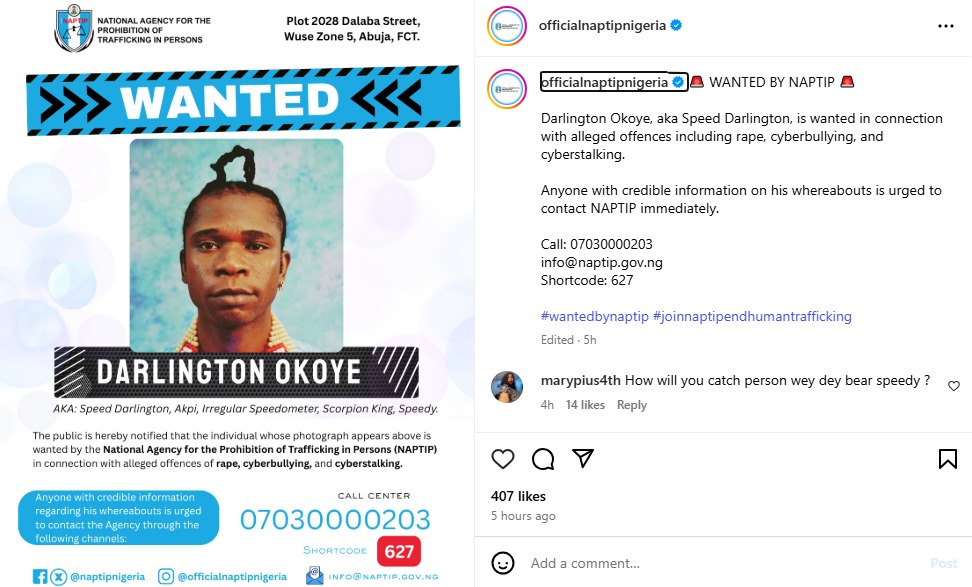
The federal anti-trafficking agency made the declaration public through its official Instagram account, @officialnaptipnigeria, on Friday afternoon, marking a significant development in a case that has garnered widespread attention across Nigerian social media platforms.
The wanted notice, issued in bold capital letters, states that Speed Darlington “is wanted in connection with alleged offenses including rape, cyberbullying, and cyberstalking.” The agency has urged members of the public to provide any credible information regarding the entertainer’s current whereabouts, providing both a direct phone line (07030000203) and email address ([email protected]) for tips.
This development follows the entertainer’s failure to respond to an earlier invitation from NAPTIP for questioning. The agency had initially sought to interview Speed Darlington following disturbing claims he made during a live Instagram video session, where he allegedly boasted about having sexual relations with a 15-year-old girl.
Speed Darlington, known for his provocative social media presence and controversial statements, has built a following through his unconventional content and outspoken personality. However, his recent statements have crossed legal boundaries, prompting law enforcement intervention from Nigeria’s specialized anti-trafficking unit.
NAPTIP, established to combat human trafficking and related offenses, typically handles cases involving the exploitation of vulnerable individuals, particularly minors. The agency’s involvement in this case underscores the serious nature of the allegations, particularly those involving potential statutory rape.
The charges carry significant legal weight under Nigerian law. Rape allegations, particularly those involving minors, are prosecuted as serious felonies with substantial prison sentences upon conviction. The additional charges of cyberbullying and cyberstalking reflect Nigeria’s evolving legal framework addressing online harassment and digital crimes.
The Cybercrimes (Prohibition, Prevention, etc.) Act 2015 provides the legal foundation for prosecuting cyberbullying and cyberstalking offenses, with penalties including imprisonment and substantial fines.
The case has sparked discussions about accountability for public figures and the responsibility of social media influencers, particularly regarding content involving minors. NAPTIP’s public wanted notice indicates that standard investigative procedures have been exhausted, and the agency now requires public assistance to locate the suspect.
Law enforcement sources suggest that Speed Darlington’s failure to honor the initial invitation for questioning has complicated the investigation timeline and necessitated the public’s wanted notice.
NAPTIP officials emphasize that anyone providing information should contact the agency directly rather than attempting to apprehend the suspect independently. The investigation remains active, with the agency working to ensure all evidence is properly collected and preserved for potential prosecution.
The case highlights Nigeria’s commitment to protecting minors from exploitation and holding public figures accountable for their actions, regardless of their celebrity status or social media following.
As this story develops, NAPTIP continues to seek public cooperation in locating Speed Darlington to advance their investigation into these serious allegations.
WHAT YOU SHOULD KNOW
Nigeria’s anti-trafficking agency, NAPTIP, has declared entertainer Speed Darlington wanted for rape, cyberbullying, and cyberstalking after he allegedly bragged about having sex with a 15-year-old girl on Instagram Live and then failed to appear for questioning.
This case demonstrates that celebrity status provides no protection from serious criminal charges, particularly those involving minors, and highlights Nigeria’s commitment to prosecuting digital crimes and child exploitation regardless of the perpetrator’s public profile.