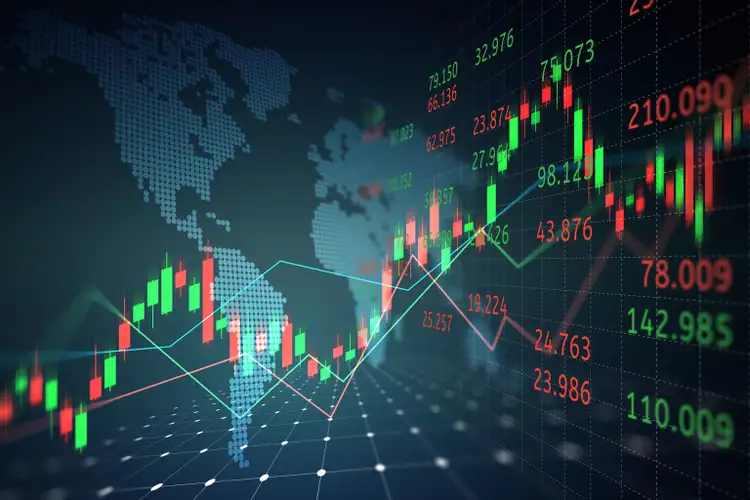
Global financial markets experienced a dramatic reversal of fortune on Friday as Asian equities soared to their highest levels in more than three years, with European markets poised to extend the rally.
The remarkable turnaround came as investors shook off weeks of anxiety over Middle East tensions and trade uncertainties, instead embracing a confluence of positive developments that fundamentally altered the market landscape.
The rally gained momentum overnight on Wall Street, where investors seized upon several key catalysts that collectively signaled a more favorable investment environment.
Most notably, the fragile ceasefire between Israel and Iran continued to hold, alleviating immediate concerns about regional conflict escalation that had kept investors on edge. Simultaneously, China-U.S. trade relations showed encouraging signs of improvement, with both nations taking concrete steps to ease commercial friction.
Dollar Weakness Reflects Shifting Federal Reserve Expectations
Perhaps the most significant driver of market optimism centered on evolving expectations for U.S. monetary policy. Fed officials now indicate their benchmark lending rate falling to 3.9% by the end of 2025, pointing to two reductions later this year, a shift that has fundamentally altered investor sentiment regarding the Federal Reserve’s policy trajectory.
The speculation surrounding Fed Chair Jerome Powell’s future has intensified market volatility and contributed to substantial dollar weakness. Reports suggest that President Trump has considered announcing Powell’s replacement as early as September or October, potentially leaving the current chair operating under a “shadow” for his final six meetings in office. This uncertainty has triggered concerns about the Fed’s independence and fueled expectations that any successor might adopt a more dovish stance on interest rates.
The dollar’s decline has been particularly pronounced, languishing near a 3½-year low on Friday and positioned for its worst weekly performance in more than a month. Already down more than 10% year-to-date, the greenback faces the prospect of recording its steepest decline for the first half of any year since the early 1970s era of free-floating currencies began.
Trade Relations Show Signs of Thawing
On the trade front, tangible progress emerged as the White House announced an agreement with China to expedite rare earths shipments to the United States. This development represents a concrete step toward normalizing commercial relations between the world’s two largest economies, addressing a critical supply chain concern that has long complicated bilateral trade.
Adding further momentum to pro-growth sentiment, Treasury Secretary Scott Bessent made a direct appeal to Republican lawmakers to remove a proposed “retaliatory tax” targeting foreign investors from sweeping budget legislation. This move signals the administration’s recognition that maintaining foreign investment flows remains crucial for U.S. economic growth, even as broader trade policies undergo review.
Tariff Concerns Fail to Materialize
Notably absent from recent market dynamics has been the consumer price spike that many investors initially feared would accompany President Trump’s tariff policies. While Federal Reserve officials caution that it remains too early to draw definitive conclusions about tariffs’ inflationary impact, the absence of immediate price pressures has allowed markets to focus on more positive developments.
Critical Data Release Looms
Friday’s release of the core Personal Consumption Expenditures (PCE) price index represents the day’s most significant market-moving event. This closely watched inflation gauge could provide crucial insights into the Federal Reserve’s future policy direction. Fed officials now see the median PCE inflation rate moving to 3% in 2025, higher than the median rate of 2.7% forecasted in March, suggesting persistent inflationary pressures that could complicate policy decisions.
Any downside surprise in the PCE data could further fuel market expectations for additional Fed easing this year, potentially extending the current rally across global markets. Conversely, stronger-than-expected inflation readings might force investors to recalibrate their assumptions about the pace of future rate cuts.
Regional Market Performance Reflects Broader Trends
Hong Kong’s Hang Seng Index ended recent trading 1.26% higher at 23,530, while mainland China’s CSI 300 index closed flat at 3,846.64, reflecting the mixed but generally positive sentiment across Asian markets. The divergent performance illustrates how different regional markets are responding to the complex interplay of global and domestic factors.
Recent weeks have seen considerable volatility as investors assessed escalating Israel-Iran tensions and parsed economic data from China, with safe-haven assets like gold and oil experiencing significant price movements. However, Friday’s rally suggests that risk appetite has returned as geopolitical tensions appear to stabilize.
Looking Ahead: Key Factors to Monitor
As markets move forward, several critical factors will determine whether the current rally can sustain momentum. The Federal Reserve’s policy trajectory remains paramount, particularly given ongoing speculation about leadership changes and the central bank’s response to evolving economic conditions. Trade relations between major economies will continue to influence investor sentiment, especially as both sides navigate the delicate balance between protectionism and economic cooperation.
The geopolitical situation in the Middle East, while currently stable, remains a potential source of market volatility should tensions resurface. Meanwhile, economic data releases will provide ongoing insight into the underlying health of major economies and the persistence of inflationary pressures that continue to challenge policymakers worldwide.
Today’s market performance represents more than just a single day’s gains; it reflects a fundamental shift in investor psychology from defensive positioning to cautious optimism. Whether this transition proves sustainable will depend largely on the Federal Reserve’s upcoming policy decisions and the broader geopolitical landscape’s continued stability.
WHAT YOU SHOULD KNOW
Global markets are experiencing their strongest rally in three years, driven primarily by three critical factors: the Israel-Iran ceasefire holding steady, improving China-U.S. trade relations, and growing expectations that the Federal Reserve will cut interest rates more aggressively.
The dollar has plummeted to 3½-year lows as investors bet on a more dovish Fed policy, potentially accelerated by speculation over Jerome Powell’s replacement. While tariff fears have failed to materialize into significant consumer price increases, today’s PCE inflation data release will be crucial in determining whether this market optimism can sustain momentum or if investors are getting ahead of themselves.