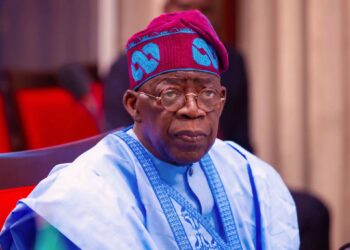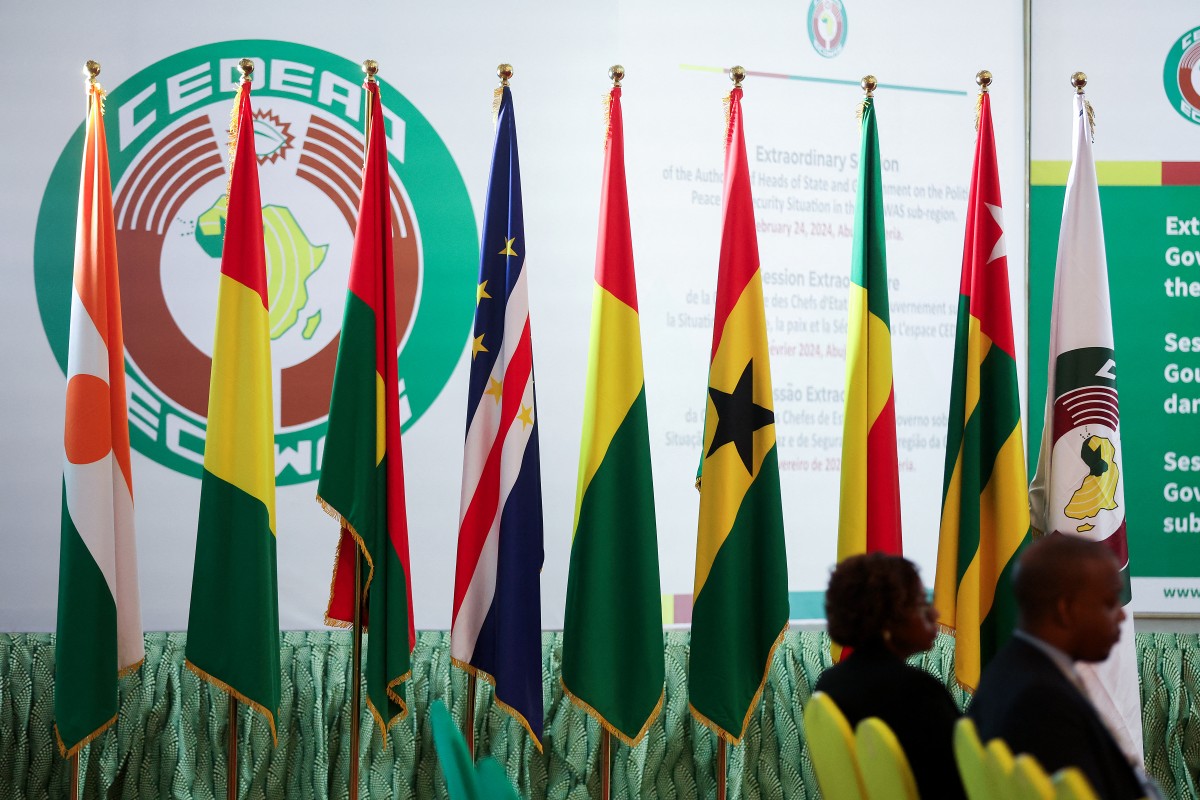
President Bola Ahmed Tinubu, in his role as the current Chairman of the Economic Community of West African States (ECOWAS), is currently presiding over the 67th Ordinary Session of the Authority of Heads of State and Government.
The gathering is underway at the State House Conference Centre in Abuja and comes at a time of notable political and economic turbulence across the subregion.
This high-level summit follows closely on the heels of the inaugural West African Economic Summit (WAES), which was convened on Saturday, June 21, 2025, in Abuja.
The WAES was attended by a significant number of West African heads of state—nine out of the twelve currently sitting ECOWAS presidents—demonstrating a continued commitment to strengthening regional collaboration.
Notable among the attendees at the economic summit were Ghana’s President John Mahama, President Joseph Boakai of Liberia, Sierra Leone’s Julius Maada Bio, Bassirou Diomaye Faye of Senegal, The Gambia’s Adama Barrow, Benin’s Patrice Talon, Jean Lucien de Tové from Togo, and Guinea-Bissau’s Umaro Sissoco Embaló.
Their participation reaffirmed the shared political will among ECOWAS member states to push forward with integration efforts despite mounting regional pressures.
The 67th session is taking place against the backdrop of the withdrawal of three countries—Mali, Niger, and Burkina Faso—from the regional bloc. These nations, each now under military rule, had previously announced their collective departure from ECOWAS and subsequently formed the Alliance of Sahel States (AES), signaling a significant shift in the subregion’s political architecture.
The formal withdrawal of these three states is scheduled to take full effect on July 29, 2025, following a six-month transitional timeline.
Despite the formal exit, ECOWAS leaders, including President Tinubu, have reiterated their readiness to reengage with the AES countries, highlighting that efforts remain ongoing to encourage their return to the fold. Dialogue is seen as essential for sustaining peace, economic cooperation, and broader regional cohesion.
In his remarks during the WAES, Liberian President Joseph Boakai urged the region’s leaders not to sever ties with the breakaway states. Emphasizing the value of reconciliation and the need for ongoing dialogue, Boakai expressed concern over the departure of Mali, Niger, and Burkina Faso, describing their actions as unfortunate and affirming that ECOWAS must continue to offer them a path back into the community.
Earlier this year, in January 2025, the three AES member states formally notified ECOWAS of their intention to withdraw. Although ECOWAS granted them a six-month grace period for possible reconsideration, the bloc ultimately acknowledged their exit later that same month. This development has introduced a new dynamic into West Africa’s geopolitical landscape, with implications for security, trade, and diplomacy.
The recent West African Economic Summit marked a continuation of ECOWAS’s efforts to consolidate regional unity. The summit emphasized economic recovery, trade harmonization, and collaborative policymaking. It also served as a precursor to the ongoing ECOWAS session, reinforcing the urgency of collective action to navigate the present challenges.
May 2025 marked a symbolic moment for ECOWAS as the bloc celebrated its 50th anniversary. The celebration, held in Lagos, Nigeria, highlighted the long-standing efforts to build a unified West African region.
With the withdrawal of the Sahel nations, the organization now comprises 12 active members: Benin, Cabo Verde, Côte d’Ivoire, The Gambia, Ghana, Guinea, Guinea-Bissau, Liberia, Nigeria, Senegal, Sierra Leone, and Togo. Together, these countries account for a population exceeding 400 million and a combined economic output surpassing $800 billion.
President Tinubu currently holds his second consecutive term as Chair of the ECOWAS Authority of Heads of State and Government. His initial election took place in July 2023 during a summit held in Guinea-Bissau, and he was re-elected in July 2024 in Abuja.
This decision to extend his leadership was based on a consensus among ECOWAS leaders, who believed that continuity was crucial for navigating the region’s political complexities and maintaining momentum in peacebuilding and economic reform.
One of the pivotal agenda items at the 67th Ordinary Session is the selection of a new chairperson for the regional bloc. Other significant issues expected to be discussed include measures to bolster security cooperation, strategies for economic revitalization, and renewed efforts to engage the breakaway AES member states diplomatically.
The summit is viewed as a critical moment for ECOWAS as it grapples with both internal fragmentation and the necessity of redefining its future path. Member states are under increasing pressure to consolidate gains in peace and economic integration while adapting to a new reality marked by shifting alliances and emergent regional blocs.
What you should know
President Bola Tinubu is chairing the 67th ECOWAS summit during a time of critical regional reconfiguration, as Mali, Niger, and Burkina Faso prepare to formally exit the bloc on July 29.
Despite the withdrawal, ECOWAS leaders remain optimistic about reengagement. The summit follows ECOWAS’s 50th anniversary and marks a crucial opportunity to reaffirm commitments to unity, security, and economic cooperation.