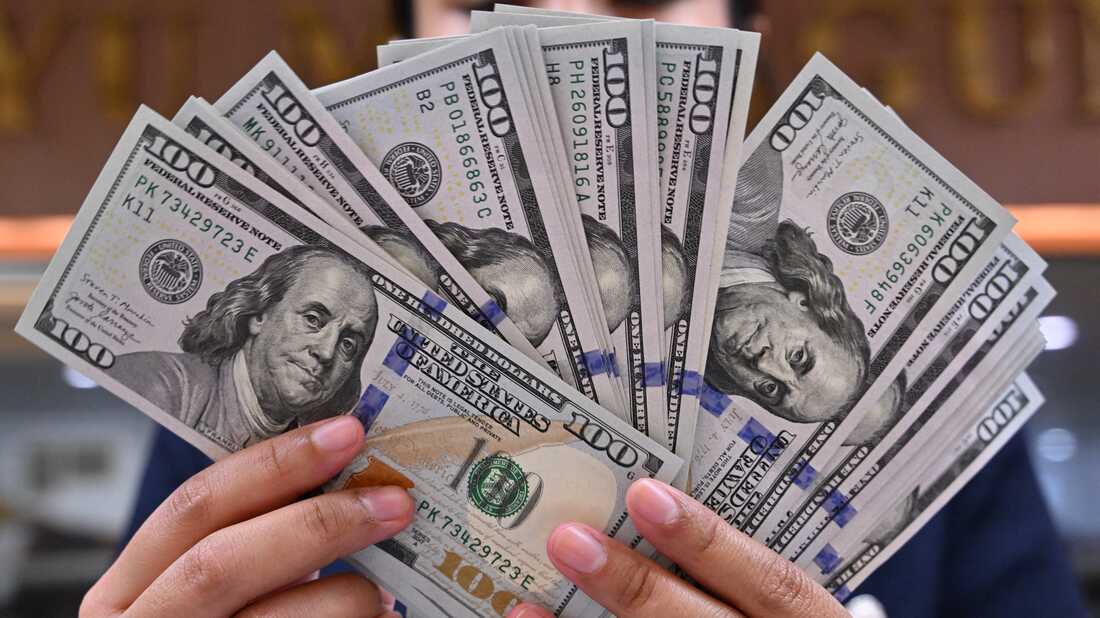
The U.S. dollar maintained its footing in volatile trading Monday as global markets grappled with escalating tensions in the Middle East while preparing for a critical week of central bank policy decisions that could reshape the currency landscape.
The greenback’s performance reflected the complex calculus facing investors as they weighed geopolitical risks against fundamental economic concerns. Trading at 144.29 against the Japanese yen after an early session gain of nearly 0.4%, the dollar demonstrated the cautious stance that has characterized recent market behavior.
Middle East Tensions Cast Long Shadow
The ongoing conflict between Israel and Iran has emerged as a primary concern for currency traders, particularly given the potential threat to global energy supplies. Market participants are closely monitoring whether Iran might move to disrupt traffic through the Strait of Hormuz, the critical waterway that handles approximately one-fifth of global oil shipments.
“The geopolitical premium is back in play,” said one senior currency strategist, noting how the conflict has injected fresh uncertainty into already fragile market conditions. The prospect of supply chain disruptions in the energy-rich region has traders on edge, despite oil prices showing muted movement Monday following Friday’s dramatic 7% surge to near six-month highs.
The dollar’s traditional role as the world’s premier safe-haven asset is being put to the test. Win Thin, global head of markets strategy at Brown Brothers Harriman, captured the market’s uncertainty: “The dollar’s role as a haven will surely be tested, and recent price action has been inconclusive.”
Federal Reserve Decision Looms Large
Wednesday’s Federal Reserve policy announcement represents the week’s marquee event, with markets widely expecting the central bank to hold interest rates steady. However, investors are hungry for insights into the Fed’s assessment of recent economic data showing signs of softening activity amid persistent inflation pressures.
The central bank faces a delicate balancing act as it navigates between supporting economic growth and maintaining price stability. Recent indicators have painted a mixed picture of the U.S. economy, with some sectors showing resilience while others display clear signs of deceleration.
“What you’re going to see from their growth forecasts is that the shift towards lower growth is very much upon us, and that will keep the statement fairly neutral,” explained Chris Weston, head of research at Pepperstone, highlighting the cautious tone expected from policymakers.
Broader Currency Movements Reflect Risk Appetite
The euro gained 0.25% to $1.1583, while the dollar held steady against the Swiss franc at 0.812. The dollar index, which measures the greenback against six major currencies, slipped 0.3% to 97.97, reflecting the mixed sentiment in currency markets.
Risk-sensitive currencies showed marginal gains, with the Australian and New Zealand dollars edging higher. Norway’s krone strengthened 0.3% to reach its highest level since early 2023, benefiting from the country’s status as a major oil exporter amid energy market tensions.
The Japanese yen faced particular scrutiny as analysts debated its safe-haven credentials in the current environment. ING FX strategist Francesco Pesole noted that “excessive rallies in oil prices may dent the attractiveness of the yen as a haven, but a hawkish repricing in Bank of Japan expectations should make up for it.”
Trump Factor Adds Complexity
The currency markets continue to grapple with uncertainty surrounding President Trump’s trade policies, which have reshaped global economic relationships since his inauguration. The dollar has declined more than 9% against a basket of major currencies this year, reflecting investor nervousness about ongoing trade negotiations.
With major trade deals still pending with the European Union and Japan and Trump’s trade deadline approaching in approximately three weeks, market participants are closely watching for any developments at the upcoming G7 leaders’ meeting in Canada.
Central Bank Marathon Ahead
Beyond the Federal Reserve, this week features a parade of central bank decisions that could significantly impact currency markets. The Bank of Japan concludes its two-day meeting Tuesday, with traders largely expecting no policy changes but watching for signals about potential tapering of government bond purchases.
Central banks in Britain, Switzerland, Sweden, and Norway are also scheduled to announce policy decisions, creating a week-long focus on monetary policy that could reshape currency relationships.
The convergence of geopolitical tensions and monetary policy decisions represents a critical juncture for global markets. As investors navigate between safe-haven demand driven by Middle East conflicts and fundamental economic concerns highlighted by central bank communications, currency markets are likely to remain volatile.
The week ahead will test both the dollar’s resilience as a safe-haven asset and central banks’ ability to provide clarity in an increasingly uncertain global environment. With oil prices, geopolitical tensions, and monetary policy all in flux, currency traders face a complex landscape that demands careful navigation of multiple competing forces.
As markets brace for what could be a defining week, the dollar’s performance will serve as a barometer not just for U.S. economic prospects but for global financial stability in an era of heightened geopolitical and economic uncertainty.
WHAT YOU SHOULD KNOW
The U.S. dollar is caught between two major forces this week that could dramatically impact global markets. First, escalating Iran-Israel tensions threaten to disrupt oil supplies through the critical Strait of Hormuz, testing the dollar’s traditional safe-haven status.
Second, the Federal Reserve’s Wednesday policy decision comes amid mixed economic signals and ongoing uncertainty over Trump’s trade policies, which have already weakened the dollar by 9% this year.
Currency markets are bracing for significant volatility as geopolitical risks collide with monetary policy decisions from major central banks worldwide. The outcome will determine whether the dollar can reclaim its safe-haven role or continue its decline amid global economic uncertainty.