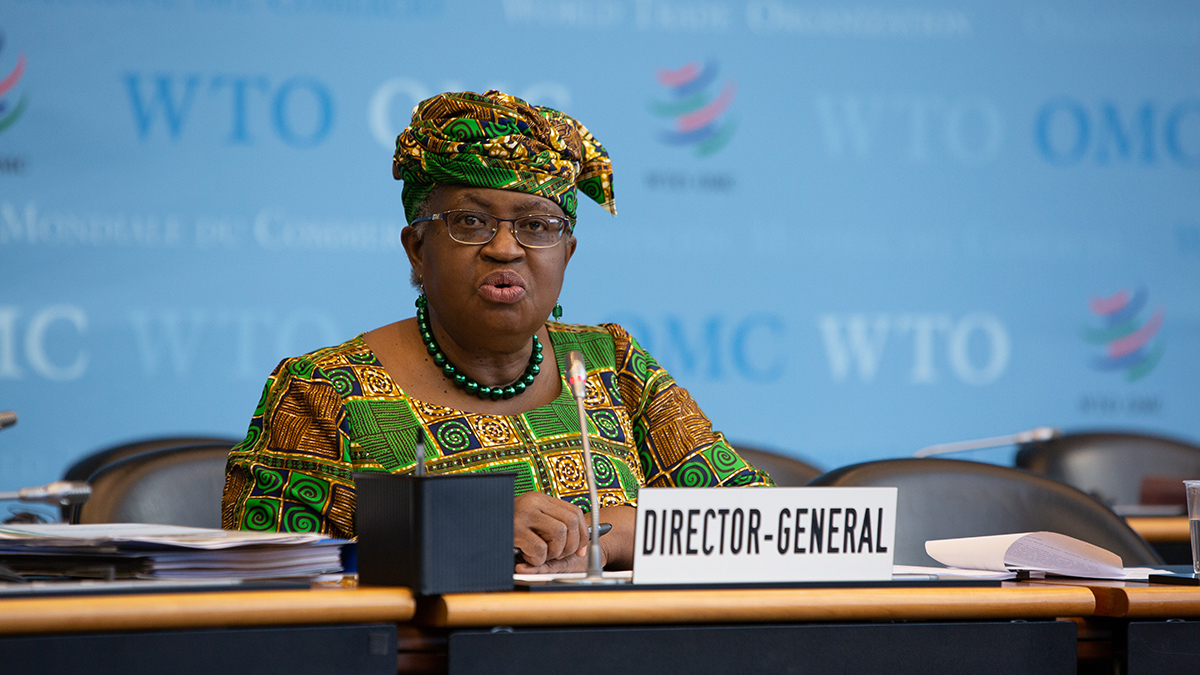
World Trade Organization (WTO) Director-General Ngozi Okonjo-Iweala has issued a stark call to action for African countries, particularly Nigeria, emphasizing that the continent must move beyond exporting raw materials and begin adding value to products if it hopes to capture a greater share of both regional and global markets.
Speaking on the sidelines of the World Economic Forum in Davos, the Nigerian-born trade chief painted a sobering picture of Africa’s current trade landscape while simultaneously pointing to untapped opportunities that could transform the continent’s economic trajectory.
According to Okonjo-Iweala, Africa remains locked in a pattern that has hindered its economic development for decades: the export of unprocessed commodities. A striking 60 percent of the continent’s exports to other regions consist of raw materials that undergo no value addition before leaving African shores.
Perhaps more concerning is that this pattern persists even within Africa itself. Intra-African trade—commerce between African nations—accounts for a mere 15 to 20 percent of the continent’s total trade volume, and much of that consists of the same unprocessed commodities.
“We need to add value to our products, even for the intra-Africa market, because we are trading with each other. We have mostly commodities and raw materials that we’re trading,” Okonjo-Iweala explained. “And I know it’s changing, and African leaders are recognizing now that they have to change. So they’re making moves. But we need to accelerate that and add value. That way, we can trade different products with each other.”
The WTO chief expressed particular enthusiasm about Nigeria’s potential to dominate specific sectors within the African market, singling out textiles and apparel as a prime opportunity. She pointed to Nigeria’s vibrant fashion industry as evidence that the country possesses both the creative talent and market understanding necessary to succeed.
“I’m very excited that Nigeria might be able to take over the African market in textiles and apparel, because we have powerful people in fashion,” she said, noting that the Minister of Industry, Trade, and Investment is already working to scale up production in this sector.
Beyond textiles, Okonjo-Iweala highlighted digital pharmaceuticals and digitally delivered services as emerging sectors where African entrepreneurs, particularly women and youth, are already making significant strides. “Our women and our young people are doing amazing things. Honestly, I have to admire them,” she said. “If we can capitalize on that, we can capture a big slice of the African market.”
While acknowledging that the global trading system faces its most severe disruption in 80 years, Okonjo-Iweala pushed back against what she characterized as overly pessimistic narratives suggesting that multilateralism has collapsed entirely.
“Almost three-quarters of world trade is still going on on WTO terms,” she noted. “There’s disruption, but the system is resilient, and I think we can build into that resilience.”
The director-general argued that current global trade tensions and what she termed the “weaponization of trade” have created an unexpected opportunity for African nations. As businesses and governments worldwide seek to diversify their supply chains to reduce over-dependence on single markets or suppliers, Africa could position itself as an alternative destination.
“I think many businesses and many suppliers are finding that maybe they are too dependent on certain countries for markets and too dependent on others for supplies,” she explained. “In that context, Nigeria, with a large market of 220 million… with a sizable middle class, has a chance to attract some of these supply chains that are trying to diversify.”
However, Okonjo-Iweala was careful to temper optimism with realism. The opportunities presented by global supply chain diversification and growing African consumer markets will not materialize automatically.
“This is our time, but it will not fall on our laps. We have to work for it,” she cautioned, identifying pharmaceuticals, textiles, and agro-processing as sectors where Africa could develop genuine comparative advantages.
Her comments come at a critical juncture for African economies, many of which are grappling with debt burdens, infrastructure deficits, and the need to create employment for rapidly growing youth populations. The path she outlined—moving up the value chain while capturing a larger share of intra-African trade—has long been discussed as essential to the continent’s development, but implementation has consistently lagged behind rhetoric.
Whether African leaders will heed her call and accelerate the transformation from commodity exporters to value-added producers may well determine the continent’s economic fate in the decades to come.
WHAT YOU SHOULD KNOW
Africa must stop exporting raw materials and start adding value to its products—now. WTO chief Ngozi Okonjo-Iweala’s message is clear: with 60% of Africa’s exports still unprocessed commodities and intra-African trade at just 15-20%, the continent is leaving massive economic opportunities on the table.
But global supply chain disruptions have opened a rare window for countries like Nigeria to attract investment in sectors like textiles, pharmaceuticals, and digital services.