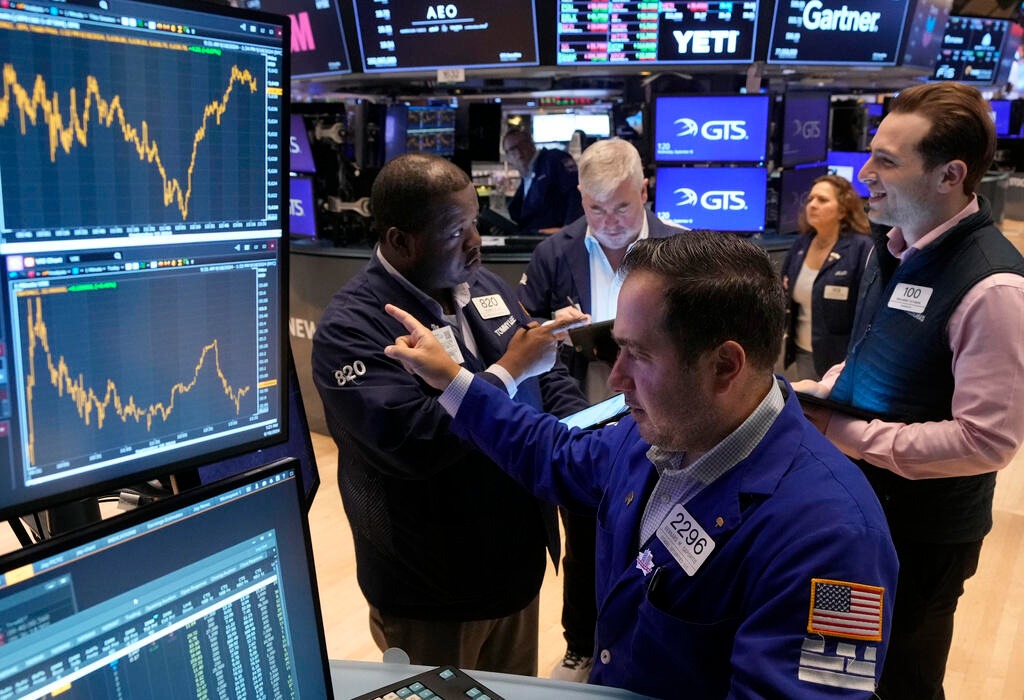
Wall Street’s major markets saw modest gains on Wednesday, while oil prices retreated from recent highs as investors grappled with a volatile mix of geopolitical risks, U.S. economic policy uncertainty, and anticipation surrounding the Federal Reserve’s latest interest rate projections.
The interplay of these factors has kept markets on edge, with analysts warning of persistent uncertainty clouding the global economic outlook.
Oil Prices Swing Amid Middle East Tensions
Brent crude oil prices, which had been climbing as the Israel-Iran air conflict entered its sixth day, fell 1.52% to settle at $75.31 per barrel. The drop followed comments from U.S. President Donald Trump suggesting that Iran was open to negotiations, easing fears of an immediate escalation that could disrupt global oil supplies.
The conflict has stoked concerns about potential supply chain disruptions in the Middle East, a region critical to global energy markets. “Geopolitical risks in the Middle East remain a wildcard,” said Sarah Collins, senior energy analyst at Global Markets Insights. “While Trump’s remarks have tempered some fears, the situation is far from resolved, and any misstep could send oil prices soaring again.”
Wall Street’s Cautious Optimism
On Wall Street, investors adopted a cautious approach but managed to push major indexes higher in early trading. The Dow Jones Industrial Average and the S&P 500 each rose 0.50%, while the Nasdaq Composite gained 0.56%.
The modest uptick reflected a tentative return of risk appetite, though analysts noted that sentiment remained fragile. “Markets are trying to find their footing amid a barrage of uncertainties,” said Chris Maxey, Managing Director and Chief Market Strategist at Wealthspire in New York. “It started with questions about U.S. economic policy at the beginning of the year, and now we’re layering on Middle East tensions and debates over Trump’s tax bill. Investors are struggling to digest it all without much clarity.”
President Trump’s proposed tax package has been a particular point of contention, with ongoing debates in Congress creating uncertainty about its scope and timing. Maxey added, “The tax package could be a game-changer for markets, but until we see concrete details, it’s just another question mark.”
Federal Reserve in Focus
The Federal Reserve’s upcoming interest rate decision and its quarterly “dot plot” projections were also top of mind for investors. The Fed is widely expected to maintain its key funds rate in the 4.25%-4.50% range, unchanged since December 2024. However, markets are keenly awaiting the dot plot for signals on the timing and pace of future rate cuts.
Harvey Bradley, co-head of global rates at Insight Investment, noted that the Fed’s projections could reflect a more cautious stance given recent economic data. “Markets are hanging on the dot plot for clues about when the Fed might resume its cutting cycle,” Bradley said. “With Middle East tensions threatening to push inflation higher, we could see projections signaling just one rate cut this year.”
Recent economic indicators have added to the uncertainty. U.S. retail sales dropped 0.9% in May, the steepest decline in millions of people around the world, significantly impacting economic growth and consumer spending. Meanwhile, labor market indicators are showing signs of softening, further complicating the economic outlook.
Treasury Yields Reflect Shifting Risks
U.S. Treasury yields continued their decline on Wednesday, with the benchmark 10-year note falling to 4.365% from 4.391% the previous day. The two-year yield, more sensitive to expectations for Fed rate changes, dipped to 3.939% from 3.95%. Analysts attributed the slide to investors prioritizing geopolitical risks over concerns about the sustainability of U.S. debt levels.
“The drop in yields suggests markets are more worried about global instability than the U.S. fiscal picture right now,” said Emily Tran, fixed-income strategist at Horizon Capital. “But if Middle East tensions ease, attention could quickly shift back to domestic concerns like the debt ceiling and deficit spending.”
Trump’s Ambiguity Adds to Uncertainty
President Trump’s refusal to clarify U.S. intentions regarding potential military action against Iran or its nuclear facilities further clouded the outlook. When pressed by reporters, Trump responded, “Nobody knows what I am going to do,” leaving markets to speculate about the potential for escalation.
“Trump’s unpredictability is a factor markets have had to contend with for years,” said Maxey. “His comments on Iran may have calmed oil markets for now, but the lack of clear policy direction continues to weigh on investor confidence.”
Outlook: A Delicate Balance
As investors navigate this complex landscape, the interplay of geopolitical risks, U.S. economic policy, and Federal Reserve signals will likely keep markets volatile. With inflation pressures looming and economic data signaling fragility, analysts expect cautious trading to persist.
“The global economy is at a crossroads,” said Collins. “Investors are trying to balance immediate risks in the Middle East with longer-term questions about U.S. monetary and fiscal policy. It’s a lot to process, and clarity is in short supply.”
WHAT YOU SHOULD KNOW
Wall Street indexes posted modest gains, with the Dow and S&P 500 up 0.50% and Nasdaq up 0.56%, while Brent crude oil prices fell 1.52% to $75.31 per barrel as Middle East tensions eased slightly after President Trump suggested Iran was open to talks.