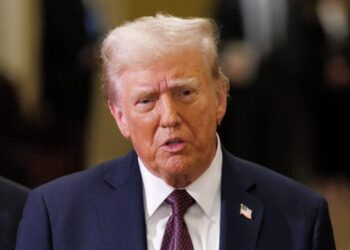
The ongoing US government shutdown reached a historic milestone on Wednesday, surpassing the 35-day record set during Donald Trump’s first term.
The impasse, which began when Congress failed to approve funding beyond September 30, has brought large parts of the federal government to a standstill, leaving millions of Americans facing mounting hardship as essential welfare programs hang in uncertainty.
While there have been faint signs of movement in Congress toward a potential resolution, approximately 1.4 million federal employees — including air traffic controllers and national park wardens — remain either furloughed or working without pay. The situation continues to worsen, with growing concern that prolonged disruption could severely impact holiday travel and access to basic assistance programs.

Just hours before the shutdown entered record-breaking territory, the Trump administration issued a stark warning that nationwide air travel could descend into turmoil if the crisis continues beyond a sixth week. Transportation Secretary Sean Duffy, speaking at a news conference in Philadelphia, cautioned that the aviation system was nearing its breaking point.
“So if you bring us to a week from today, Democrats, you will see mass chaos… you will see mass flight delays,” Duffy said. “You’ll see mass cancellations, and you may see us close certain parts of the airspace, because we just cannot manage it because we don’t have the air traffic controllers.”
According to the American Automobile Association (AAA), Thanksgiving air travel is projected to reach record levels this year, with an estimated 5.8 million Americans expected to fly domestically over the November 27 holiday. Yet more than 60,000 air traffic controllers and Transportation Security Administration (TSA) officers are currently working without pay, raising fears of widespread absenteeism that could cripple airports.
The White House has acknowledged that increased “sick-outs” among unpaid airport workers could lead to massive delays, echoing one of the factors that forced Trump to end the 2019 shutdown. Despite these warnings, both Democrats and Republicans remain firmly entrenched in their positions, with health care funding emerging as the core issue of contention.
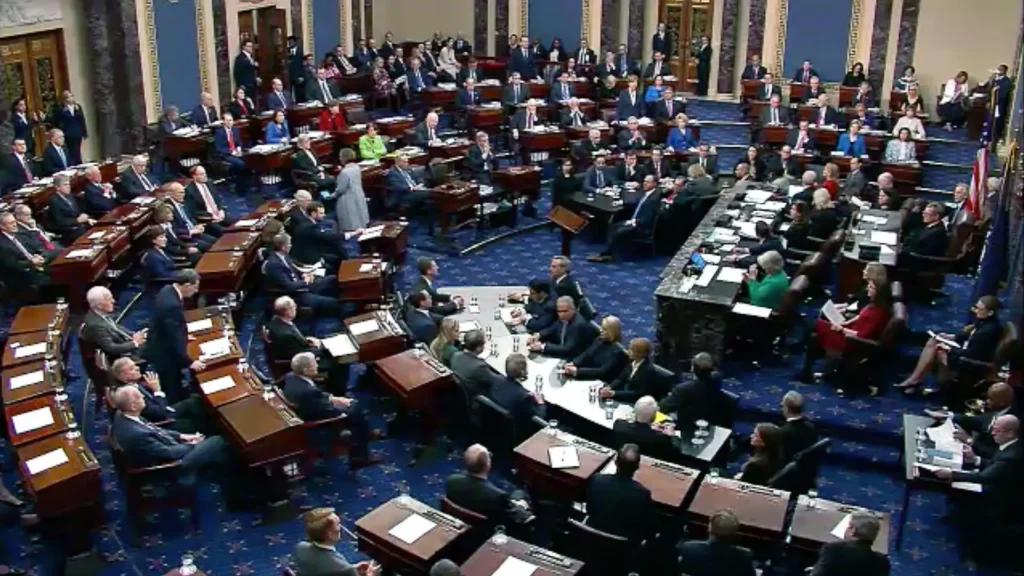
Democrats insist they will only vote to end the funding lapse once a deal is reached to renew key insurance subsidies that help millions of Americans afford health care. Republicans, however, argue that such negotiations should occur only after Democrats agree to reopen the government.
Though top party leaders on both sides have shown little inclination to compromise, some moderate lawmakers are exploring ways to break the deadlock. Earlier this week, a bipartisan group of four centrist House members introduced a framework aimed at reducing health insurance costs — a proposal seen as a potential step toward ending the stalemate.
Democrats believe public frustration will eventually pressure Republicans into concessions, particularly as Americans face rising premiums while enrolling in new health plans. Trump, however, has remained steadfast, declaring in a CBS interview that he would “not be extorted” into an agreement.
In an attempt to force Democrats’ hand, the president has threatened to cut off federal benefits and lay off workers if funding is not approved. On Tuesday, he renewed his administration’s warning to suspend the Supplemental Nutrition Assistance Program (SNAP), which provides food aid to 42 million Americans, marking the first such threat in the program’s 60-year history.
Although two courts have already blocked the move, the White House later stated that it was “fully complying” with its legal obligations and working to distribute partial SNAP payments “as much as we can and as quickly as we can.”
As the shutdown drags on with no resolution in sight, its impact continues to ripple across the nation — from grounded flights to delayed benefits — while political leaders remain locked in a standoff that shows no sign of breaking.
What You Should Know
The current US government shutdown, now the longest in history, began after Congress failed to pass a new funding bill due to deep divisions over health care subsidies.
President Donald Trump has refused to negotiate under pressure, while Democrats insist on protecting insurance programs for millions of Americans. The crisis has left over a million federal workers unpaid and threatens to disrupt holiday air travel and food aid for millions.
Transportation officials have warned of “mass chaos” at airports, while bipartisan efforts to find a compromise continue to stall amid growing public frustration and economic uncertainty.