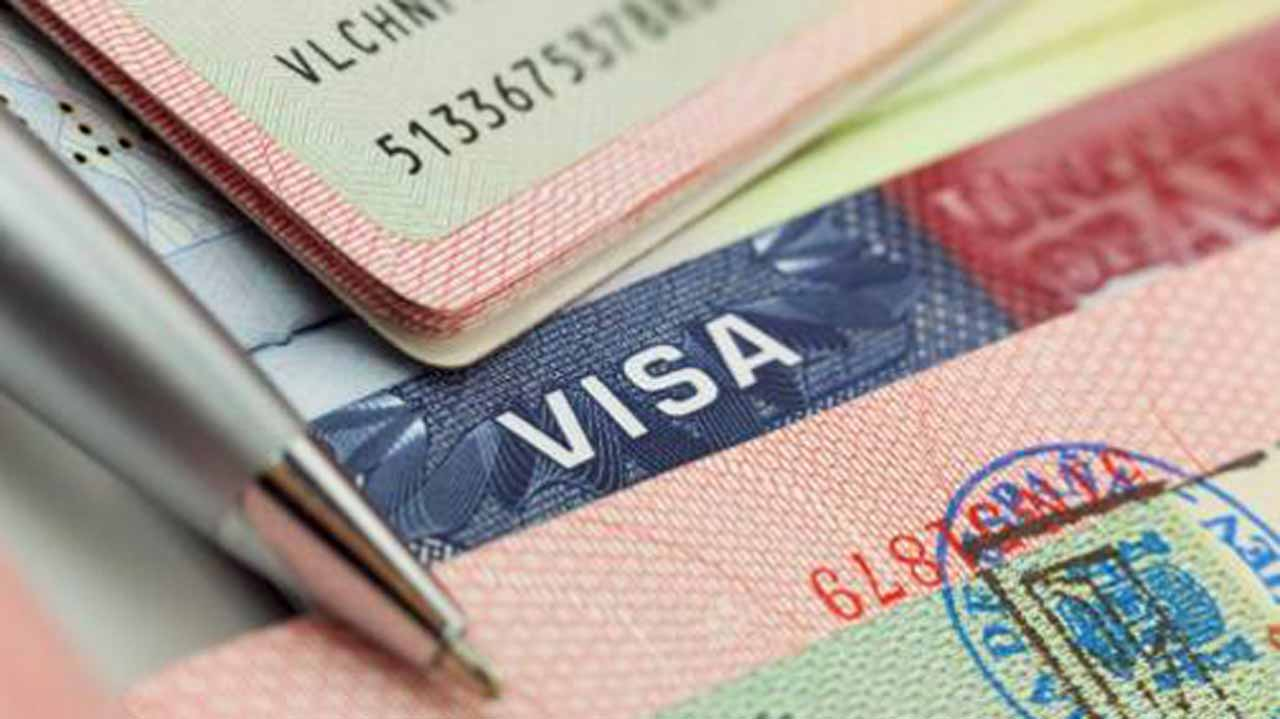
The United States government has introduced a new visa policy requiring Nigerians seeking entry into the country to provide detailed information about their social media use over the past five years.
Officials have warned that any applicant who withholds such information risks immediate visa denial and possible future ineligibility to enter the US.
The US Mission in Nigeria made the announcement on its official X handle, stressing that compliance is mandatory. This latest move expands on a previous rule that targeted international student visa applicants, who were required to share their social media handles and remove privacy restrictions to allow U.S. authorities access during background checks.
According to US officials, the regulation is part of broader security measures introduced under President Donald Trump’s administration. The stated aim is to strengthen national security by tightening immigration controls.
What the new policy demands
Applicants are now obliged to declare all usernames, handles, email addresses, and phone numbers associated with their online presence within the last five years. This includes accounts created across different platforms, or multiple accounts under a single platform. These details must be accurately recorded in the DS-160 visa application form.
The Mission clarified that by submitting the application, applicants confirm the authenticity of all provided details. Any omission, whether deliberate or accidental, could result in refusal of the visa and a ban on future eligibility. Officials described the requirement as an essential step to verify online interactions, collaboration platforms, and personal identifiers connected to applicants.
USCIS tightens naturalisation checks
Alongside the new visa policy, the US Citizenship and Immigration Services (USCIS) has rolled out tougher guidelines for individuals seeking American citizenship. A new “Good Moral Character” requirement goes beyond traditional criminal record checks. Immigration officers will now evaluate applicants’ day-to-day lifestyle, societal engagement, and adherence to US norms.
The policy directs officials to assess criteria such as volunteering, community participation, steady employment, pursuit of education, and prompt tax compliance. The updated rules reflect an effort to conduct what the agency described as a “holistic review” of citizenship applications.
Visa revocations under Rubio
In a related development, the US State Department confirmed that it has revoked 6,000 student visas since Marco Rubio assumed the position of Secretary of State seven months ago. Rubio, a staunch ally of Trump’s conservative base, has leaned on a rarely used law to rescind visas for individuals deemed contrary to US foreign policy interests.
The majority of the revocations, according to officials, were linked to offenses such as assault, burglary, driving under the influence, and alleged support for terrorism. While the State Department did not specify nationalities, Rubio has been vocal about his intent to scrutinize Chinese students more aggressively.
Rubio has also targeted activist students, particularly those critical of US support for Israel. He has accused pro-Palestinian protesters of anti-Semitism, though those accusations have been strongly denied. Two recent cases—Mahmoud Khalil, a Palestinian activist, and Rumeysa Ozturk, a Turkish student—highlighted legal pushback against the administration’s measures, as both individuals were freed by US judges.
Rubio has defended his approach, insisting that the US government has the authority to revoke visas without judicial oversight and reiterating that foreign nationals are not protected under America’s constitutional right to free speech.
Nigeria to reciprocate
Reacting swiftly to Washington’s directive, Nigeria’s Ministry of Foreign Affairs stated that it is preparing reciprocal measures. Ministry spokesman Kimiebi Ebienfa explained that US citizens seeking Nigerian visas would soon be asked to provide similar details about their social media presence.
He noted that visa policy is typically reciprocal in nature and that Nigeria cannot ignore the precedent set by Washington. “What you are mandating our nationals to do, we will also mandate your citizens applying for our visa to do,” he emphasized.
Ebienfa revealed that the Nigerian government will hold an inter-agency meeting involving the Ministry of Foreign Affairs, Ministry of Interior, and the National Intelligence Agency (NIA) to finalize the country’s response.
This development adds to a growing list of US visa restrictions affecting Nigerians. Recently, the US limited most non-diplomatic visas for Nigerian citizens to single-entry permits with a validity of three months. The State Department justified the move on the grounds of visa overstays and reciprocity principles.
Officials underscored that the US government’s immigration policies are constantly under review and are designed to maintain the integrity of the American immigration system.
What you should know
The new US visa rule extends beyond traditional background checks by requiring Nigerians to disclose extensive details about their social media use over the last five years.
This move is part of a broader tightening of immigration under President Trump, which also includes stricter citizenship evaluations and mass revocation of student visas.
Nigeria, in turn, has vowed to impose identical requirements on US citizens applying for Nigerian visas, signaling rising diplomatic tensions over immigration policies.