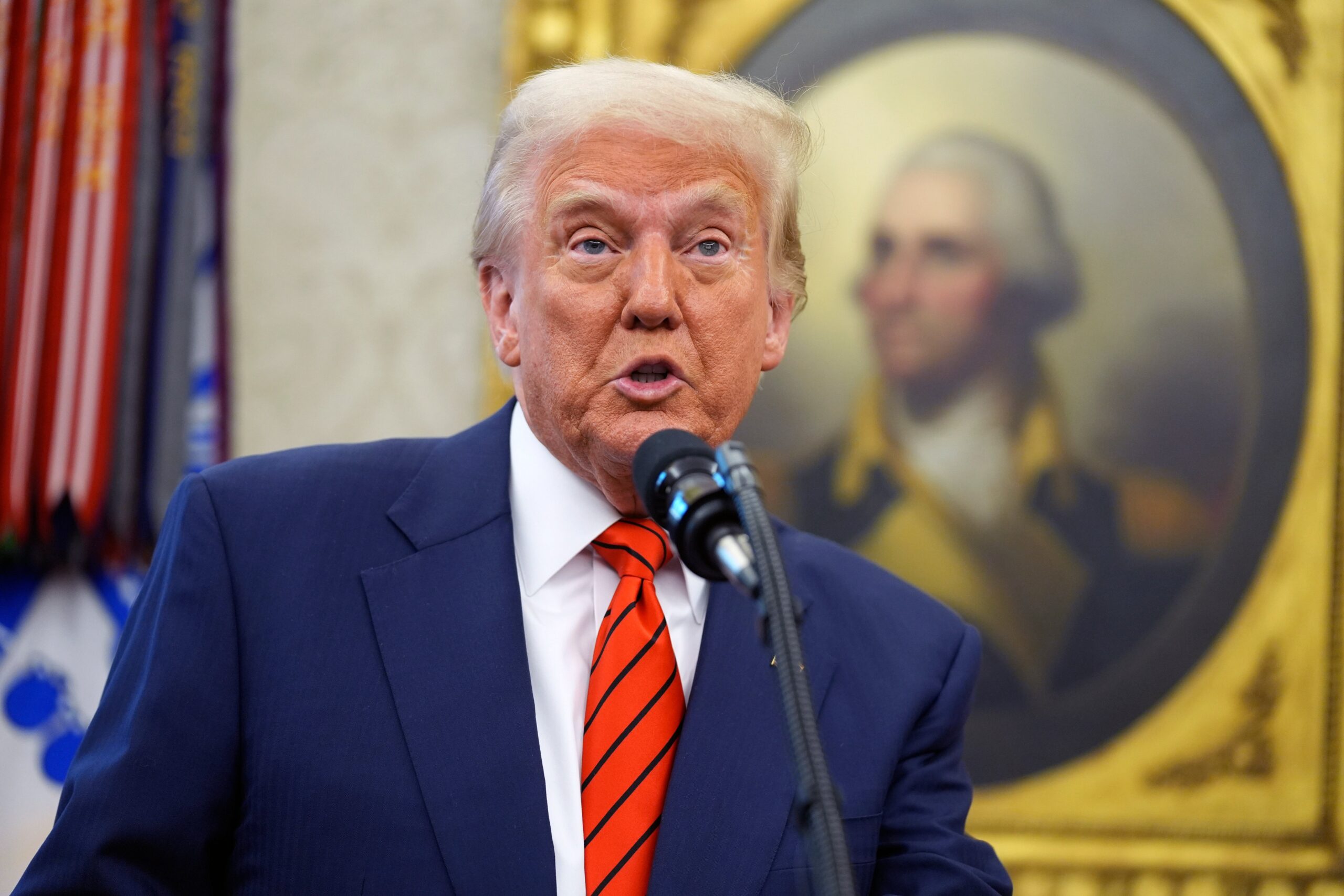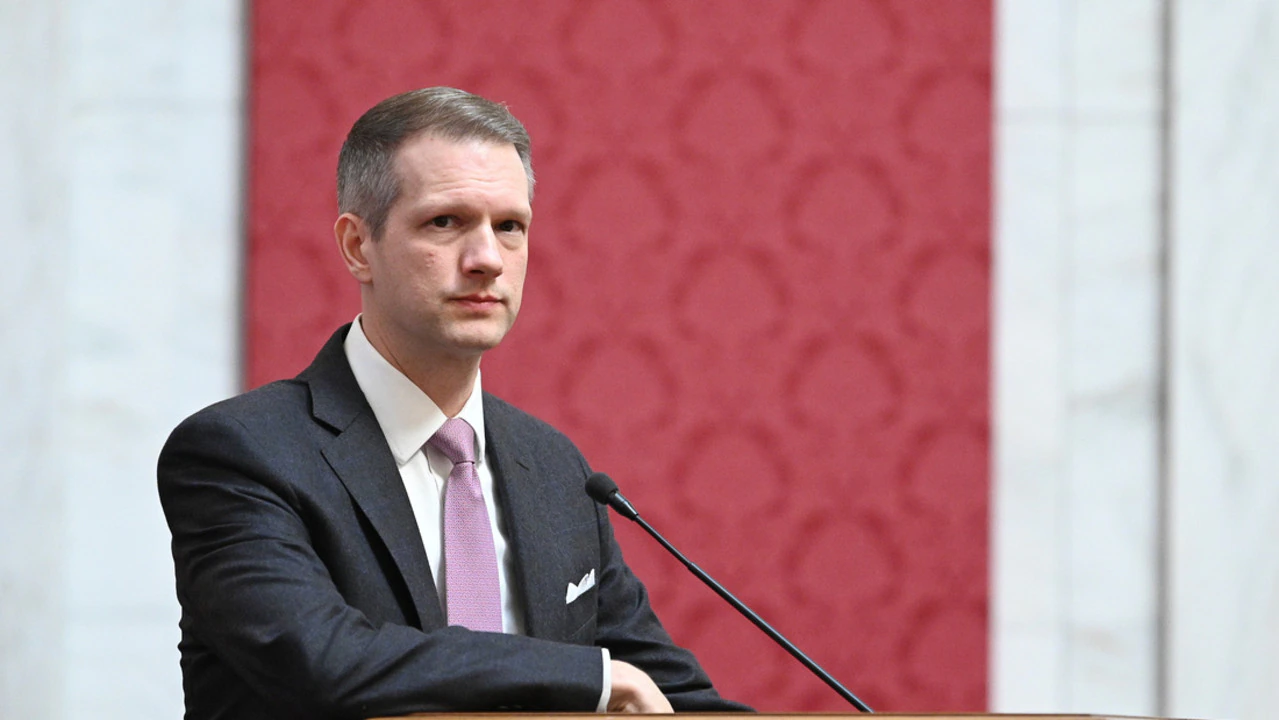
US Congressman Riley M. Moore delivered a stark, harrowing account of the violence driving hundreds of thousands of Christians from their homes in Nigeria, following a recent visit to internally displaced persons (IDP) camps in Benue State.
In a powerful statement issued via social media, the Congressman recounted the “harrowing stories” of survivors, painting a picture of systematic brutality that he asserts is perpetrated by “genocidal Fulani.”
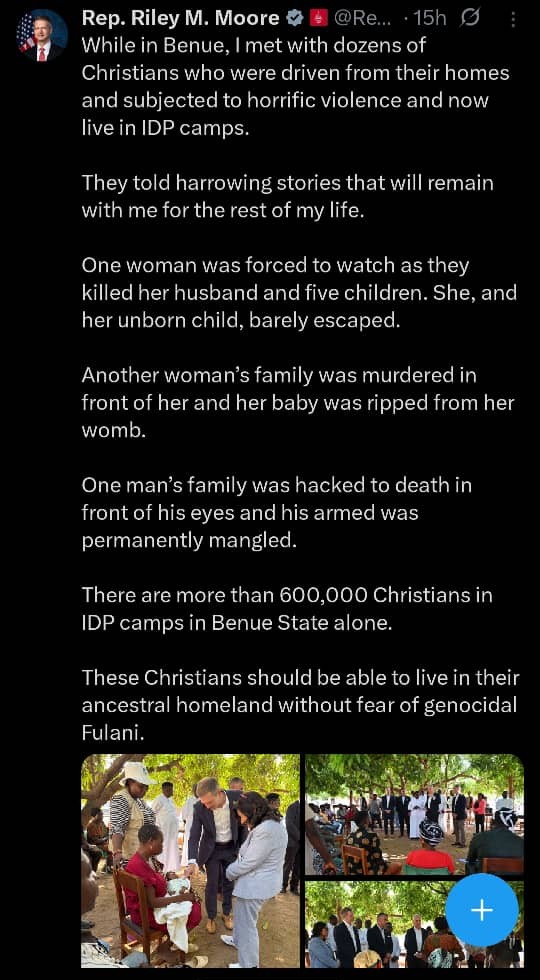
The Congressman’s tweet immediately amplified calls for greater international attention to the long-running crisis in Nigeria’s Middle Belt region.
Eyewitness Accounts of Atrocity
The Congressman’s post focused on several deeply disturbing personal testimonies from those now living in the IDP camps:
- A Mother’s Loss: One woman, he reported, was “forced to watch as they killed her husband and five children,” barely escaping with her own life and that of her unborn child.
- Maternal Desecration: Another survivor shared a horrific account of her family being murdered in front of her, followed by the assailants “ripp[ing] her baby from her womb.”
- A Man’s Mutilation: A man recounted the brutal hacking death of his family before his eyes, a massacre that left his own arm “permanently mangled.”
Moore stated that these stories “will remain with me for the rest of my life,” underscoring the severity of the trauma inflicted on the displaced population.
Crisis of Displacement
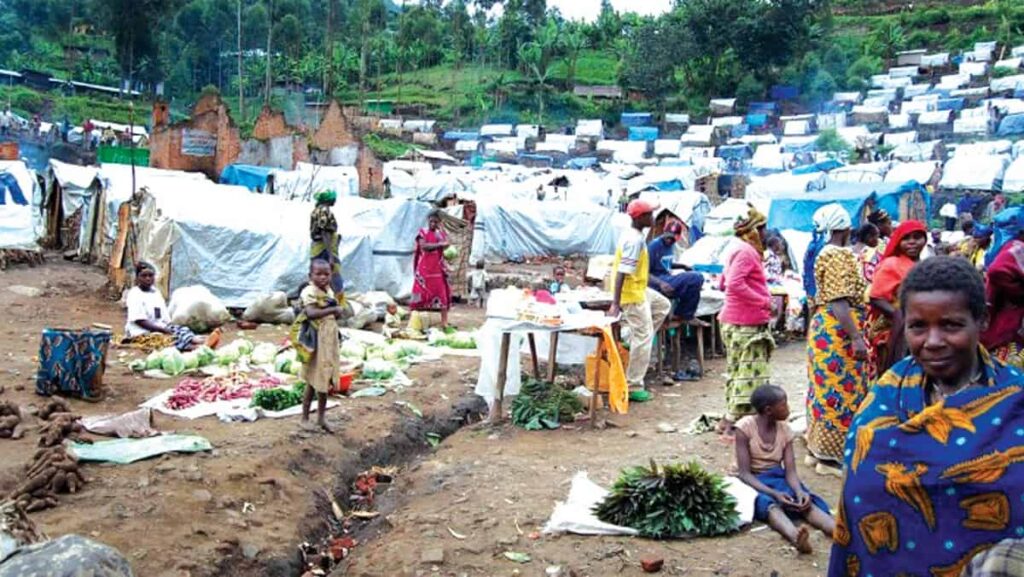
The Congressman highlighted the sheer scale of the humanitarian disaster, asserting that “more than 600,000 Christians” are currently living in IDP camps across Benue State alone.
He concluded with an unequivocal demand for action, stating, “These Christians should be able to live in their ancestral homeland without fear of genocidal Fulani.”
Congressman Moore has been a vocal advocate for international intervention regarding the persecution of Christians in Nigeria, leading efforts in the US Congress to urge the designation of Nigeria as a “Country of Particular Concern.” His visit comes as Nigeria continues to experience a complex conflict between farming communities, primarily Christian, and armed groups, which the Congressman has consistently framed as a targeted, genocidal campaign against Christians.
Would you like to know more about the humanitarian situation in Benue State or the US government’s stance on religious freedom in Nigeria?
What you should know
The situation in Benue State reflects a broader crisis in Nigeria’s Middle Belt, where recurring violence has uprooted entire communities and overwhelmed humanitarian structures.
Congressman Moore’s comments highlight the growing international concern regarding attacks that have left thousands dead and many more displaced. His stance also aligns with advocacy groups urging stronger global action to address religiously framed violence.
As Nigeria contends with complex clashes involving land, identity, and security, the testimonies shared by displaced residents continue to draw attention to the human cost of the prolonged conflict.