In a significant move to address the rising number of illegal Channel crossings, the governments of the United Kingdom and France have announced a new initiative that will see some migrants who arrive in Britain via small boats sent back to France.
The agreement was unveiled on Thursday as French President Emmanuel Macron wrapped up a three-day state visit to the UK.
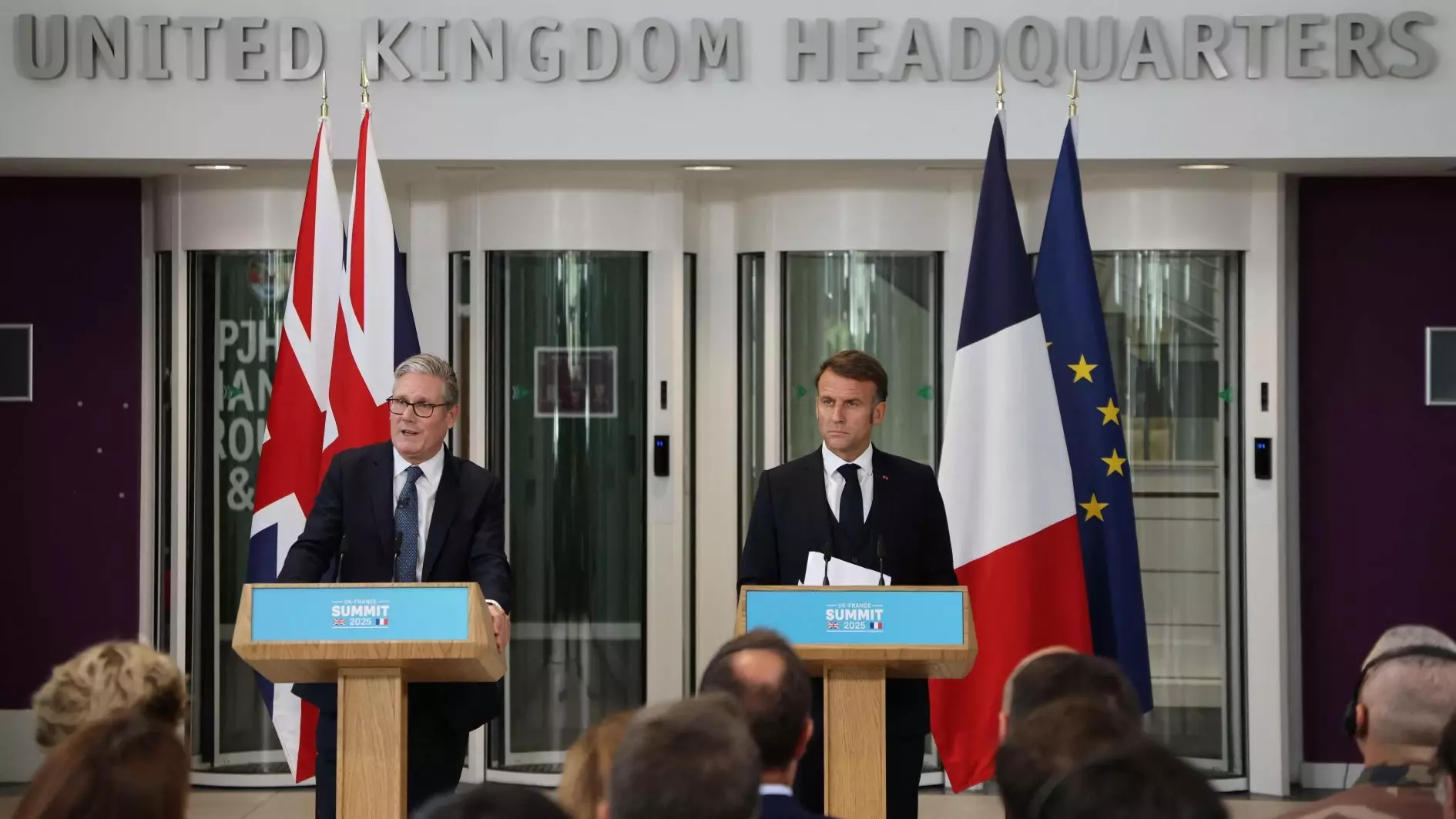
Speaking at a joint press briefing, British Prime Minister Keir Starmer described the agreement as a landmark step forward in efforts to curtail the surge in unauthorized crossings.
Starmer emphasized that the pilot project would act as a deterrent, making it clear to those considering the dangerous journey across the Channel that such efforts would not succeed in gaining entry to Britain.
“This is groundbreaking, because this is a scheme intended to break the model, and to make it clear that if you cross in a small boat, then you’ll end up where you started,” Starmer said. He noted that for every individual returned to France, another person would be allowed to travel to the UK through safe and lawful routes. The arrangement is set to commence within the next few weeks.
Although Starmer did not offer specific figures during his announcement, reports indicate that the number of migrants initially returned under the pilot could be around 50 per week.
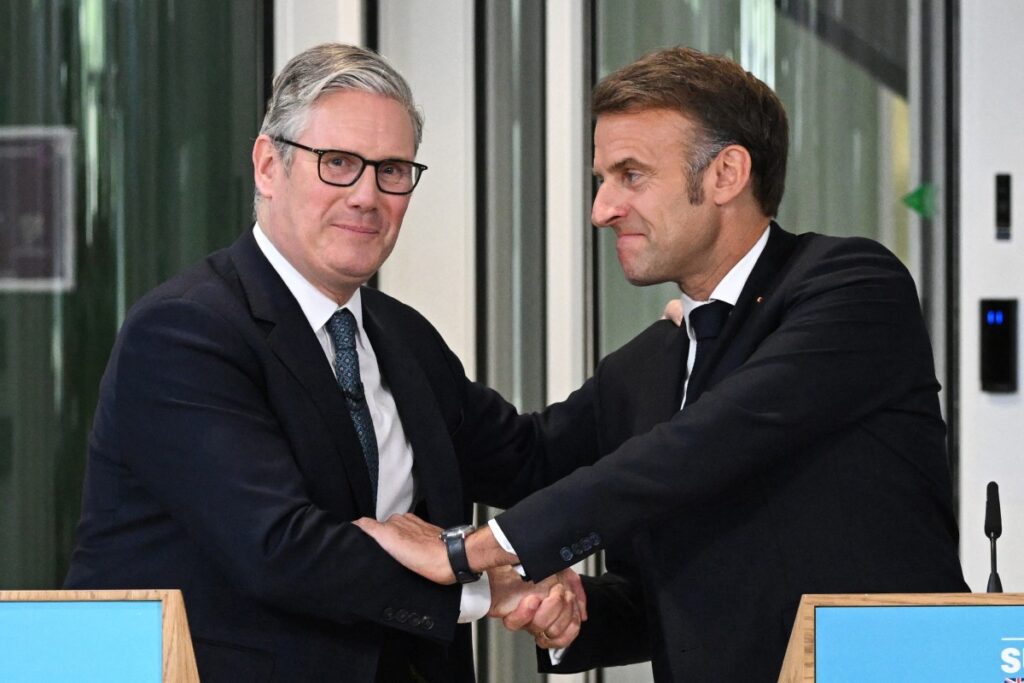
President Macron, addressing the press alongside Starmer, linked the worsening situation in the Channel to the United Kingdom’s departure from the European Union. He pointed out that Brexit had severed legal migration pathways and cut off Britain’s access to EU return agreements, creating a vacuum that has fueled risky Channel crossings.
“So for people wanting to cross, there is no legal way, nor a way of sending people back after a crossing,” Macron said. “This is a pull factor to attempt the crossing — exactly the inverse effect of what Brexit promised.”
Beyond the migration issue, the state visit served as a platform for the UK and France to deepen cooperation in other areas of mutual interest. The two leaders discussed a range of pressing global and regional matters, including the ongoing war in Ukraine, the volatile situation in the Middle East, defence cooperation, and trade partnerships.
They agreed to strengthen the existing Combined Joint Expeditionary Force, expanding its capacity from 10,000 to 50,000 troops. They also pledged to continue supplying Ukraine with Storm Shadow missiles—sophisticated long-range air-launched weapons developed jointly by the UK and France—and to accelerate work on a successor system.
Another key outcome of the visit was the confirmation that the headquarters for the European-led coalition supporting Ukraine, a group of 30 nations informally dubbed the “coalition of the willing,” has been established in Paris. Both Macron and Starmer participated in a virtual meeting of the coalition during the visit and reaffirmed their shared commitment to bolstering Kyiv’s defences.
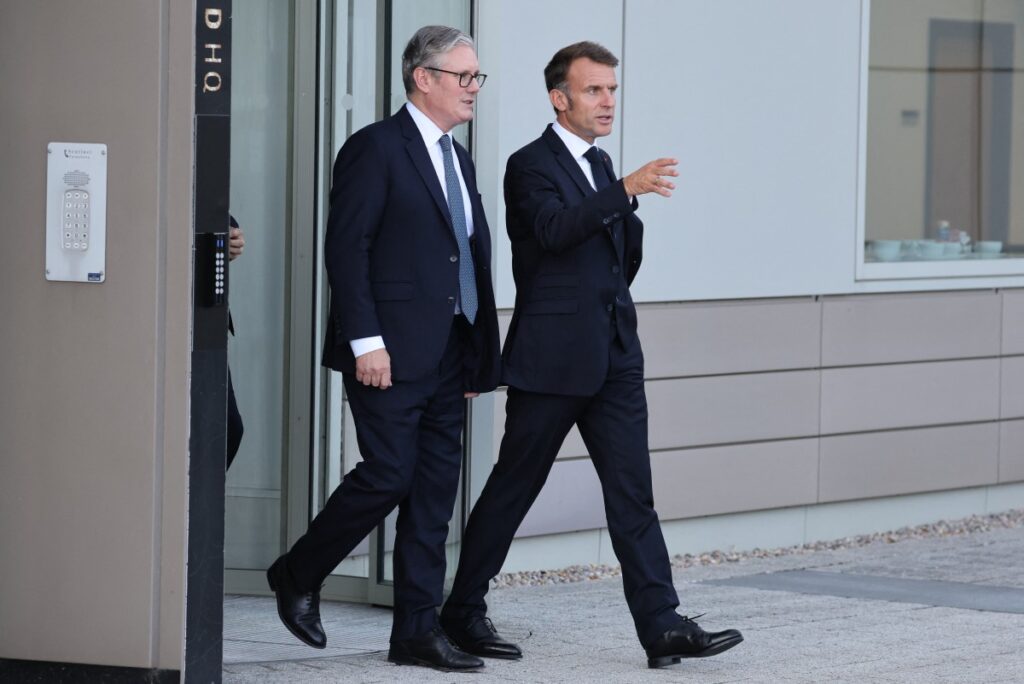
Macron also made an impassioned appeal for the UK and France to jointly recognize a Palestinian state, arguing that such recognition offers “the only hope for peace” in the region.
In addition to the policy-focused agenda, the visit featured all the ceremonial flair typical of a full state visit. President Macron and First Lady Brigitte Macron were formally received by King Charles III and Queen Camilla at Windsor Castle on Tuesday. The royal welcome included a carriage procession, a traditional 41-gun salute, and a lavish state banquet during which the French president and the monarch exchanged tributes to the historic friendship between their countries.
However, the fanfare did little to shift public attention away from the contentious migration issue, which has become one of the most politically sensitive topics in the UK.
The Labour government, led by Prime Minister Starmer, is grappling with mounting pressure from both the right and left on how to handle the influx of migrants using small boats to reach British shores. More than 21,000 people have made the dangerous crossing in makeshift vessels so far this year.
Reacting to the newly announced return arrangement, Reform UK leader Nigel Farage lashed out at the deal, calling it “a humiliation for Brexit Britain.” Farage accused Starmer of surrendering the nation’s sovereignty to “an arrogant French President,” claiming the plan undermines the promises made during the Brexit campaign.
The main opposition Conservative Party was equally critical, describing the agreement as ineffective and dismissing it as a superficial response to a complex problem. Party officials accused the Labour government of relying on “gimmicks” instead of implementing meaningful solutions.
Elsewhere in Europe, the proposal has reportedly sparked concerns among some nations, who worry that such bilateral return arrangements could undermine collective migration policies or place undue pressure on individual countries.
Despite the controversy, Starmer insisted that the agreement with France marks a bold step forward and could offer a workable model for addressing illegal migration if it proves successful.
What you should know
The UK and France have agreed to a new pilot programme that will allow Britain to return small boat migrants to France, while accepting others through legal migration routes.
Announced during President Emmanuel Macron’s state visit to the UK, the deal aims to disrupt illegal migration networks and strengthen cross-border cooperation.
Prime Minister Keir Starmer hailed it as a decisive measure, though critics like Nigel Farage and the Conservative Party claim it undermines Brexit and lacks real substance.