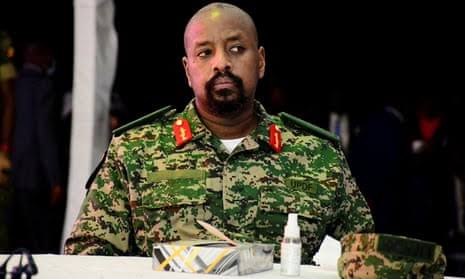
Uganda’s army chief and son of newly re-elected President Yoweri Museveni has issued threats to hunt down and kill opposition figure Bobi Wine, who has gone into hiding following last week’s disputed election.
General Muhoozi Kainerugaba, 51, made the remarks days after his father was declared winner of a seventh presidential term at the age of 81, in a vote the opposition dismissed as a “sham.
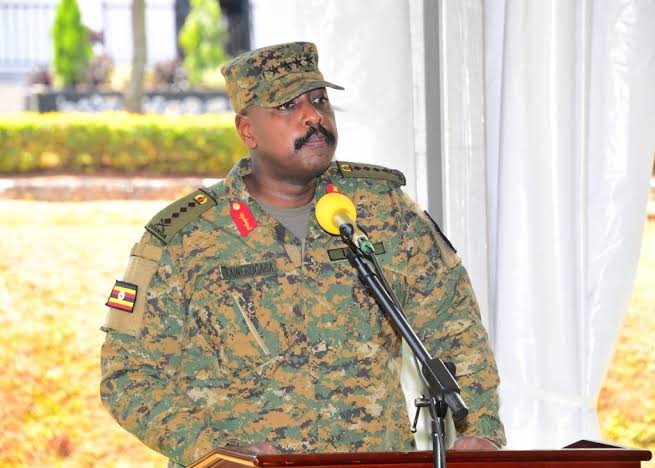
Kainerugaba, who has never hidden his ambition to succeed his father, was relatively quiet during the election campaign but quickly resumed his provocative online activity after the results were announced. In one post, he claimed, “We have killed 22 NUP terrorists since last week,” referring to the opposition National Unity Platform led by Wine, the singer-turned-politician who finished second in the polls. “I’m praying the 23rd is Kabobi,” he added, using a nickname for Wine.
Wine has remained in hiding since the vote, accusing security forces of raiding his residence and attempting to arrest him. His location has been unknown since Saturday. Escalating his rhetoric, Kainerugaba wrote: “I’m giving him exactly 48 hours to surrender himself to the Police. If he doesn’t, we will treat him as an outlaw/rebel and handle him accordingly.”
Responding online, Wine condemned what he described as “threats to kill me” and demanded that the military withdraw from his home, saying: “My wife and people are not safe.”
Despite the controversy, many Ugandans continue to embrace the army chief’s outspoken behaviour. At a pro-government rally in Kampala, some supporters openly described him as the country’s future leader. “He is my next president. He is a good man. I love him so much,” said 25-year-old Natasha Alinitwe, wearing a T-shirt bearing his image.
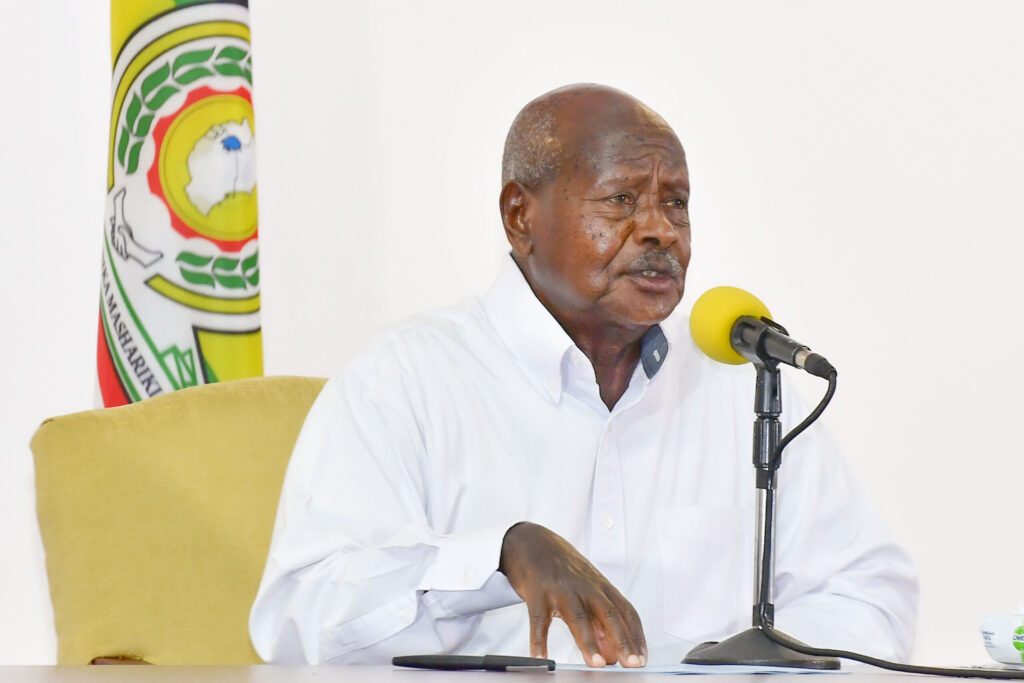
President Museveni, who came to power in 1986 after a guerrilla war, has often projected physical strength and authority, even performing press-ups on camera during the COVID-19 pandemic. Kainerugaba has repeatedly hinted at taking over, declaring in 2023: “Enough of the old people ruling us. Dominating us. It’s time for our generation to shine,” before later retracting his intention to run.
Educated at foreign military academies, including Britain’s Sandhurst, Kainerugaba was appointed head of the Ugandan People’s Defence Forces in March 2024. Analysts suggest the move was partly intended to rein in his political ambitions, as open discussion of succession remains sensitive. Past media reports on an alleged “Project Muhoozi” aimed at preparing his rise to power once led to the temporary shutdown of newspapers and radio stations.
According to Kristof Titeca, a Uganda specialist at Belgium’s University of Antwerp, President Museveni has at times signalled support for his son’s succession, only to later distance himself. “A major reason is Muhoozi’s behaviour, or statements, which have been unpredictable and often quite radical,” he said.
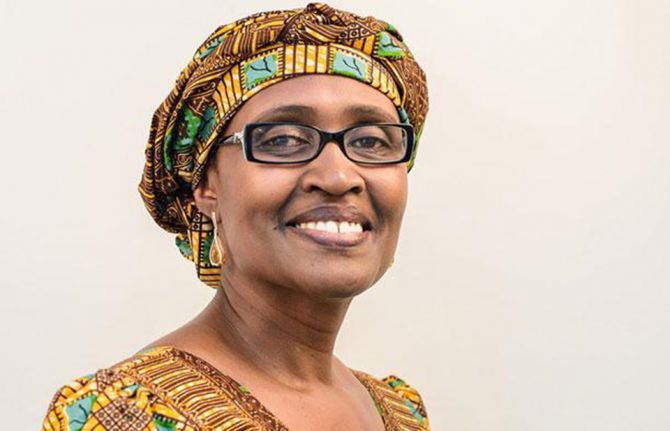
UNAIDS executive director Winnie Byanyima, wife of detained opposition figure Kizza Besigye, linked her husband’s imprisonment to what she described as an effort by the president to pave the way for his son. Besigye faces treason charges that carry the death penalty, a case criticised by international rights organisations. Byanyima accused Museveni of seeking to “extend his dictatorship through his son,” calling Kainerugaba a “loose cannon.”
Within ruling circles, Museveni’s brother Salim Saleh is also viewed by some as a potential successor, although his past corruption allegations complicate that prospect. Observers say the period ahead will determine which figure ultimately gains the upper hand in Uganda’s tense political landscape.
What you should know
Uganda is entering a sensitive post-election phase marked by intimidation, military rhetoric and uncertainty over succession.
The army chief’s threats against opposition leader Bobi Wine have raised alarm among rights groups and observers, highlighting the growing role of the military in political affairs. President Museveni’s long rule and his son’s rising influence have fueled concerns about dynastic succession and democratic backsliding.
With opposition figures under pressure and succession debates largely suppressed, the coming months may shape whether Uganda moves toward deeper authoritarian control or renewed political resistance.