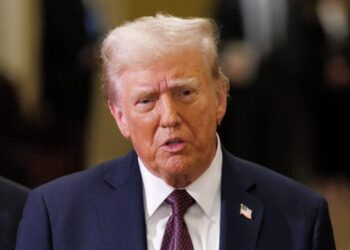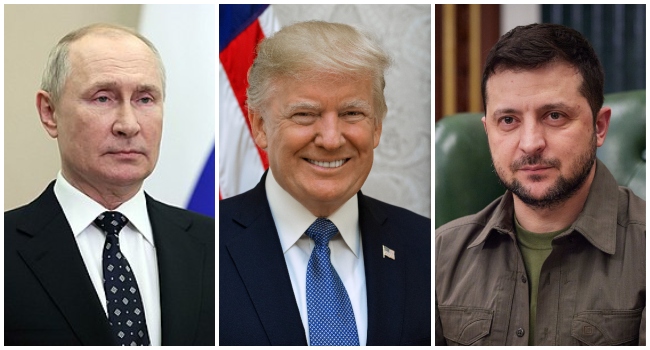
US President Donald Trump on Tuesday stated that Ukrainian forces should not target Moscow, countering reports that he may have supported such an escalation in the ongoing war with Russia.
His comments came a day after unveiling a major diplomatic push, giving Russia 50 days to reach a peace deal with Ukraine and announcing fresh NATO-backed military assistance for Kyiv.
Speaking at the White House, Trump dismissed the idea of Ukraine launching direct attacks on the Russian capital, saying plainly, “No, he shouldn’t target Moscow,” when asked about the possibility of President Volodymyr Zelensky expanding Ukraine’s strike capabilities.
The Financial Times had earlier reported that Trump spoke to Zelensky regarding the possibility of delivering US-made missiles capable of hitting Moscow. While that claim stirred reactions worldwide, Trump’s latest response appears to signal a reluctance to see the war spill further into Russia’s heartland.
Trump vowed to wind down US involvement in the war, halt arms shipments to Ukraine, and engage diplomatically with both Kyiv and Moscow. Despite this posture, his new timeline has placed Russia under considerable pressure. Trump announced that without a negotiated peace within 50 days, Russia’s remaining trade allies would face severe tariffs aimed at constraining the Kremlin’s war budget.
Although negotiations between Ukraine and Russia have occurred since Trump’s return to the White House, they have yielded little beyond prisoner exchanges. Meanwhile, Russia has intensified its campaign against Ukraine, launching record numbers of missile and drone attacks in recent months.
The Kremlin, reacting to Trump’s ultimatum, hinted that his announcement might not aid diplomacy. Russian Presidential Spokesman Dmitry Peskov said Moscow needed time to fully assess the US plan but expressed concerns that Kyiv would interpret the move as encouragement to prolong the conflict.
“It seems that such a decision made in Washington and in NATO countries and directly in Brussels will be perceived by Kyiv not as a signal for peace but for the continuation of the war,” Peskov told reporters.
Trump’s plan also includes the promise of fresh military aid from NATO members. While the US will coordinate the effort, European allies are expected to shoulder a significant part of the cost. Trump emphasized that while NATO would contribute weapons, financial responsibility should be shared.
Still, that position sparked criticism from EU leaders like foreign policy chief Kaja Kallas, who stated, “If you promise to give the weapons, but say that it’s somebody else who is going to pay for it, it is not really given by you.” Kallas added that European countries would prefer the US to commit funding along with hardware.
Trump has long pushed for NATO allies to increase their defense spending and to purchase American-made military equipment. In line with his stance, several European nations — including Denmark, Sweden, and the Netherlands — signaled support for the plan. Sweden’s Defense Minister Pal Jonson confirmed his country would participate and highlighted the urgent need to bolster Ukraine’s air defense capabilities amid Russia’s relentless air assaults.
Russia’s economy, buoyed by defense spending and redirected energy exports to China and India, has thus far resisted Western economic pressure. Trump’s threat of wider sanctions targeting Russia’s remaining trading partners aims to apply new pressure without direct military escalation.
In Moscow, reactions to Trump’s comments were muted, with some residents viewing them as part of a larger geopolitical strategy. “It’s a game of chess,” said Svetlana, a 47-year-old aviation engineer. “We are waiting for the next move of our president.”
On the front lines, Ukrainian troops expressed cautious optimism but harbored doubts about Trump’s sincerity. A soldier identified by the call sign “Shah” voiced skepticism, noting past unmet promises. Another, called “Master,” welcomed the aid but lamented the delay in sending key systems like Patriot missiles, saying they could have made a difference earlier. Yet another soldier, Ruslan, emphasized that any move improving Ukraine’s position was welcome, however small.
As Trump presses forward with his 50-day deadline for a peace settlement, the conflict remains complex and fraught with geopolitical risks. Both Moscow and Kyiv seem entrenched in their positions, and the prospect of real progress hinges on whether Trump’s plan can strike a balance between pressure and diplomacy.
What you should know
President Donald Trump has given Russia a 50-day window to agree to a peace deal with Ukraine, signaling a tougher stance and offering NATO-coordinated military aid to Kyiv.
However, he explicitly advised Ukraine against striking Moscow, amid speculation about US missile support. Russia has so far resisted diplomatic overtures, while Ukraine’s troops and leaders remain cautiously hopeful about the new initiative.