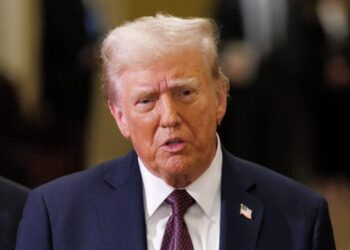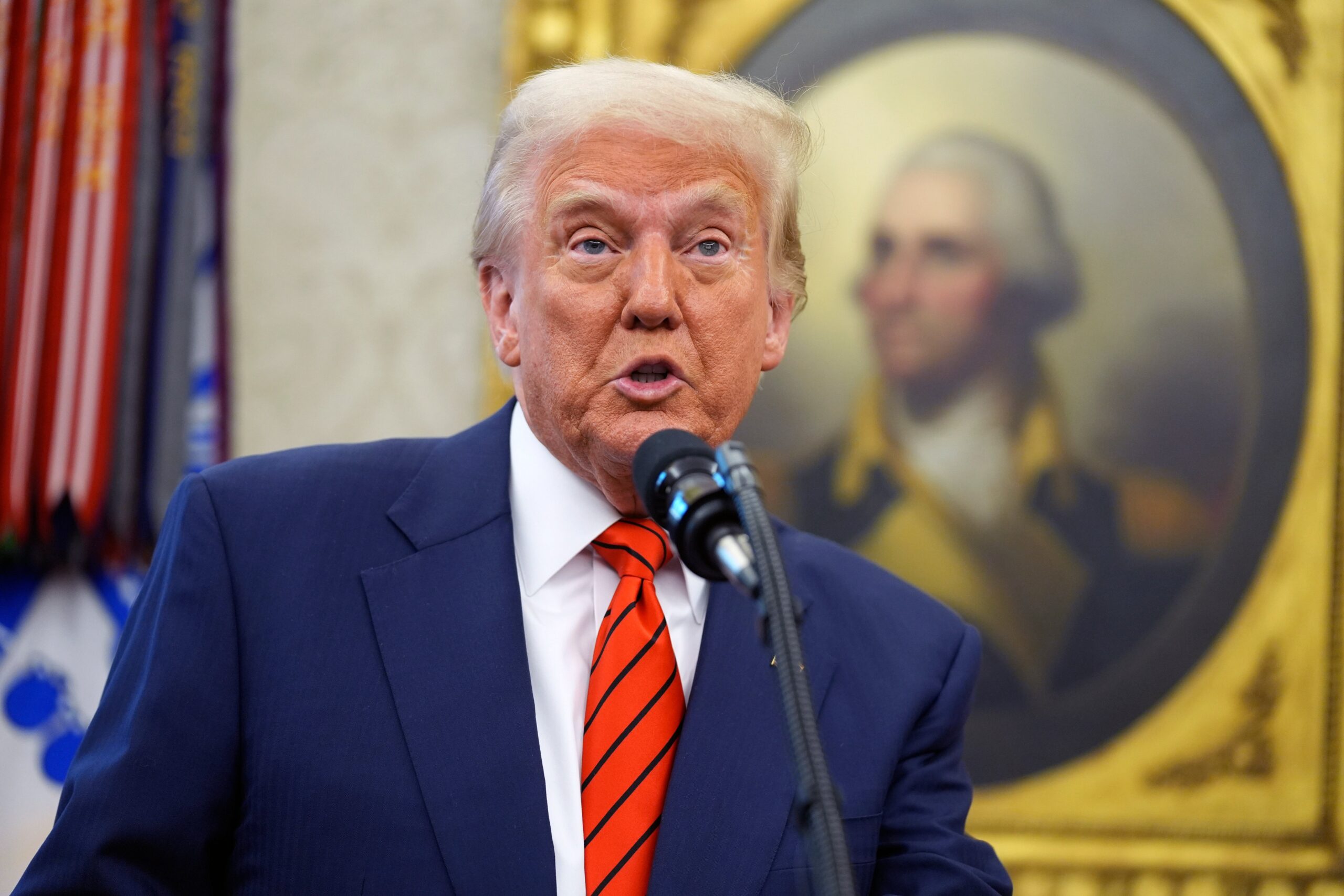
President Donald Trump returned to the United States on Thursday after issuing a startling directive to resume nuclear weapons testing, a move that has sparked widespread concern about the possible rekindling of global superpower tensions.
The unexpected announcement, made via Truth Social, came just as Trump was preparing for a summit with Chinese President Xi Jinping in South Korea. The timing and tone of the declaration left many observers uncertain about its intent, especially since the United States has not carried out an actual nuclear test explosion since 1992.
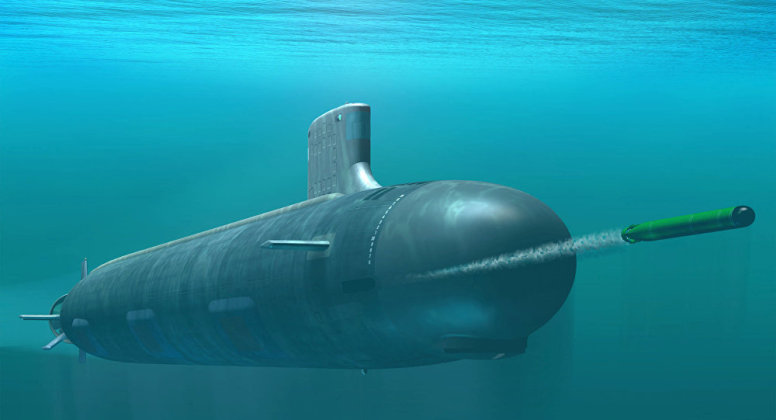
Trump’s statement followed recent reports that Russia had tested nuclear-capable, nuclear-powered cruise missiles and sea drones. His post, blunt and characteristic of his rhetoric, stated: “Because of other countries testing programs, I have instructed the Department of War to start testing our Nuclear Weapons on an equal basis.”
The message, however, lacked clarity on whether the directive referred to system-level testing or full-scale nuclear detonations. Despite this ambiguity, it was widely interpreted as a provocative gesture that signaled renewed nuclear competition among global powers.
Trump also asserted that the United States possessed “more nuclear weapons than any other country” and credited himself for that achievement during his first term. But data from the Stockholm International Peace Research Institute (SIPRI) contradicts this claim, showing that Russia holds 5,489 nuclear warheads, the US 5,177, and China about 600. Trump further added that China was expected to “be even within 5 years,” a statement made just minutes before his meeting with Xi.
China’s response was swift. Foreign Ministry spokesman Guo Jiakun urged Washington to “earnestly abide” by the Comprehensive Nuclear-Test-Ban Treaty (CTBT), which prohibits all nuclear test explosions. The United Nations also weighed in, with Secretary-General Antonio Guterres emphasizing that “nuclear testing can never be permitted under any circumstances.”
In Moscow, Kremlin spokesman Dmitry Peskov dismissed Trump’s claims about Russian nuclear testing, asserting that recent Russian drills “cannot in any way be interpreted as a nuclear test.” Peskov, however, warned that “if someone departs from the moratorium, Russia will act accordingly,” implying that Russia might resume live testing if the US does.
Both nations have long observed a moratorium on explosive nuclear testing while continuing to conduct military exercises with nuclear-capable systems. The US has been a signatory to the CTBT since 1996, committing to halt all atomic test detonations, both military and civilian.

Speaking later aboard Air Force One, Trump defended his decision, saying that “it had been many years” since the last test and that it was now “appropriate” to begin again. Still, he contradicted himself when he reiterated a desire for talks on nuclear disarmament, claiming, “Denuclearization would be a tremendous thing. It’s something we are actually talking to Russia about, and China would be added to that if we do something.”
Historically, the United States conducted 1,054 nuclear tests between 1945 and 1992, including the two atomic bombings of Japan in World War II—the only time nuclear weapons have been used in combat. The final US test occurred in September 1992 at the Nevada Nuclear Security Site, followed by a testing moratorium imposed by President George H.W. Bush the following month. Since then, the US has relied on non-nuclear subcritical experiments and computer simulations to maintain its arsenal.
The political backlash to Trump’s statement was immediate. Nevada Representative Dina Titus vowed to introduce legislation to “put a stop” to any effort to resume explosive testing in her state. Senator Jacky Rosen echoed the sentiment on X, saying Trump’s remarks “directly contradict the commitments I secured from Trump nominees… who’ve told me explosive nuclear testing would not happen & is unnecessary.”
Trump’s announcement—made at a moment of heightened geopolitical rivalry—has reignited global fears about a new nuclear arms race and raised questions about America’s long-term commitment to arms control agreements.
What You Should Know
President Donald Trump’s sudden directive to resume US nuclear weapons testing marks a sharp departure from decades of restraint maintained by previous administrations since 1992.
The move has drawn sharp criticism from international bodies, including the United Nations and China, as well as domestic opposition from lawmakers in Nevada, home to the country’s primary nuclear testing site.
The order, coming just before Trump’s summit with Xi Jinping, has sparked concerns that it could escalate nuclear tensions among the world’s leading powers.