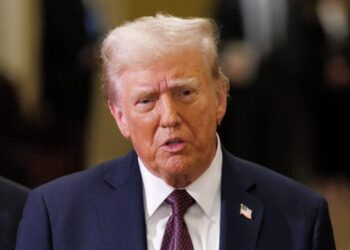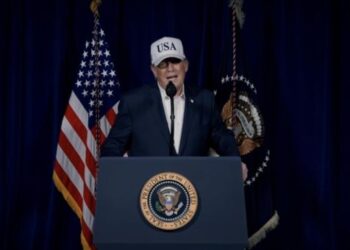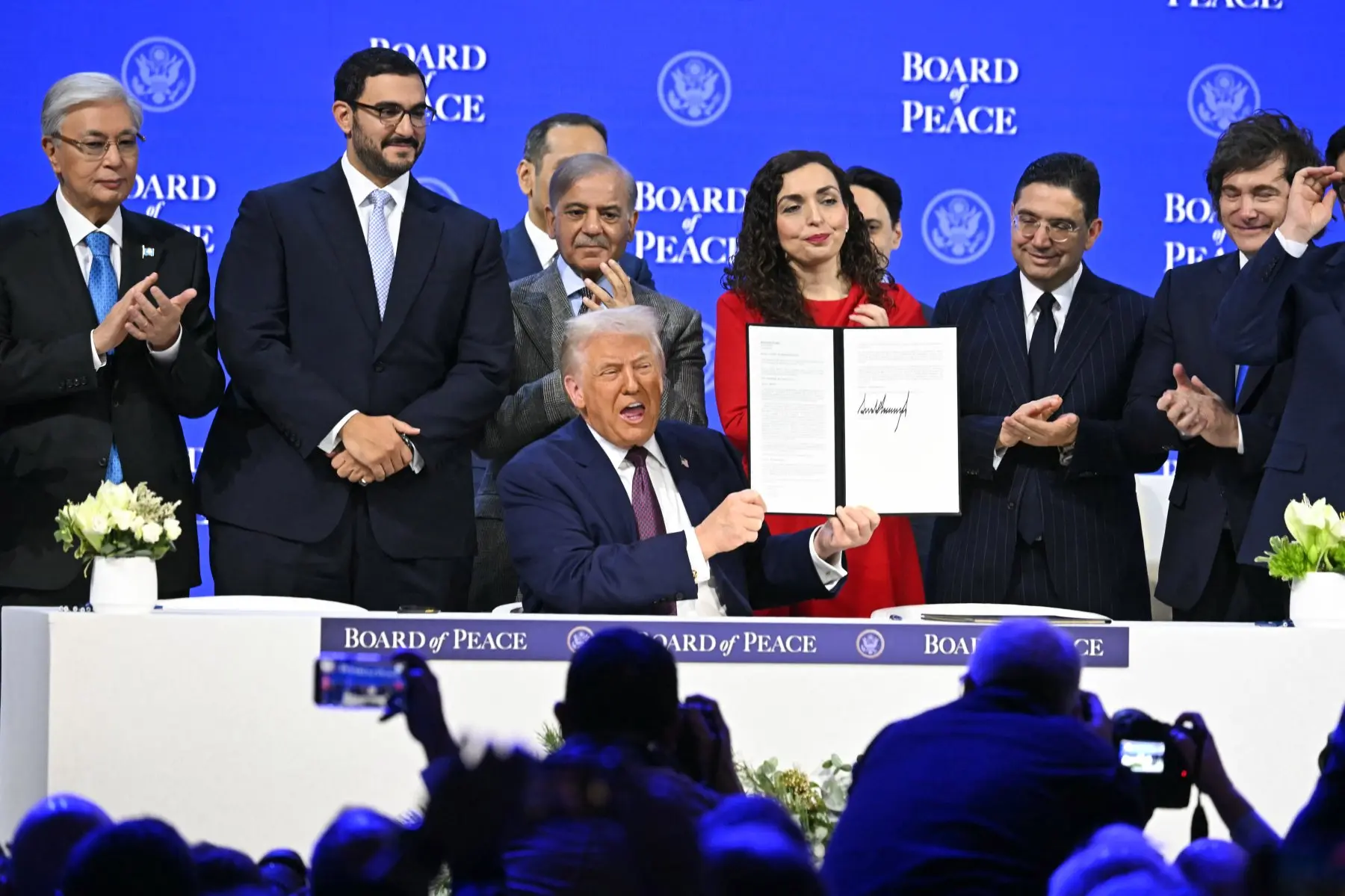
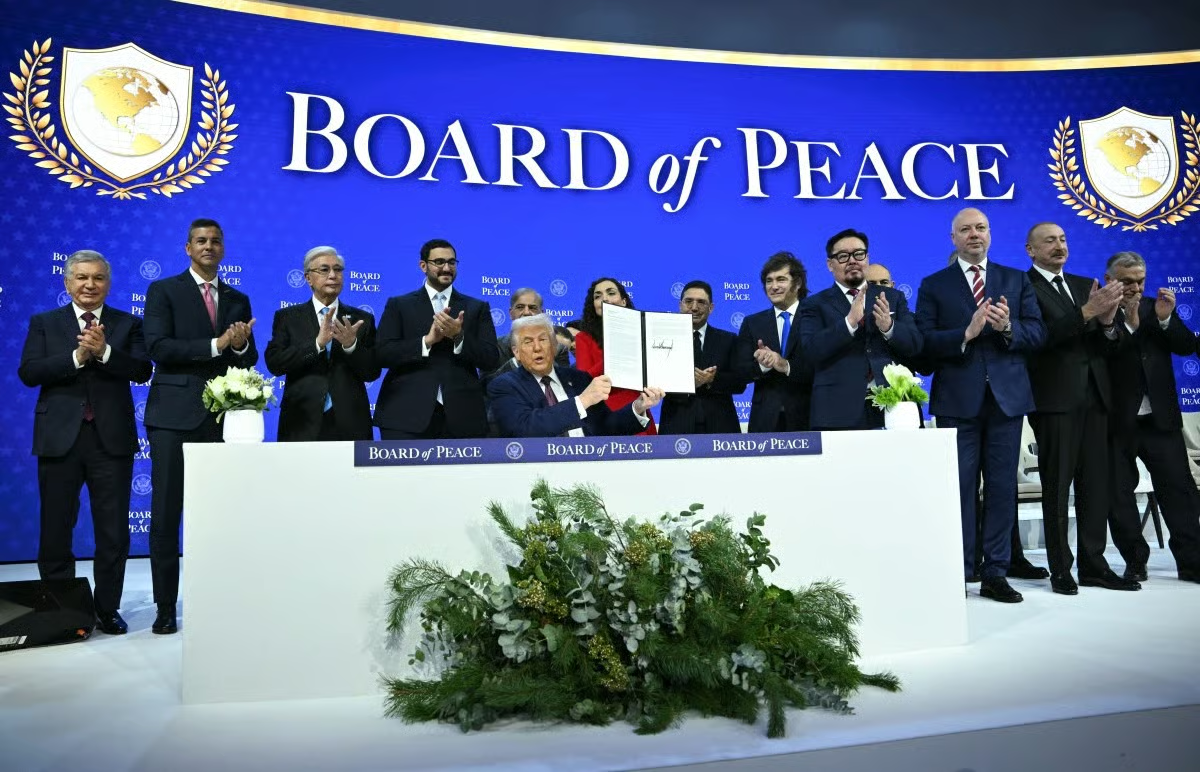
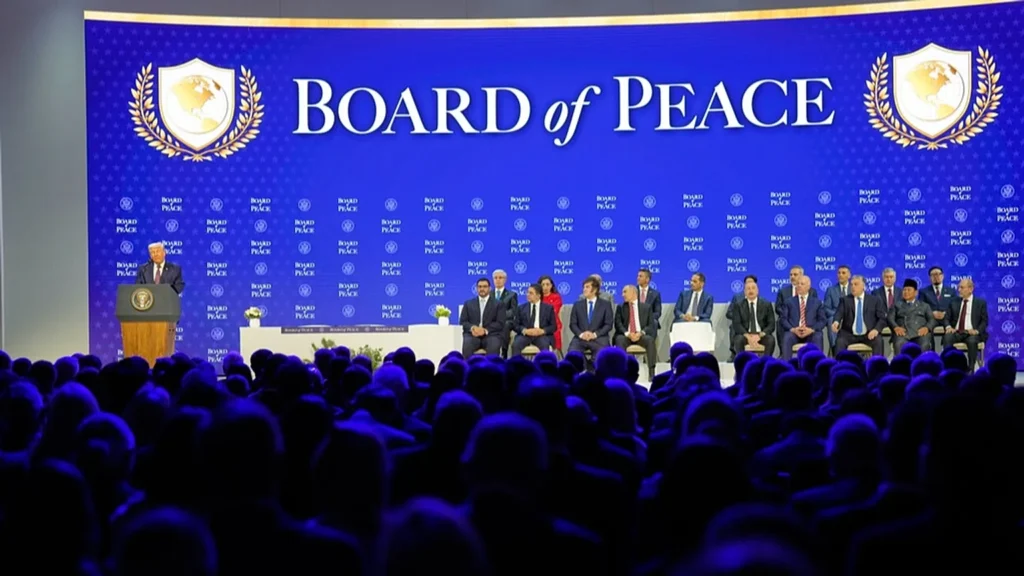
US President Donald Trump on Thursday formally launched his new “Board of Peace” at the World Economic Forum in Davos, unveiling the body with a signing ceremony that immediately drew attention for its $1 billion membership fee and a contentious list of invitees.
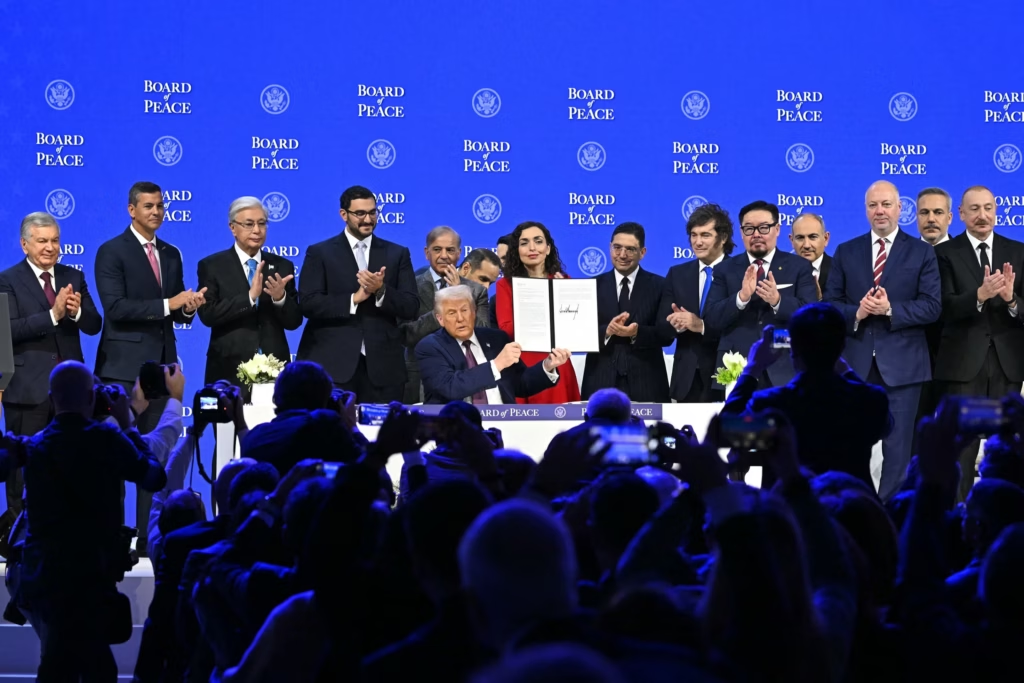
Standing on stage with Trump were leaders and senior officials from 19 countries who signed the founding charter of the organisation. Among them were close allies of the US president, including leaders from Argentina and Hungary, alongside representatives from a range of other nations.
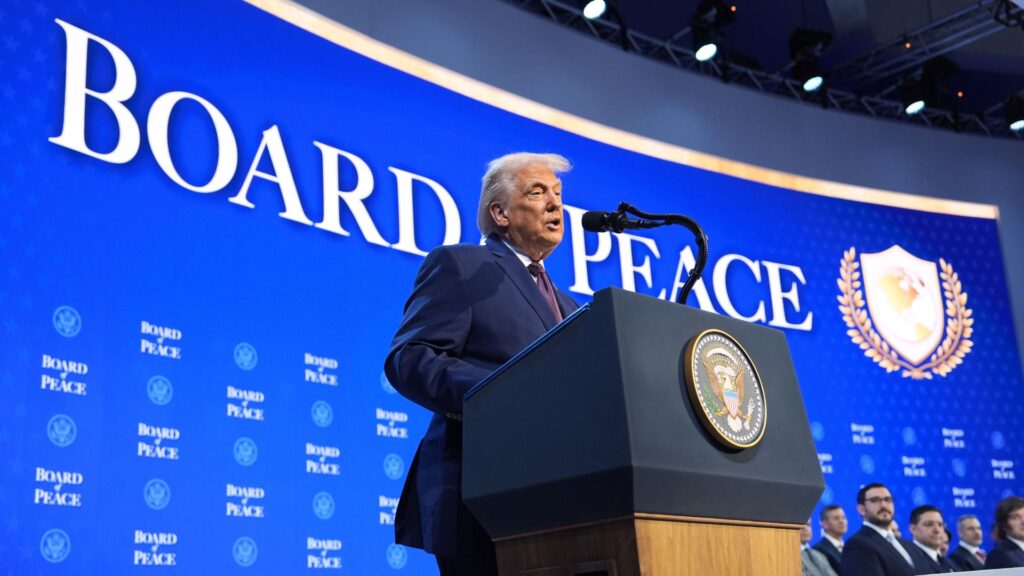
Trump, who will serve as chairman of the Board of Peace, described the group as made up of leaders who were “in most cases very popular leaders, in some cases not so popular. That’s the way it goes in life.”
Although the board was initially conceived as a mechanism to oversee peace in Gaza following the war between Hamas and Israel, its charter outlines a broader ambition to mediate international conflicts. This expanded scope has fuelled concerns that Trump intends for the body to rival the United Nations, an idea he downplayed by insisting it would work “in conjunction” with the UN.
Controversy has surrounded the board’s proposed membership, particularly Trump’s invitation to Russian President Vladimir Putin, whose invasion of Ukraine began four years ago. Trump said Putin had agreed to join, while the Russian leader indicated he was still reviewing the invitation.
Further criticism has focused on the requirement that permanent members pay $1 billion to join, prompting accusations that the Board of Peace risks becoming a “pay to play” alternative to the UN Security Council.
Scepticism has been strongest among some of Washington’s closest allies. Britain and France both distanced themselves from the launch, with the UK confirming on Thursday that it would not attend the ceremony.
Those present at the signing largely included leaders with close ties to Trump or those eager to demonstrate alignment with his administration. Officials from Bahrain, Morocco, Armenia, Azerbaijan, Bulgaria, Indonesia, Jordan, Kazakhstan, Kosovo, Pakistan, Paraguay, Qatar, Saudi Arabia, Turkey, the United Arab Emirates, Uzbekistan and Mongolia also added their signatures alongside Trump.
Israeli Prime Minister Benjamin Netanyahu, who is facing an International Criminal Court arrest warrant linked to the Gaza conflict, has said he will join the board but did not attend the Davos event.
US Secretary of State Marco Rubio told the gathering that the board’s immediate priority was “first and foremost on making sure that this peace deal in Gaza becomes enduring.” Trump, however, issued a stark warning, saying Hamas must disarm under the next phase of the Gaza ceasefire agreement or it would be the “end of them.”
The launch comes amid Trump’s long-standing frustration at failing to secure a Nobel Peace Prize, despite his disputed claims of having ended eight conflicts during his political career.
Attention in Davos is now turning to Trump’s planned meeting with Ukrainian President Volodymyr Zelensky, scheduled to take place after the Board of Peace ceremony. The talks are expected to focus on a possible ceasefire in Ukraine, a deal that has so far remained elusive.
Trump’s special envoy, Steve Witkoff, said discussions aimed at ending the war had made a “lot of progress” and were now centred on a single unresolved issue. “I think we’ve got it down to one issue, and we have discussed iterations of that issue, and that means it’s solvable,” Witkoff said, without elaborating.
Witkoff added that he and Trump’s son-in-law, Jared Kushner, would not remain in Moscow overnight after meeting Putin, instead travelling directly to Abu Dhabi for what he described as “military to military” talks.
Zelensky, meanwhile, has expressed concern that Trump’s push to seize Greenland, a topic that has dominated discussions in Davos, could distract from efforts to end Russia’s invasion of Ukraine. Trump sought to reassure European allies late Wednesday, saying he had reached a “framework of a future deal” following talks with NATO Secretary-General Mark Rutte and would therefore suspend tariffs due to take effect on February 1.
While he offered no details, European officials reacted with cautious relief. A source close to the negotiations said the 1951 Greenland defence pact would be renegotiated as part of the emerging agreement.
What you should know
The launch of Trump’s “Board of Peace” marks a significant shift in global diplomacy, blending high financial barriers with ambitious conflict-resolution goals.
While Trump insists the body will complement the United Nations, critics fear it could undermine existing multilateral systems by favouring wealth and political loyalty over consensus. The inclusion of controversial figures like Vladimir Putin, alongside the absence of key Western allies, highlights deep divisions over the initiative.
Its effectiveness will likely depend on whether it can deliver tangible results in Gaza and Ukraine without escalating geopolitical tensions or sidelining established international institutions.