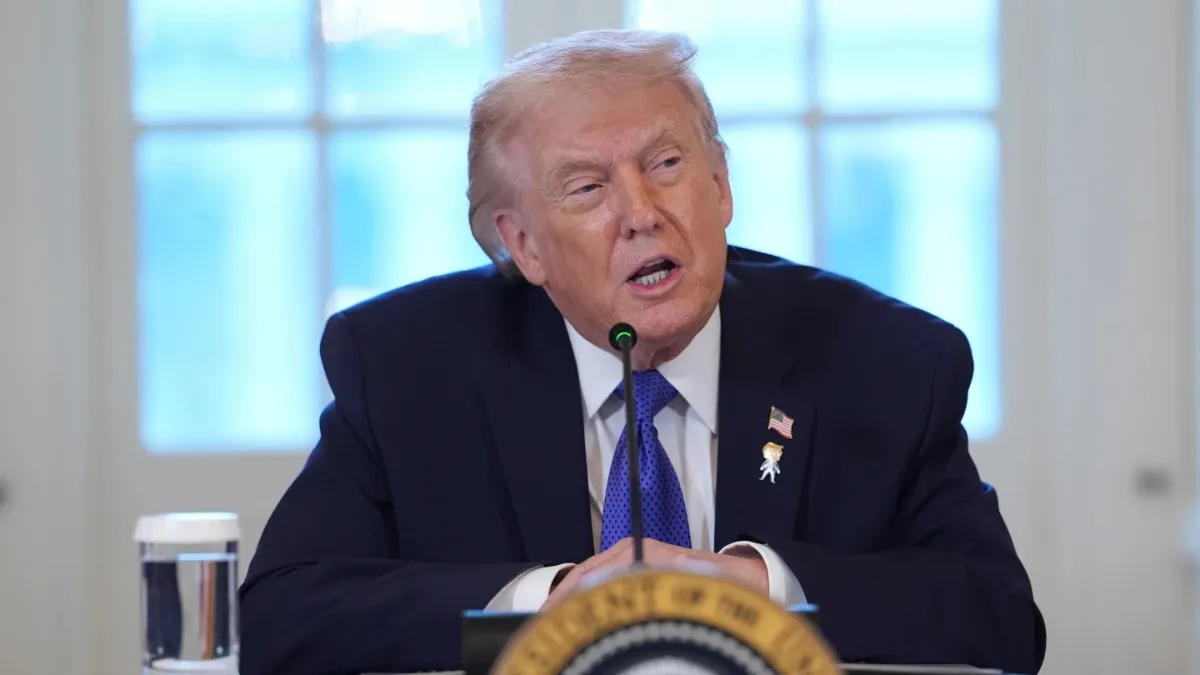
In a sweeping move that threatens to reshape global trade relationships, President Donald Trump announced on Monday that the United States will immediately impose a 25% tariff on goods from any country that continues to conduct business with Iran, dramatically escalating Washington’s economic campaign against Tehran.
The announcement, delivered via social media, represents one of the most aggressive applications yet of the Trump administration’s strategy of weaponizing tariffs to achieve foreign policy objectives. The measure takes effect immediately and applies to “any business” with the United States by nations maintaining commercial ties with Iran, though critical details about the scope and enforcement mechanisms remain unclear.
The policy’s potential reach is vast. Iran maintains significant trading relationships with major economies, including China, India, and Turkey—all of which are also substantial U.S. trading partners. The prospect of 25% duties on goods from these countries could send shockwaves through global supply chains and complicate America’s diplomatic and economic relationships across multiple continents.
Trump characterized the directive as “final and conclusive,” signaling an uncompromising posture toward Tehran amid what the administration has described as widespread protests in Iran in recent weeks.
The tariff threat carries particular implications for African countries that have deepened commercial ties with Iran. According to Iranian government figures, trade between Tehran and African nations has reached $1.2 billion in recent years, with Nigeria emerging as a key partner in this expansion.
Data from Nigerian financial publication Nairametrics indicates that Iran exported $46.5 million worth of non-oil commodities to Nigeria in just the first seven months of 2023, highlighting the West African nation’s strategic importance to Iran’s trade diversification efforts beyond traditional oil markets.
Nigerian officials and business leaders now face difficult calculations about whether to maintain these growing commercial relationships at the risk of facing punitive U.S. tariffs, or to curtail trade with Iran to preserve access to the far larger American market.
Monday’s announcement follows an established pattern by the Trump administration of deploying tariffs as instruments of foreign policy pressure. Earlier this year, Washington imposed duties as high as 50% on certain Indian goods, targeting New Delhi’s purchases of Russian oil—even as the two countries were actively negotiating a broader trade agreement designed to reduce barriers and strengthen bilateral economic ties.
That move raised questions about the predictability of U.S. trade policy and whether countries could negotiate in good faith with an administration willing to impose sudden, severe penalties outside normal trade dispute channels.
The timing of Trump’s Iran tariff announcement is notable for another reason: the U.S. Supreme Court is currently weighing a challenge to the president’s broad authority to unilaterally impose global tariffs. A ruling against the administration could significantly constrain Trump’s ability to rapidly deploy such measures without congressional approval or adherence to established trade law procedures.
The court’s next scheduled opinion day is Wednesday, meaning a decision could come within days that might undermine the legal foundation of Monday’s directive and similar actions.
Trade analysts and economists warn that the policy could introduce substantial new uncertainty into an already fragile global trading system. Countries may be forced to choose between commercial relationships with Iran—often involving humanitarian goods, agricultural products, and other non-sanctioned items—and maintaining tariff-free access to the massive U.S. market.
The prospect of such forced choices could strain longstanding alliances, complicate ongoing trade negotiations, and potentially drive affected nations to deepen economic ties with China and other U.S. competitors who are not imposing similar ultimatums.
For businesses operating across international borders, the announcement creates immediate compliance challenges. Companies must now assess their supply chains for any exposure to Iranian trade and determine whether their goods could face the new 25% levy when entering the United States.
Despite the sweeping nature of the announcement, significant questions remain unanswered. The administration has not detailed how it will identify goods produced in countries trading with Iran, how it will calculate the tariff base, or what mechanisms might exist for exemptions or appeals.
Additionally, it remains unclear whether the tariffs will apply uniformly to all imports from affected countries or only to specific categories of goods, and whether humanitarian or agricultural products might receive different treatment.
As markets opened Tuesday morning following the announcement, currency traders and commodity analysts were closely monitoring reactions from major trading partners, particularly in Asia and the Middle East, where Iran’s commercial relationships are most developed.
The coming days will reveal whether Trump’s latest tariff gambit achieves its stated goal of isolating Iran economically or whether it instead further fractures the post-World War II trading order that has underpinned American economic power for generations.
WHAT YOU SHOULD KNOW
President Trump has imposed an immediate 25% tariff on all goods from any country that trades with Iran—a drastic measure that could hit major U.S. trading partners like China, India, and Turkey, as well as African nations, including Nigeria, which has $46.5 million in annual trade with Tehran.
This represents a major escalation in using tariffs as a foreign policy weapon, forcing countries worldwide to choose between doing business with Iran or maintaining tariff-free access to the U.S. market.
The move comes as the Supreme Court prepares to rule Wednesday on whether Trump even has the legal authority to impose such sweeping tariffs unilaterally.