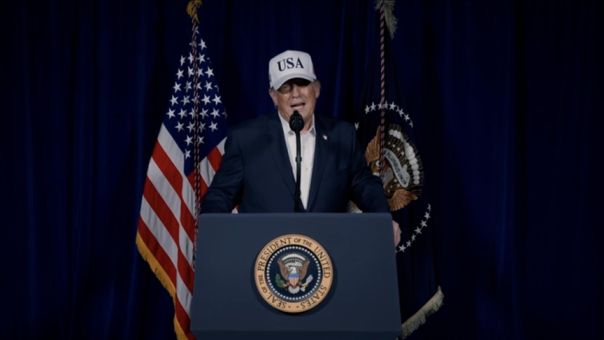
Donald Trump said on Monday that United States military operations in Iran could end soon, offering reassurance to global markets that have been shaken by a conflict spreading across the Middle East.
The war had rattled financial markets, with stock prices falling and oil prices surging after Tehran, now under the leadership of Mojtaba Khamenei, launched another wave of missiles at neighbouring Gulf states while indicating that the strategic Strait of Hormuz would likely remain closed.
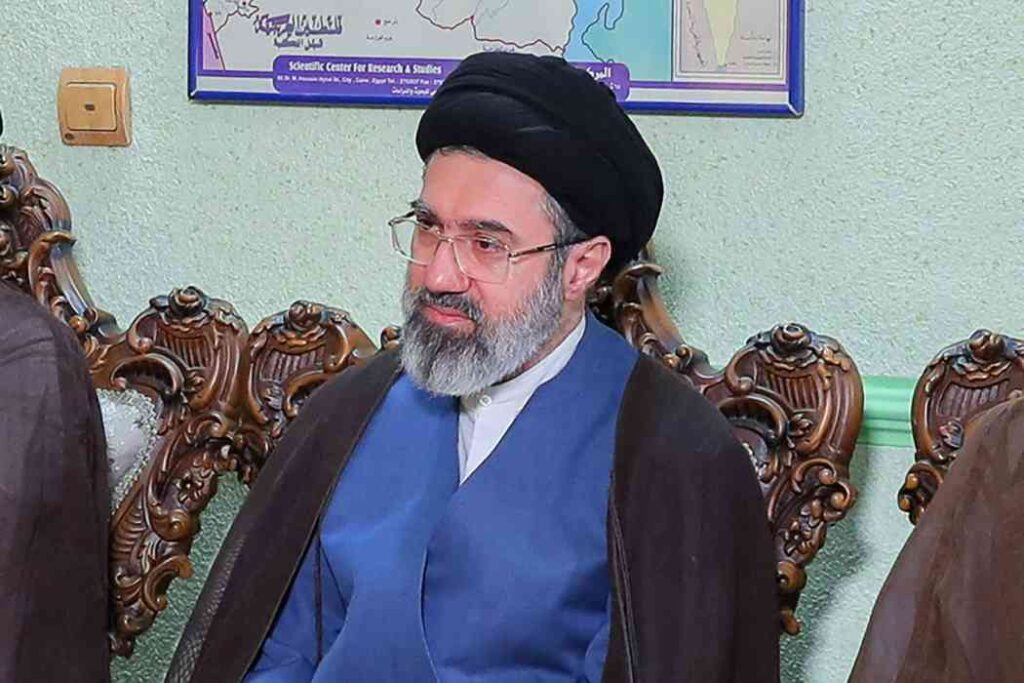
However, markets began to recover following Trump’s signals that the conflict would be brief. Wall Street moved into positive territory, while markets in Tokyo and Seoul also opened stronger on Tuesday. The gains came despite the US president’s warning that military operations could be expanded if Iran failed to comply with Washington’s demands.
Oil prices also reversed their earlier surge, falling by as much as five percent a day after benchmark crude prices jumped above $100 per barrel, the highest level recorded since Russia’s invasion of Ukraine.
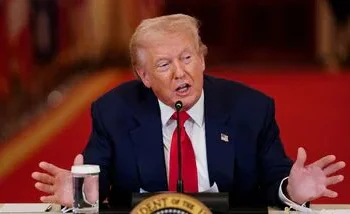
“It’s going to be ended soon, and if it starts up again they’ll be hit even harder,” Trump said during a news conference in Florida, after earlier informing lawmakers that the military campaign would be a “short-term excursion.”
Iran’s response came swiftly. The Islamic Revolutionary Guard Corps said on Tuesday that it would be Tehran, not Washington, that would ultimately determine when the conflict ends.
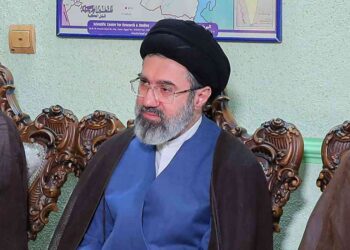
Trump’s remarks coincided with the first day in power for Mojtaba Khamenei, the 56-year-old son of slain leader Ali Khamenei. Iranian forces launched another round of missile and drone attacks targeting Saudi Arabia, Bahrain, Qatar, United Arab Emirates and Israel.
Another missile was also fired toward Turkey, the second such incident within five days, though NATO air defence systems intercepted it before it could reach its target.
Diplomatic attention on Monday focused heavily on the Strait of Hormuz, a crucial global shipping lane through which nearly 20 percent of the world’s crude oil typically passes. The waterway has been largely closed to oil tankers, sending shockwaves through global energy markets.
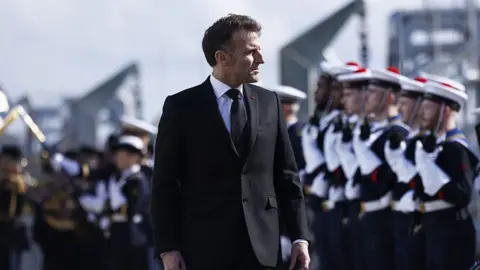
Emmanuel Macron said France and its allies were exploring a “purely defensive” mission aimed at reopening the strait. According to Macron, the plan would involve escorting ships once the most intense phase of the conflict subsides. However, analysts warn that such a mission could expose naval vessels to attacks from the nearby Iranian coastline.
Kamal Kharazi told CNN that Tehran believes economic pressure could eventually compel other nations to intervene and push for an end to the conflict.
The escalation followed a new wave of US and Israeli strikes on Iran after the Assembly of Experts appointed Mojtaba Khamenei as the country’s new supreme leader, marking the first leadership change in 37 years.
Iranian state media broadcast images of large crowds celebrating Khamenei’s appointment in central Tehran, with many supporters carrying his portrait.
Iran’s regional allies, including the Houthi movement in Yemen and Hezbollah in Lebanon, pledged allegiance to the new leader. Meanwhile, Vladimir Putin expressed “unwavering support” for Iran.
Trump said he was “disappointed” by Khamenei’s appointment but indicated he remained open to another leadership change within the Islamic republic, referencing the recent political transition in Venezuela as “a formula that has been very good so far.”
Ali Ansari, a professor of Iranian history at the University of St Andrews, told AFP that the new Iranian leader is known as a hardliner who has “been involved in all the most violent repressions that have taken place over the last 15-16 years”.
Concerns are also mounting over energy security. Shipping experts say roughly ten vessels in or near the Strait of Hormuz have come under attack since Iran blocked the route following US-Israeli strikes.
Global shipping giant Mediterranean Shipping Company announced it was suspending certain export shipments from the Gulf, meaning goods already aboard vessels would be unloaded.
After strikes hit Bahrain’s Al Ma’ameer oil facility and triggered a fire, the state energy firm Bapco joined companies in Qatar and Kuwait in declaring force majeure, warning that circumstances beyond their control could disrupt exports.
Meanwhile, the Saudi defence ministry said it intercepted a drone attack targeting an oil field in eastern Saudi Arabia near the Emirati border.
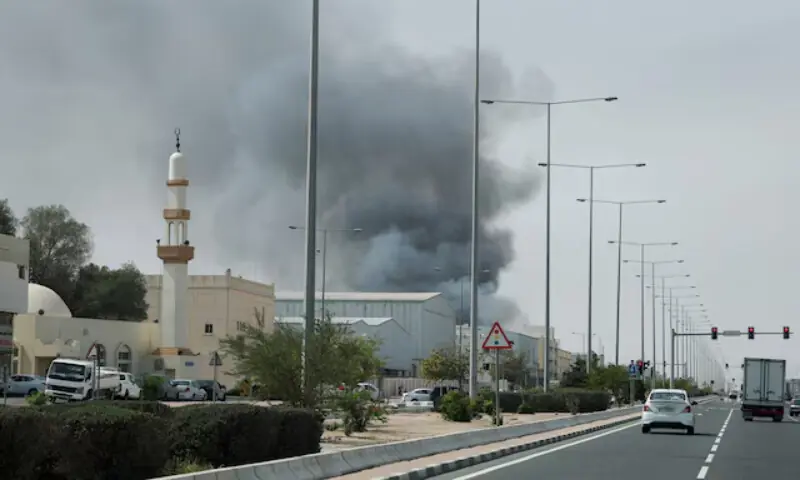
In Manama, authorities said an Iranian strike on a residential area early Tuesday killed one person and injured others.
Earlier in Israel, around ten explosions were heard in Tel Aviv after the military warned of incoming Iranian missiles. Emergency services reported that at least one person was killed after being struck by shrapnel.
Israel said Tuesday that it had destroyed an Iranian missile launcher shortly after missiles fired from Iran triggered air raid warnings in several parts of the country.
The broader conflict has also intensified in Lebanon, where clashes between Israel and Hezbollah since March 2 have killed at least 486 people and injured more than 1,300.
Joseph Aoun accused Hezbollah of attempting to “collapse” the state, while the head of the group’s parliamentary bloc insisted it had “no other option…than the option of resistance.”
What you should know
The conflict between the United States, Israel and Iran has quickly evolved into a multi-front regional crisis affecting several countries across the Middle East.
The closure of the Strait of Hormuz has heightened global economic concerns because the route handles a large share of the world’s oil supply. Missile exchanges and drone attacks across Gulf states and Israel have further raised fears of a wider war.
Markets remain highly sensitive to developments, with energy prices, shipping routes and global trade already showing signs of disruption as diplomatic efforts continue to prevent further escalation.