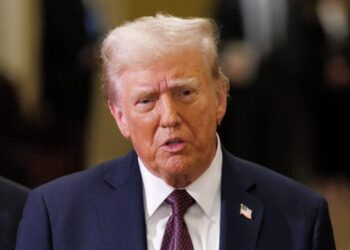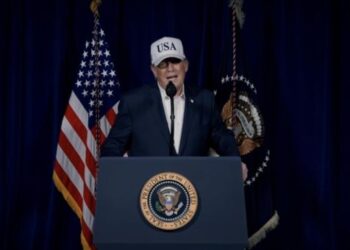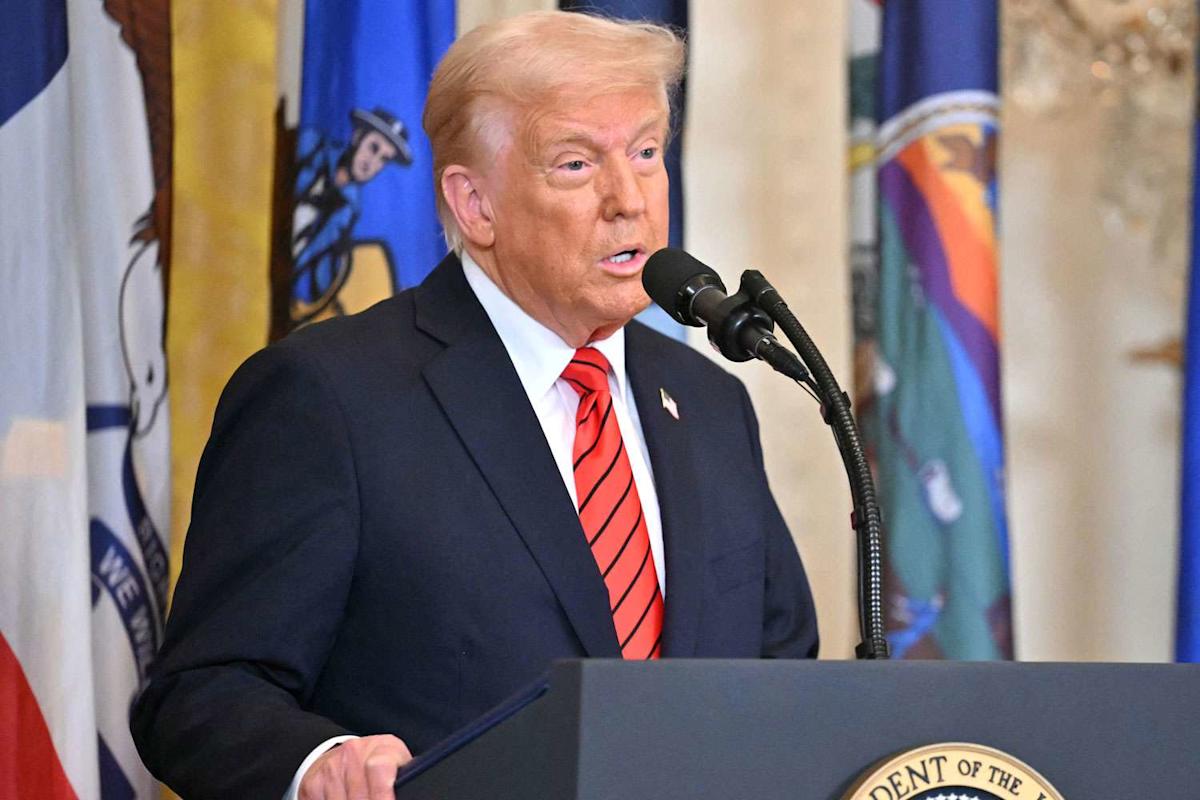
US President Donald Trump said on Friday that he halted a planned second wave of military attacks on Venezuela after the country’s authorities, following the removal of its leftist president by Washington, began freeing prisoners.
Trump made the disclosure as he prepared to meet with executives of major oil corporations, which he said were ready to invest at least $100 billion in Venezuela, a nation that holds the world’s largest proven oil reserves.
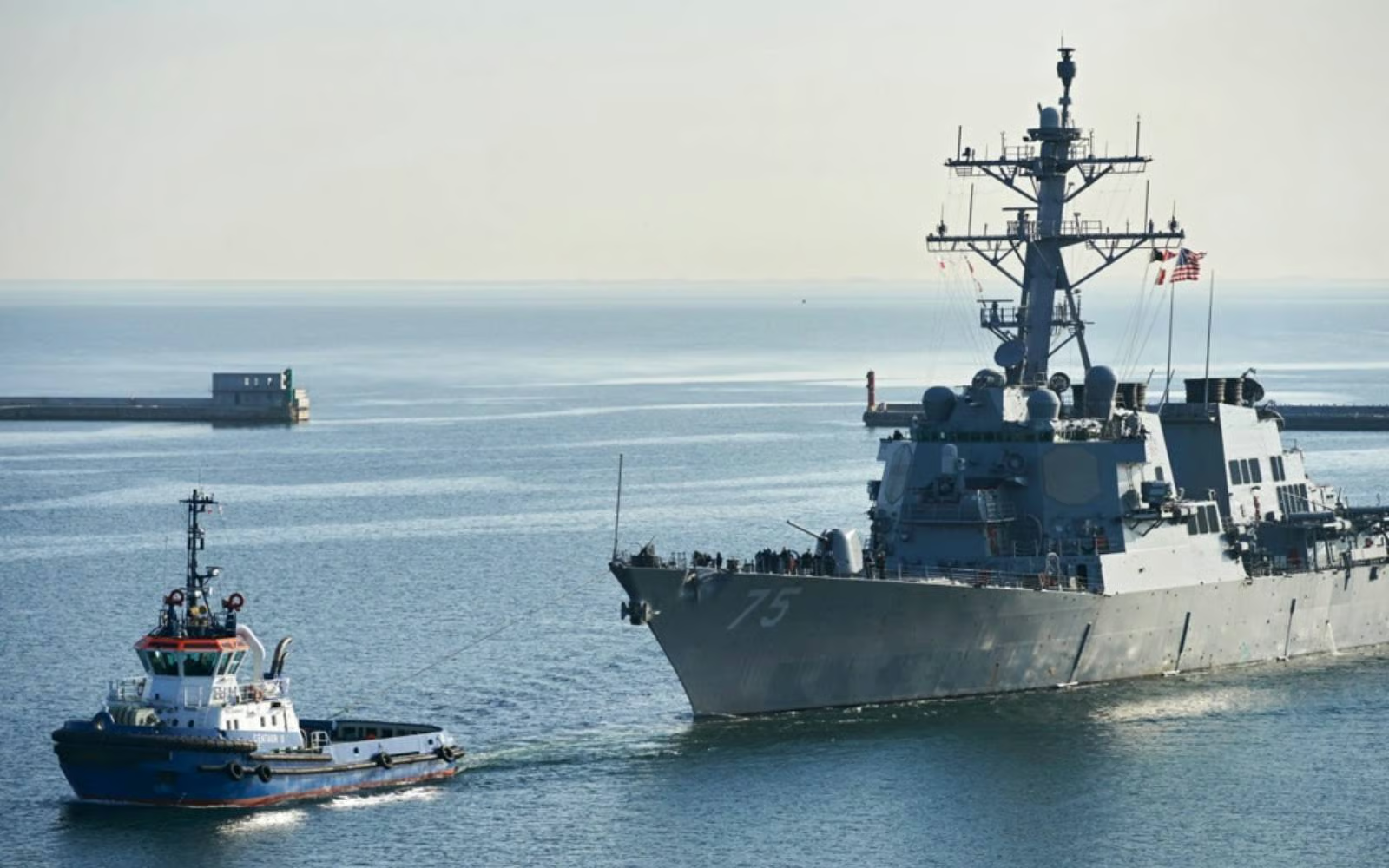
His remarks underscored his readiness to again resort to force in Venezuela, a country he has repeatedly vowed to reshape in a way that benefits the United States, particularly American oil interests.
“Venezuela is releasing large numbers of political prisoners as a sign of ‘Seeking Peace,’” Trump wrote on his Truth Social platform.
“Because of this cooperation, I have cancelled the previously expected second Wave of Attacks,” he added.
On the same day, the United States announced the seizure of another oil tanker near Venezuela as part of its enforcement of an embargo on the country’s crude exports, further consolidating Washington’s dominance over Venezuela’s most critical economic lifeline.
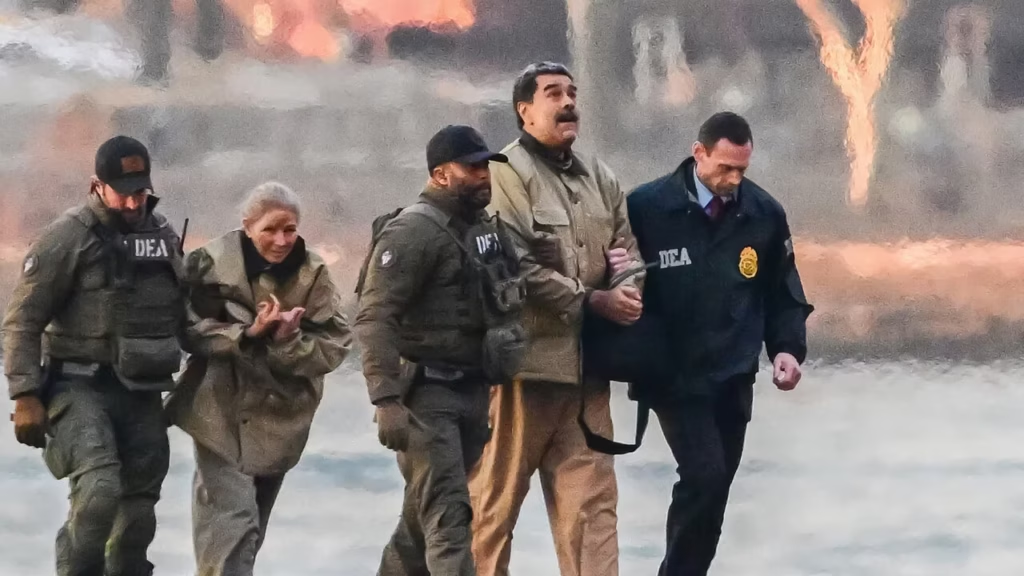
The prisoner releases began on Thursday, marking the first conciliatory move since US forces removed and detained President Nicolas Maduro in a deadly January 3 operation, after which his deputy, Delcy Rodriguez, assumed interim leadership.
Among those freed was former opposition presidential candidate Enrique Marquez, who challenged Maduro in the disputed 2024 election. In a video recorded by a local journalist, Marquez appeared alongside his wife and fellow opposition figure Biagio Pilieri, saying, “It’s all over now.”
The White House was quick to claim credit for securing the releases.
Despite years of Washington insisting Maduro’s rule stemmed from fraudulent elections, Trump has previously downplayed democracy as a primary motivation for the intervention. Still, he confirmed plans to meet next week with Venezuelan opposition leader Maria Corina Machado, whom he had earlier described as a “very nice woman” lacking the “respect” required to lead the country.
“I understand she’s coming in next week sometime, and I look forward to saying hello to her,” Trump told Fox News host Sean Hannity in an interview.
Trump has also expressed resentment over Machado winning the Nobel Peace Prize, arguing that he deserved the honour, a sentiment she responded to by dedicating the award to him.
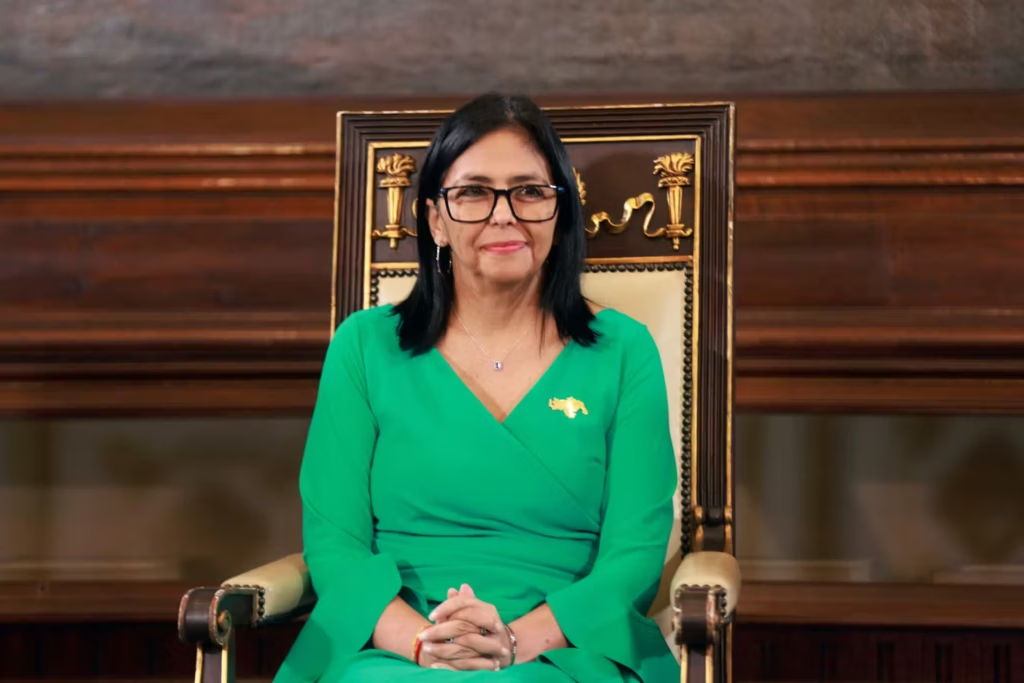
Interim leader Delcy Rodriguez’s brother and parliament speaker, Jorge Rodriguez, said “a large number of Venezuelan and foreign nationals” were being released immediately in the interest of “peaceful coexistence.”
Spain’s foreign ministry confirmed that five Spanish citizens were among those freed, including prominent Spanish-Venezuelan activist Rocio San Miguel, who had been detained since February 2024 over an alleged plot to assassinate Maduro, an accusation she denied.
Earlier in the week, Trump told Republican lawmakers that Rodriguez’s administration was shutting down a “torture chamber” in Caracas, though he offered no additional details.
According to Venezuelan rights group Foro Penal, more than 800 political prisoners remain incarcerated across the country.
Maduro was captured during a special forces raid backed by airstrikes, an operation Caracas says resulted in the deaths of 100 people. He and his wife, Cilia Flores, were taken to New York to face drug-related charges.

Trump has stated that the United States would “run” Venezuela for a transitional period while exploiting its oil reserves for years. However, Delcy Rodriguez rejected claims of submission, insisting her country was “not subordinate or subjugated.”
“Nobody surrendered. There was fighting for the homeland,” when US forces attacked, she said during a ceremony honouring those killed.
Earlier this week, Trump unveiled a proposal for the United States to sell between 30 million and 50 million barrels of Venezuelan crude, with the proceeds to be used by Caracas to purchase American-made goods.
Public reaction in Caracas has been divided. “I feel we’ll have more opportunities if the oil is in the hands of the United States than in the hands of the government,” said 26-year-old Jose Antonio Blanco.
What you should know
The Venezuela crisis has entered a new phase marked by US military pressure, control over oil exports and strategic negotiations tied to prisoner releases.
While Washington frames the pause in attacks as a response to cooperation, critics see it as leverage to secure economic and political influence.
With hundreds of political detainees still held and foreign intervention shaping leadership outcomes, the situation remains volatile, especially as oil deals and international reactions continue to redefine Venezuela’s sovereignty and future governance.