Summary
The Trump administration announced on Thursday that it would conduct a comprehensive review of the immigration status of every permanent resident, or “Green Card” holder, originating from Afghanistan and 18 additional countries following the attack on National Guard personnel in Washington.
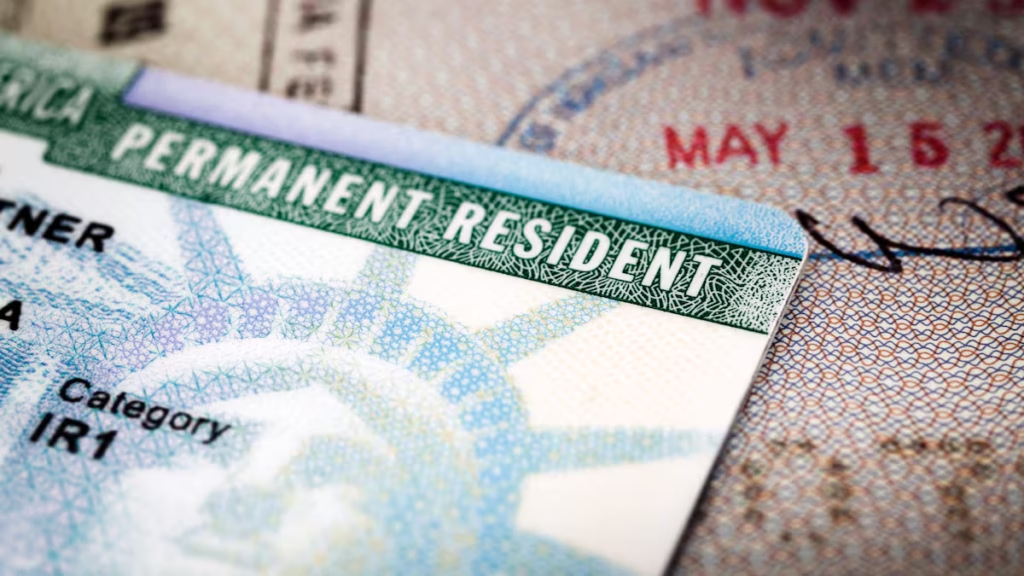
US authorities have identified the detained suspect in Wednesday’s shooting as a 29-year-old Afghan national who had previously collaborated with American forces in Afghanistan. The individual was granted asylum in April of this year, not permanent residency, through AfghanEvac, an organisation that assisted in resettling Afghans in the United States following the Taliban’s 2021 takeover.
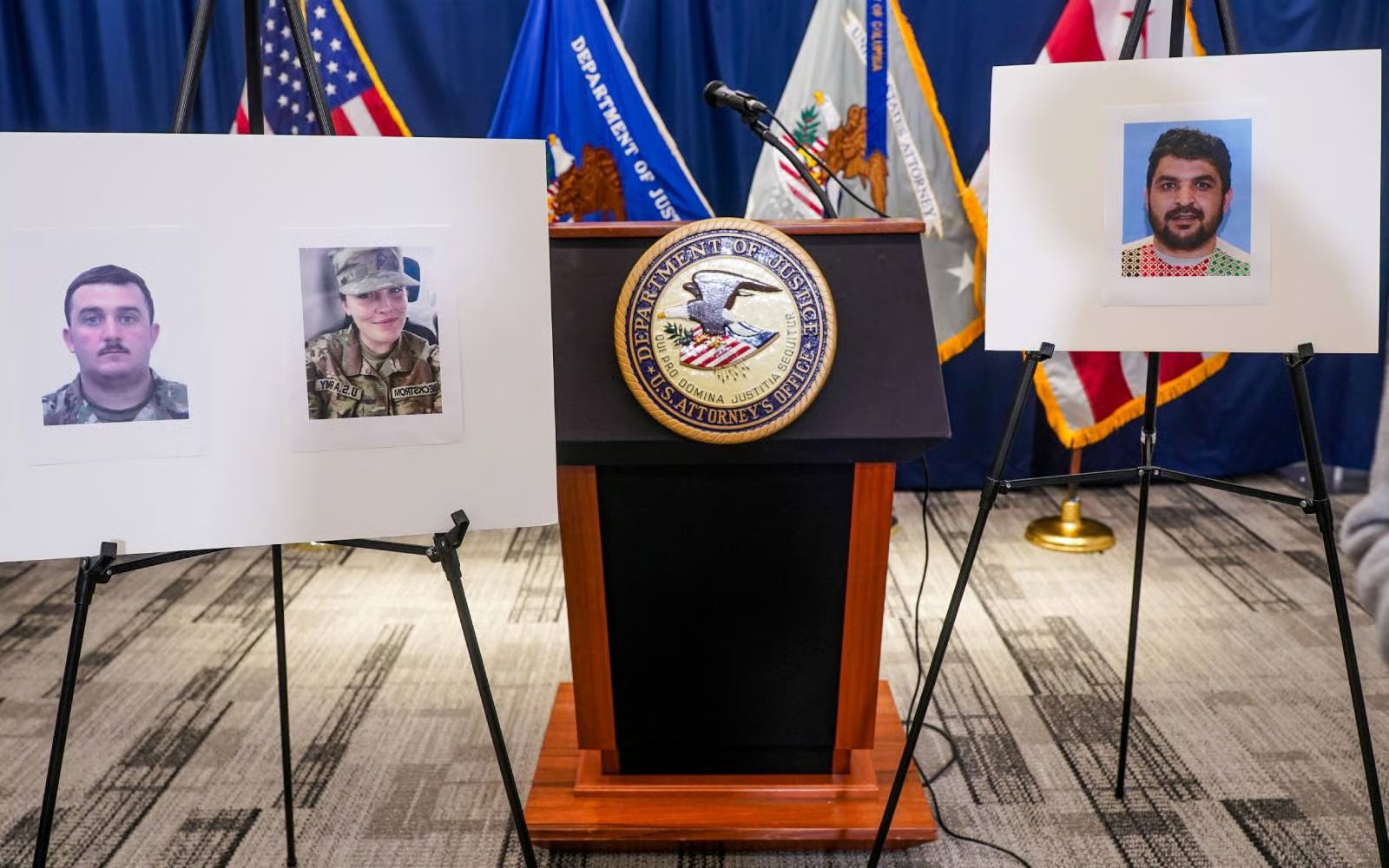
“I have directed a full-scale, rigorous reexamination of every Green Card for every alien from every country of concern,” Joseph Edlow, director of the US Citizenship and Immigration Services (USCIS), said on X.
When pressed for clarification on which countries were included, a USCIS spokesperson referenced President Donald Trump’s June executive order that designated 19 nations as “of Identified Concern.” This executive order banned entry for nearly all nationals from 12 of the countries, including Afghanistan.
The other countries affected by the ban were Myanmar, Chad, Congo-Brazzaville, Equatorial Guinea, Eritrea, Haiti, Iran, Libya, Somalia, Sudan, and Yemen.
Additionally, Trump issued partial travel restrictions on seven more countries—Burundi, Cuba, Laos, Sierra Leone, Togo, Turkmenistan, and Venezuela—allowing some temporary work visas from these nations.
This sweeping review is part of the administration’s response to the attack on US troops, aiming to ensure national security while reassessing the immigration status of individuals from countries identified as posing potential risks.
What you should know
The review targets all Green Card holders from 19 nations considered high-risk under Trump’s executive order, following a security incident in Washington involving an Afghan asylum seeker.
While most of these countries face full travel bans, some have limited allowances for work visas.
This action highlights heightened US immigration scrutiny in the wake of security threats.