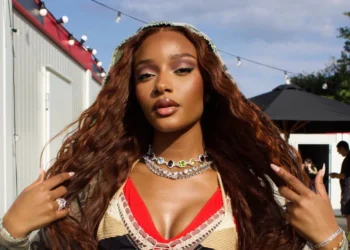
Tonto Dikeh is now facing a ₦200 million fundamental rights enforcement suit filed at the High Court of the Federal Capital Territory in Abuja, and the allegations at the heart of the case are as disturbing as they are legally significant.
Human rights lawyer Ikechukwu Obasi filed the suit under the Fundamental Rights (Enforcement Procedure) Rules 2009, accusing Dikeh of violating the rights of a female school child during what he has described as a “vicious religious deliverance ritual.”
The child at the center of the controversy is a Junior Secondary School 1 student at JSS Durumi II in Abuja, originally from Rivers State.
The lawsuit was triggered after a video posted on March 6, 2026, spread quickly across social media platforms, sparking heated debate over whether such religious interventions with minors are appropriate or safe.
According to the affidavit attached to the originating motion, the footage posted directly on Dikeh’s verified Facebook account showed something deeply troubling.
The child was laid on bare ground and pressed against a stony surface while the actress, who was wearing artificial fingernails, carried out what the lawyer characterized as a religious exorcism involving harassment and public shaming of the child.
The lawyer argues that the manner in which the session was conducted went far beyond the boundaries of faith. He contends that the alleged treatment was degrading and could cause lasting psychological harm to the child, exposing her to contempt, public shame, and likely unspoken child trauma.
The suit is not merely about one viral video. Obasi is asking the courts to make a ruling with sweeping implications for child welfare and religious practice in Nigeria.
He is asking the court to declare that the alleged deliverance ritual amounts to a flagrant violation of the child’s fundamental rights to dignity under Section 34 of the Nigerian Constitution, the African Charter on Human and Peoples’ Rights, and the Child Rights Act.
He is also seeking a declaration that any form of child exorcism or harmful religious rite carried out under the guise of spiritual deliverance violates the fundamental rights of children.
On the matter of the video’s publication, the suit goes further still. Obasi alleged that posting the images and footage on social media violated the child’s right to privacy as guaranteed under Section 37 of the 1999 Constitution.
The lawyer’s argument draws a clear line in the sand: religious freedom, however constitutionally protected, does not extend to the public humiliation of a minor.
He argued that such conduct goes beyond the bounds of religious expression and instead places the child at risk of stigma and social ridicule, especially within the cultural setting in which the incident occurred.
The lawyer is requesting that the court order Dikeh to remove the video footage and images from all her social media platforms and publish an unreserved apology to the child and to Nigerian children in three national newspapers.
The suit is also seeking an order of perpetual injunction restraining Dikeh from carrying out similar religious exorcisms or harmful rites on any Nigerian child. On top of all this, Obasi is demanding ₦200 million in damages.
He warned that portraying the girl as someone possessed by evil spirits, with an attempt to cast out demons, could subject her to ridicule and discrimination—particularly among her classmates and peers.
The actress, who has recently rebranded her public image around faith and evangelism, has yet to respond publicly to the lawsuit. As of now, no hearing date has been set, and Dikeh has not made any public statement.
It is worth noting that this legal action did not come entirely without warning. The suit follows earlier reports in which Obasi had issued a 72-hour ultimatum demanding a public apology—an ultimatum that, by all indications, went unheeded.
Beyond the fate of one actress, this case has the potential to set a landmark precedent on the intersection of children’s rights, religious freedom, and social media accountability in Nigeria.
WHAT YOU SHOULD KNOW
The Nollywood actress Tonto Dikeh now faces a ₦200 million fundamental rights suit at the FCT High Court in Abuja.
The suit seeks justice for her, but its implications stretch far wider, potentially setting a landmark precedent that no faith, fame, or following places anyone above the constitutional rights of a child.