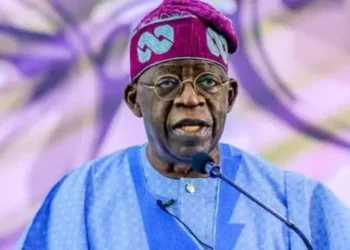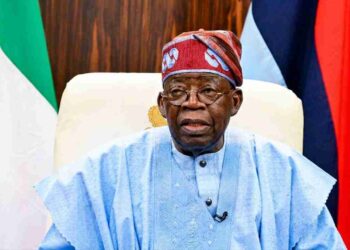
President Bola Tinubu on Friday urged power generation companies (GenCos) to allow the Federal Government more time to carry out verification and validation of the longstanding debts owed to them.
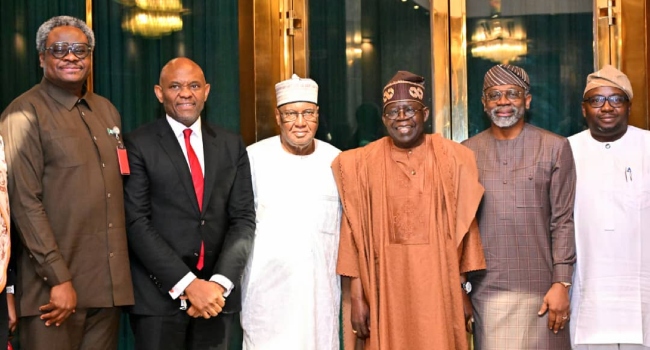
Speaking at the Presidential Villa in Abuja during a meeting with members of the Association of Power Generation Companies, led by retired Colonel Sani Bello, President Tinubu assured the group of his administration’s full commitment to tackling the liquidity crisis plaguing Nigeria’s power sector.
Olu Verheijen, the President’s Special Adviser on Energy, revealed that the President has granted anticipatory approval for a ₦4 trillion bond programme intended to address the sector’s financial shortfall.
Acknowledging the inherited financial burdens from past governments, Tinubu stressed the importance of due diligence before any commitments are made.
“I accept the assets and liabilities of my predecessors, and there is no question about that. But that acceptance must be on credible grounds. I need to wear the audit cap of verifiability, authenticity, and the fact that this inheritance is not a mere deodorant but a support structure for critical economic and industrial promotion,” Tinubu stated in a release issued by presidential spokesperson Bayo Onanuga.
He appealed for patience from GenCos and financial institutions, highlighting that federal agencies are engaging auditing and legal experts to assess the validity of the claims.
“We are here. So market it to your other colleagues. Give us time to do verification and validation of the numbers,” the President requested.
Reiterating his administration’s dedication to a market-oriented electricity sector, Tinubu emphasized that past unresolved issues in the industry are now being addressed with serious intent.
“This is a longstanding issue that is now being dealt with. I know how much we have been able to save on fuel subsidies. We introduced the alternative, CNG, to bring relief back to the people,” he said.
He further stressed the need for a balanced and investment-friendly environment, warning against drastic actions such as foreclosure on GenCos’ assets.
“To our friends in the banking sector, I ask that we avoid foreclosures. Sharpen your pencils, but keep an eraser handy. Let’s persevere together,” Tinubu added.
Calling electricity the most transformative invention in a millennium, the President underscored its centrality to national development and human dignity.
Providing context to the crisis, Verheijen explained that the liquidity gap stems from “a combination of unfunded tariff shortfalls and market shortfalls” that have been building up since 2015.
She noted that as of April 2025, the Federal Government’s verified exposure to GenCos stands at ₦4 trillion in debt.
“We have since sat with 27 GENCOs—not all of them are here today—and reviewed their PPAs and gas sales agreements to understand the legitimacy of their claims. The GENCOs claimed about ₦4 trillion from 2015 to the end of 2023,” Verheijen noted.
So far, the Nigerian Bulk Electricity Trading Company (NBET), which serves as the contractual intermediary between GenCos and the government, has confirmed ₦1.8 trillion of the claims.
She further explained, “Since that period, we have had ₦200 billion in unfunded subsidies that have accumulated the federal government’s liability. So, as of April 2025, the total exposure that we are carrying at the moment is ₦4 trillion.”
However, she stressed that the figures are still subject to downward adjustments, depending on the outcome of the ongoing validation process.
“While there is an anticipatory approval of this ₦4 trillion bond programme, it is subject to negotiations and final settlement of agreements. Only the amounts that the federal government validly owes are the things that will make it into the issuance by DMO,” she concluded.
What You Should Know
President Bola Tinubu has asked power generation companies (GenCos) for patience as his administration works to validate and verify ₦4 trillion in debts owed to them.
At a meeting with GenCos, he affirmed that the government acknowledges liabilities inherited from previous administrations but must ensure accuracy before payments are made. Tinubu highlighted transparency, fairness, and a commitment to resolving long-standing liquidity issues, while discouraging foreclosures by banks.
He emphasized the importance of electricity to national progress and economic stability, pledging reform in the sector. This marks a serious step toward addressing the financial strain that has plagued Nigeria’s power industry for years.