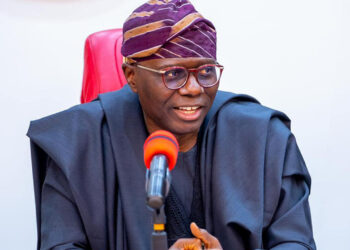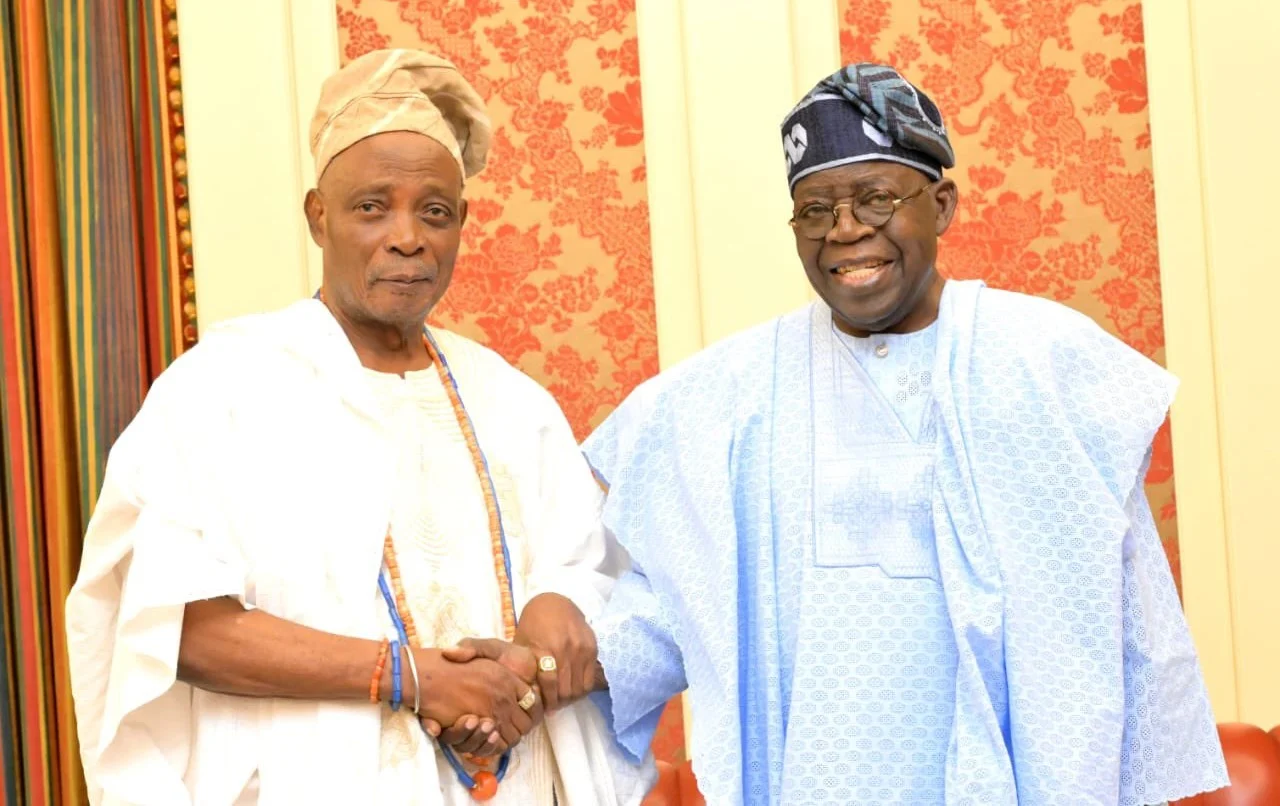
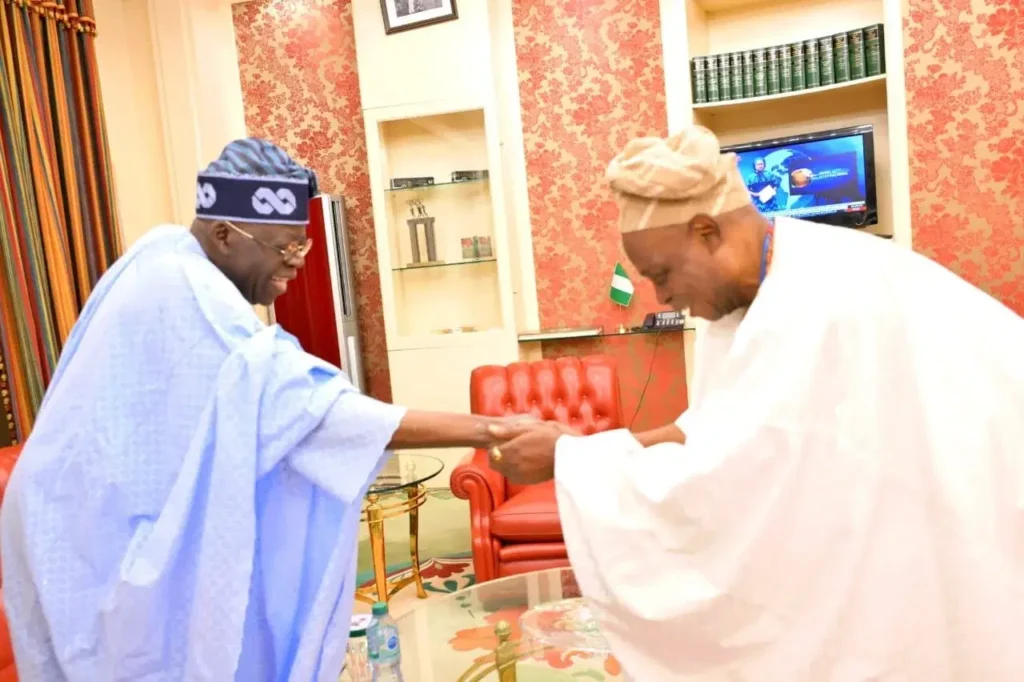
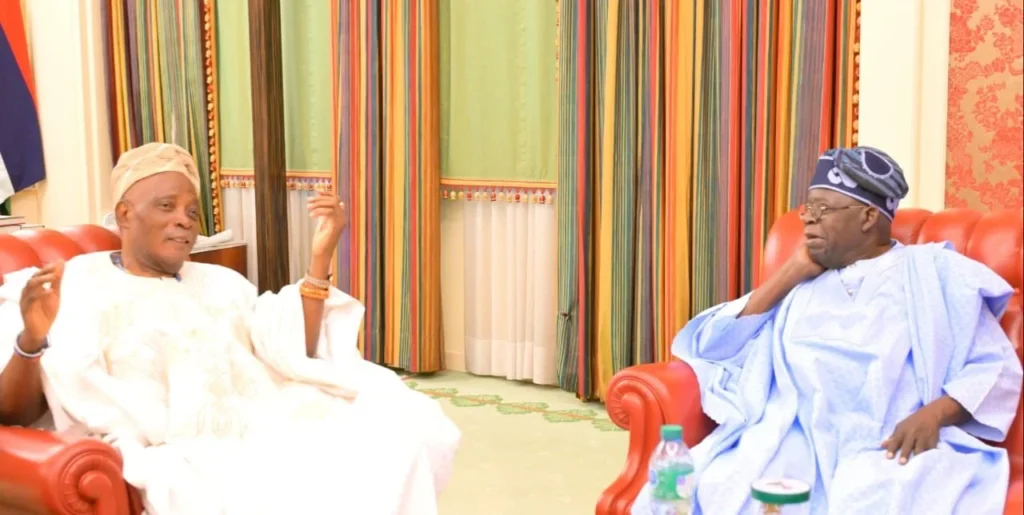
President Bola Tinubu on Friday received the Olubadan of Ibadanland, Oba Rashidi Adewolu Ladoja, at the Presidential Villa in Abuja.
The visit came less than four months after Oba Ladoja’s installation as the 44th Olubadan of Ibadanland and marked his first official engagement with President Tinubu since ascending the throne.
The meeting also took place just a day after Oyo State Governor, Seyi Makinde, was hosted by the President at the State House, Abuja.
As of the time this report was filed, the details of the discussion between the President and the traditional ruler had not been made public.
Before his ascension to the throne, Oba Ladoja was actively involved in partisan politics, having served as the Governor of Oyo State from May 2003 until January 2006 on the platform of the Peoples Democratic Party.
Oba Ladoja became the Olubadan in September 2025 following the death of his predecessor, Oba Owolabi Olakulehin, who passed away in July 2025 after a brief reign on the throne.
His emergence as Olubadan followed Ibadan’s long-standing traditional succession structure, which alternates the stool between the civil line, known as Egbe Agba, and the military line, referred to as Balogun.
Oba Olakulehin emerged from the Balogun line, making Ladoja’s succession from the civil line consistent with established tradition.
Prior to becoming the Olubadan, Ladoja held the position of Otun Olubadan, which he assumed in August 2024. That role placed him next in line to the throne, in line with Ibadan’s hierarchical chieftaincy system.
What you should know
The Olubadan of Ibadanland is regarded as one of the most respected traditional institutions in Yorubaland, with a unique and structured succession system that reduces disputes over the throne.
Oba Rashidi Adewolu Ladoja’s background as a former state governor adds political depth to his reign, although the Olubadan traditionally remains non-partisan.
His visit to President Bola Tinubu reflects ongoing interactions between traditional rulers and the federal government, often centred on national unity, development, and regional stability, even when details of such meetings are not publicly disclosed.