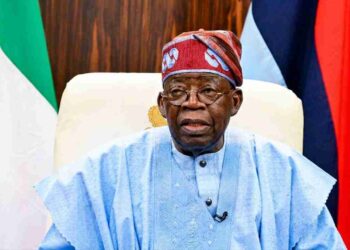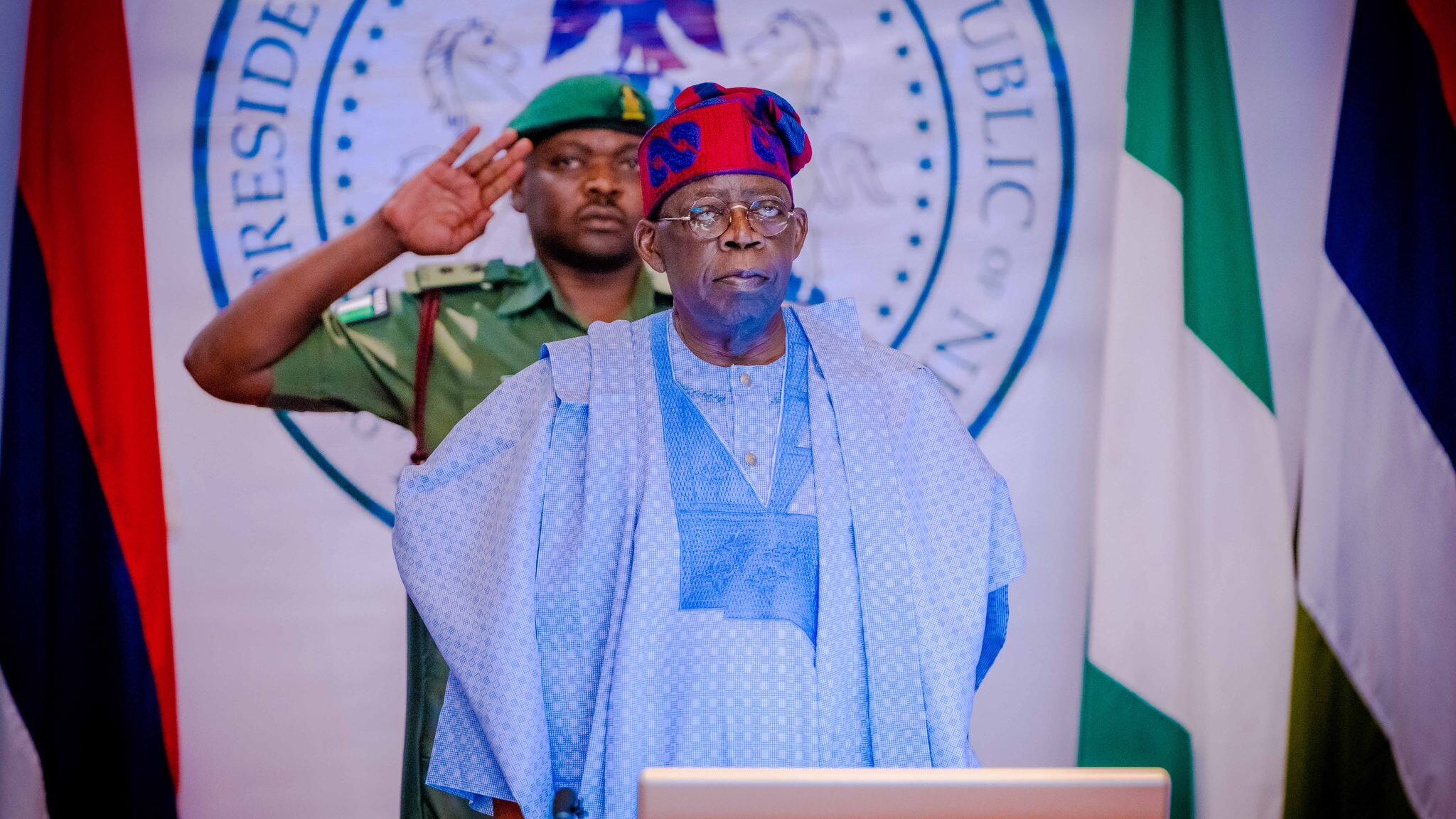
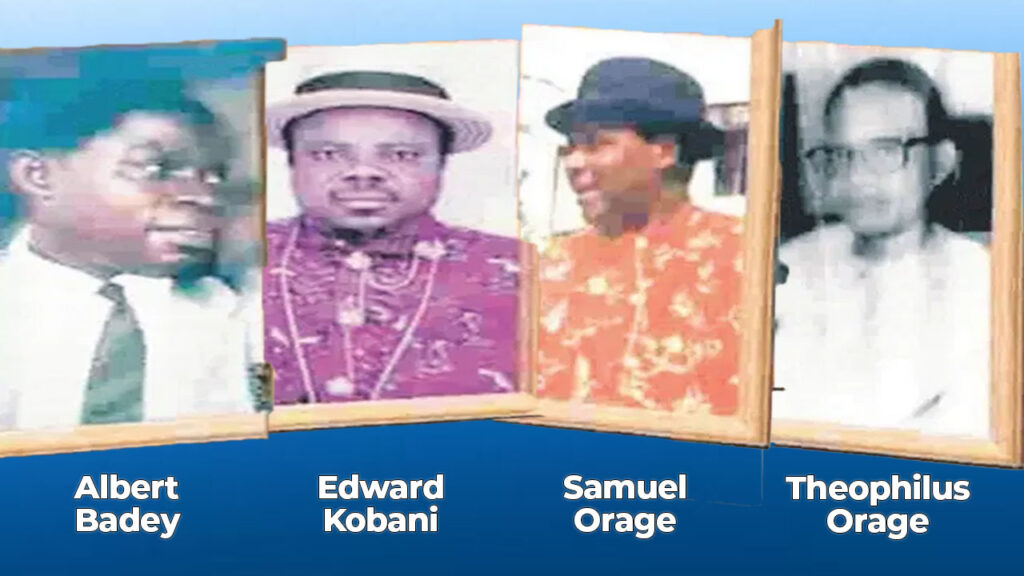
President Bola Tinubu has posthumously awarded the national honour of Commander of the Order of the Niger (CON) to four prominent Ogoni leaders, Albert Badey, Edward Kobani, Theophilus Orage, and Samuel Orage, widely remembered as the “Ogoni Four.”
The President made this announcement on Wednesday while receiving the report of the Ogoni Consultation Committee at the Presidential Villa, Abuja.
Calling for reconciliation after decades of internal strife, Tinubu urged Ogoni communities to unite. “May their memories continue to inspire unity, courage, and purpose among us. I urge the Ogoni people across classes, communities, and generations to close ranks, put this dark chapter behind us, and move forward as a united community with one voice,” he said.
Tinubu assured the people that his administration remains committed to supporting Ogoniland’s journey to peace, environmental restoration, and economic growth. He also emphasized that oil exploration would resume in the area. “I am encouraged by the overwhelming consensus of the Ogoni communities to welcome the resumption of oil production. The government will deploy every resource to support your people in this march towards shared prosperity,” he stated.
President Backs Oil Exploration
Tinubu recalled that in 2022, the previous administration handed over the operatorship of the Ogoni oil field to the Nigerian National Petroleum Company Limited (NNPCL) and its joint venture partners. He pledged that his government would build on that decision and accelerate implementation.
The President directed the National Security Adviser, Nuhu Ribadu, to begin immediate engagement between the Ogoni people, NNPCL, its partners, and other stakeholders to finalize modalities for restarting operations.
Oil production in Ogoniland came to a halt in 1993 following widespread protests against pollution and injustice, which escalated into the execution of Ken Saro-Wiwa and eight other activists in 1995. Tinubu stressed the need for change, saying, “A dead asset is not valuable to the community, the country, or the people. The longer we procrastinate, the worse it is for everyone.”
He also tasked the Minister of Environment to integrate environmental recovery efforts into ongoing dialogue with the Ogoni people, adding: “Let us together turn pain into purpose, conflict into cooperation, and transform the wealth beneath Ogoni soil into a blessing for the people and for Nigeria.”
Committee Report
Don Baridam, Chairman of the Dialogue Committee, said the panel ensured every stakeholder was part of the process. He explained that the report reflects the Ogoni people’s united demand for structured participation in oil production, a renewed commitment to environmental cleanup, and a framework for sustainable development.
Presenting the report earlier, NSA Nuhu Ribadu said the consultation spanned all four Ogoni zones, involving local leaders, community groups, and the diaspora. He added that the exercise was not merely about compiling a report but about rebuilding trust and hope in Ogoniland after years of conflict.
Ribadu emphasized that the report should guide implementation, with an inter-agency task force—comprising NNPCL, relevant ministries, and the Ogoni Dialogue Committee—set to drive the process forward.
What you should know
The recognition of the “Ogoni Four” underscores Tinubu’s attempt to heal longstanding wounds in the Niger Delta.
By backing oil exploration alongside environmental recovery, his administration seeks to balance economic growth with justice for a region scarred by decades of pollution, activism, and conflict. The move could reshape Ogoni’s future if implemented inclusively.