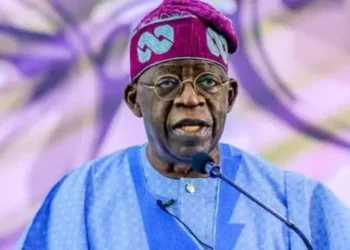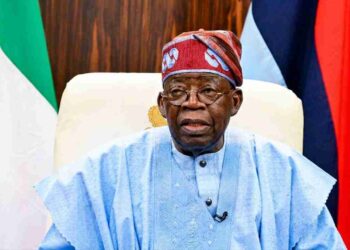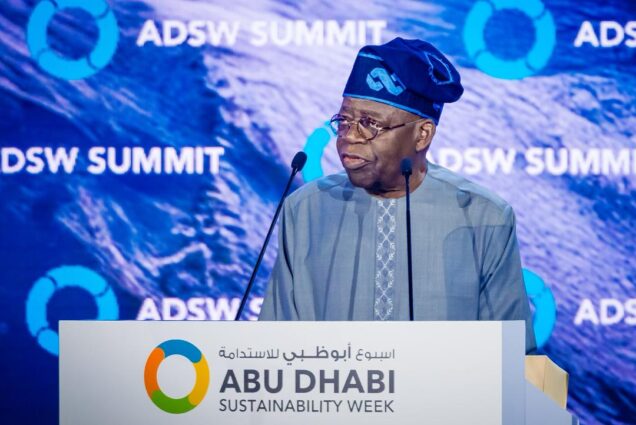
President Bola Ahmed Tinubu has announced that Nigeria will co-host Investopia with the United Arab Emirates in Lagos this February, as part of efforts to attract global investors and accelerate sustainable investment inflows into the country.
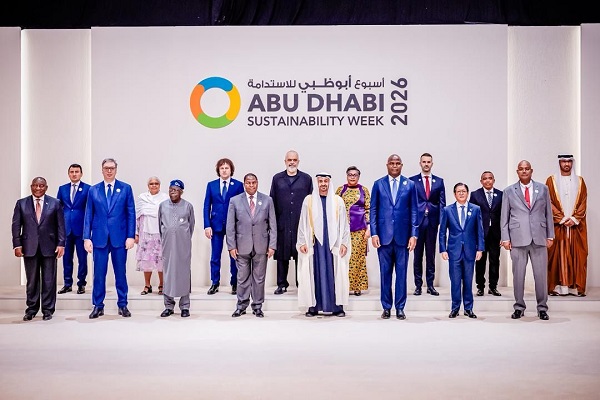
Tinubu made the announcement while addressing participants at the 2026 Abu Dhabi Sustainability Week, where Nigeria also concluded a Comprehensive Economic Partnership Agreement with the UAE to strengthen trade relations and expand cooperation in renewable energy, infrastructure, logistics and digital trade.
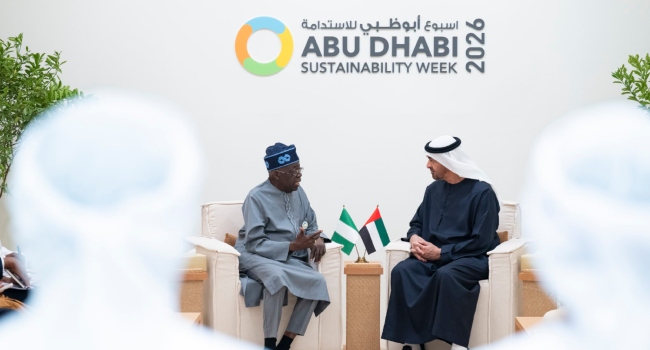
“We warmly invite our partners to join us and help build the next chapter of sustainable and shared prosperity for Nigeria, Africa, and the world,” President Tinubu said.
He described the CEPA as a historic and strategic agreement that would deepen collaboration in aviation, logistics, agriculture and climate-smart infrastructure, while creating long-term opportunities for citizens of both countries.
According to the president, Investopia will serve as a platform bringing together investors, innovators, policymakers and business leaders to convert opportunities into concrete commitments and ideas into investment.
President Tinubu said Nigeria is working towards mobilising up to $30 billion annually in climate and green industrial finance as it pushes ahead with energy transition reforms and expands electricity access nationwide.
“The foundation of every modern economy is electricity. As an emerging economy in the Global South, we understand the delicate balance between industrialisation and decarbonisation, ensuring neither is pursued at the expense of the other,” he said.
He also called for reforms in the global financial system, urging a move away from heavy reliance on sovereign guarantees that disadvantage developing economies.
“Instead, the focus should be on blended finance and first-loss capital mechanisms that allow private sustainable capital flows directly into our green projects without further straining national balance sheets,” Tinubu stated.
The president noted that Nigeria has strengthened its climate governance framework through the adoption of a National Carbon Market Activation Policy and the establishment of a National Carbon Registry, steps he said were designed to boost transparency and investor confidence.
He identified the Electricity Act 2023 as a key driver of Nigeria’s energy reforms, explaining that it supports decentralised power generation and distribution to underserved communities across the country.
Tinubu added that Nigeria’s climate investment strategy includes a $500 million distributed renewable energy fund supported by the Nigeria Sovereign Investment Authority, alongside a $750 million World Bank programme projected to expand clean electricity access to over 17.5 million people.
Reaffirming Nigeria’s commitment to its Energy Transition Plan, the president restated the country’s goal of achieving net-zero emissions by 2060 while sustaining industrial growth and universal energy access.
He also invited foreign investors to explore opportunities in Nigeria’s lithium and critical minerals sector, stressing the government’s focus on local processing and value addition.
Highlighting the impact of ongoing economic reforms, Tinubu said Nigeria has recorded a 21 per cent increase in non-oil exports and rising investor confidence.
“These reforms, alongside wider fiscal and monetary measures, are delivering results. Non-oil exports have grown by 21 per cent, supported by a more diversified product base. Capital importation has risen, and Nigeria now has over 50 billion dollars in investment commitments across key sectors,” he said.
Tinubu concluded by reaffirming Nigeria’s readiness to work with global partners to build a development path that is green, inclusive and sustainable.
What you should know
Nigeria’s decision to co-host Investopia with the UAE signals a strategic push to position the country as a major destination for sustainable and green investments.
The Comprehensive Economic Partnership Agreement strengthens bilateral ties and opens new pathways for collaboration in energy, infrastructure and digital trade. By targeting $30 billion annually in climate finance, Nigeria aims to balance industrial growth with decarbonisation while expanding electricity access.
Recent reforms, including the Electricity Act 2023 and carbon market initiatives, are designed to attract private capital, boost investor confidence and support Nigeria’s long-term goal of achieving net-zero emissions by 2060.