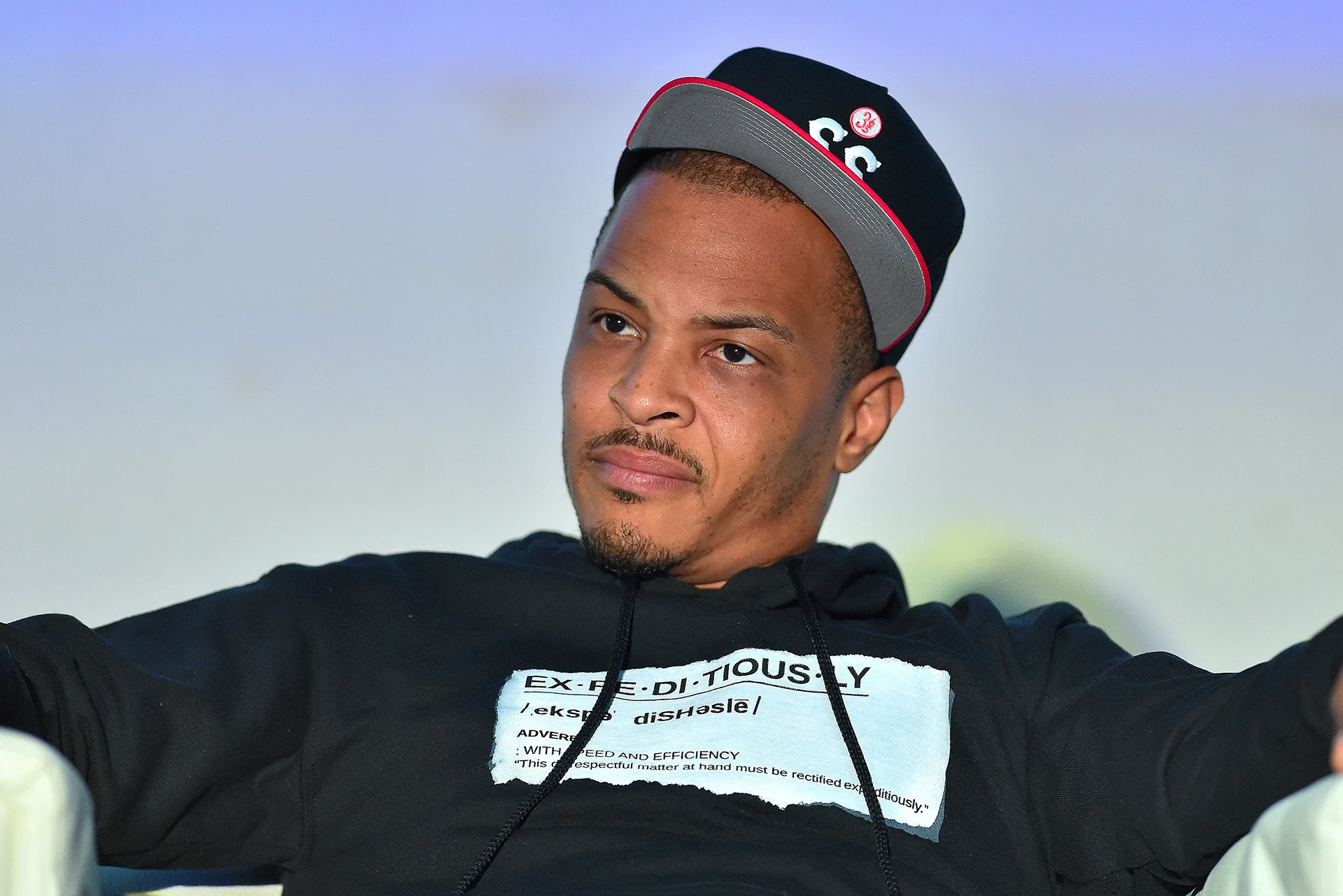
In a frank and provocative conversation with gospel musician Kirk Franklin, Grammy-winning rapper T.I. has voiced sharp criticisms of organized Christianity, distinguishing his personal faith from what he describes as the commercialized practices of the modern church.
The 44-year-old Atlanta native, born Clifford Joseph Harris Jr., didn’t mince words when explaining his absence from church pews despite maintaining his Christian beliefs. Raised in what he describes as a “strong Christian household” with devout female relatives, T.I. insists his issue isn’t with God—it’s with the institution claiming to represent Him.
“I have never been a church person,” T.I. told Franklin during the interview. “My grandma and auntie were very strong in prayer. So, I know how to pray, and I know the word. And I know God is real; I’ve seen his presence and his hands in my life. But I have never felt the connection with the church.”
The rapper’s critique grew more pointed as he characterized churches as profit-driven enterprises rather than spiritual sanctuaries. Drawing comparisons to corporate presentations and entertainment venues, T.I. suggested that contemporary worship services have strayed far from their spiritual foundations.
“To be honest, I don’t think the church is real. I think it’s a business,” he stated bluntly. “It’s like a show. It’s like public speaking, like a TED Talk. And sometimes, the clergy try to twist the word of God to benefit themselves.”
At the heart of T.I.’s concerns lies the controversial practice of tithing—the biblical principle of giving ten percent of one’s income to the church. The rapper questioned whether financial contributions should serve as a prerequisite for divine favor, expressing skepticism about clergy members positioning themselves as necessary intermediaries between believers and God.
“Y’all telling me… I have to pay this joker… for my God to hear my prayer??? “Mehn, I’m outta here,” T.I. said, capturing his frustration with what he perceives as transactional spirituality.
The artist’s comments touch on long-standing debates within American Christianity about the role of money in ministry, the accountability of religious leaders, and whether traditional church structures remain relevant to younger generations. His criticism of clergy as potential manipulators of scripture echoes concerns that have intensified in recent years amid high-profile scandals involving megachurch pastors and televangelists.
T.I.’s remarks are particularly noteworthy given his platform and influence within hip-hop culture, where discussions of faith and spirituality have become increasingly common. His willingness to publicly challenge church authority while affirming his personal relationship with God reflects a growing trend among millennials and younger believers who identify as spiritual but not religious.
The conversation with Kirk Franklin—himself a prominent figure in gospel music who has often bridged secular and sacred spaces—provided an unusual forum for such candid theological discourse. Franklin has built his career on making gospel music accessible to mainstream audiences, making him perhaps an ideal conversation partner for T.I.’s unconventional spiritual perspective.
Whether T.I.’s comments will spark broader dialogue within faith communities or draw criticism from religious leaders remains to be seen. What’s clear is that the rapper has no intention of filtering his views on what he sees as a fundamental disconnect between personal faith and institutional religion.
WHAT YOU SHOULD KNOW
Rapper T.I. has publicly declared that while he maintains a strong Christian faith rooted in his upbringing, he rejects the organized church as a “business” that exploits believers.
His central criticism: churches and clergy manipulate scripture for profit, require financial payments like tithes as conditions for God’s blessings, and unnecessarily position themselves as middlemen between individuals and God.
T.I. insists on a direct, personal relationship with God without institutional involvement—a stance that reflects growing skepticism among younger generations toward traditional religious structures, even among those who consider themselves believers.