The U.S. Supreme Court will not deliver its highly anticipated decision on the constitutionality of President Donald Trump’s expansive global tariff regime on Friday, leaving businesses, trading partners, and legal observers in continued suspense over a case that could fundamentally reshape the balance of executive power.
The justices released only one opinion Friday morning, in an unrelated criminal matter, offering no indication of when they might rule on the tariff challenge. The court maintains its longstanding practice of not announcing its decision schedule in advance, though the delay extends uncertainty over a case with profound implications for both domestic constitutional law and the international economic order.
At stake in the litigation is nothing less than the scope of presidential emergency powers in the modern era. The case represents one of the most significant tests of Trump’s executive authority since he began his second term in January 2025, and legal experts across the political spectrum are watching closely to see whether the court will impose meaningful limits on what critics describe as an unprecedented expansion of unilateral presidential action.
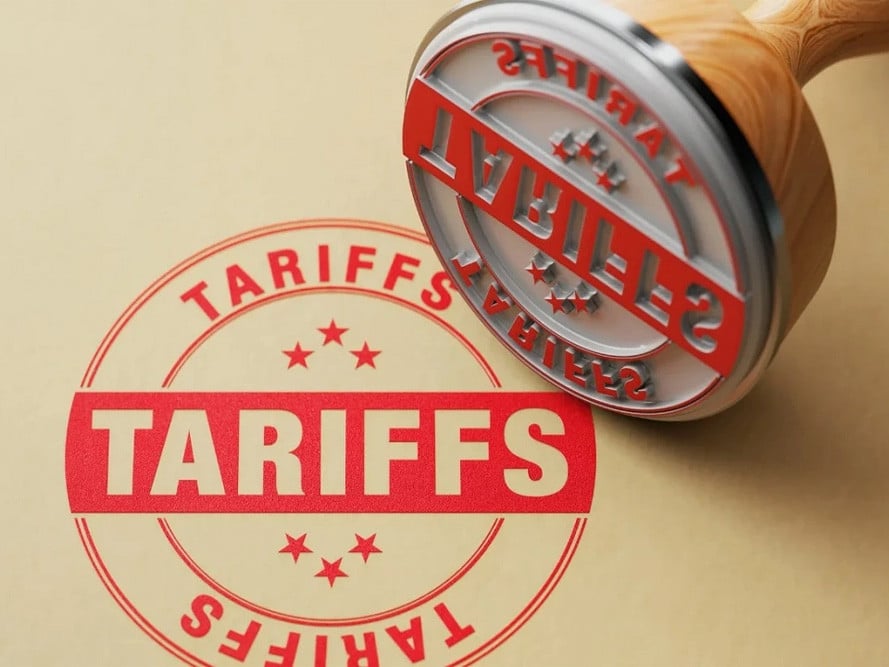
Trump invoked the International Emergency Economic Powers Act of 1977—a Cold War-era statute designed for genuine national security crises—to justify imposing what he termed “reciprocal” tariffs on imports from nearly every American trading partner. The president declared a national emergency based on U.S. trade deficits, arguing that the economic imbalance threatened national security. He separately invoked the same law to target China, Canada, and Mexico with additional tariffs, this time citing the flow of fentanyl and other illicit drugs across American borders as the emergency justification.
During oral arguments heard by the court on November 5, observers noted an unusual degree of skepticism from justices spanning the ideological spectrum. Both conservative and liberal members of the bench appeared to question whether Trump’s use of the emergency powers statute stretched its intended purpose beyond recognition.
The lower courts that previously examined the tariffs ruled that the president had overstepped his constitutional authority, prompting the administration’s appeal to the nation’s highest court. Those rulings suggested that trade deficits and drug trafficking, while serious policy concerns, do not constitute the type of acute national emergencies that Congress envisioned when granting presidents extraordinary economic powers.
The president has vigorously defended his tariff policy, insisting that the measures have strengthened America’s financial position. In a January 2 social media post, Trump warned that a Supreme Court ruling striking down the tariffs would deliver a “terrible blow” to the United States, underscoring the administration’s view that the policy is central to its economic agenda.
The legal challenge has been spearheaded by a coalition of affected businesses and twelve states—most with Democratic governors—who argue that the tariffs have disrupted supply chains, raised consumer prices, and violated the constitutional separation of powers by allowing the executive branch to essentially legislate trade policy without congressional approval.
Beyond the domestic constitutional questions, the case carries enormous weight for the global economy. America’s trading partners have watched the litigation closely, with the outcome likely to determine whether retaliatory measures remain in place and whether the international trading system faces continued disruption. Markets have responded nervously to the uncertainty, with economists warning that prolonged tariff disputes could dampen global growth.
As the court continues its deliberations, the nation waits to see whether the justices will affirm broad presidential discretion in matters touching on national security and economic policy, or whether they will draw a firmer line limiting executive authority—a decision that will reverberate far beyond this particular case and this particular president.
The Supreme Court’s current term runs through June, meaning a decision could come at any point in the coming months. Until then, the tariffs remain in effect, and the constitutional questions remain unresolved.
WHAT YOU SHOULD KNOW
The Supreme Court has postponed its ruling on Trump’s global tariffs, leaving unresolved a critical constitutional question: Can a president use emergency powers laws to unilaterally impose sweeping tariffs based on trade deficits and drug trafficking? Both conservative and liberal justices expressed doubts about the legality during arguments, suggesting Trump may have overreached his authority.
The decision—whenever it comes—will determine not only the fate of these specific tariffs but also set a major precedent for the limits of presidential power and significantly impact the global economy. The stakes are exceptionally high: this is a defining test of executive authority in the modern era.