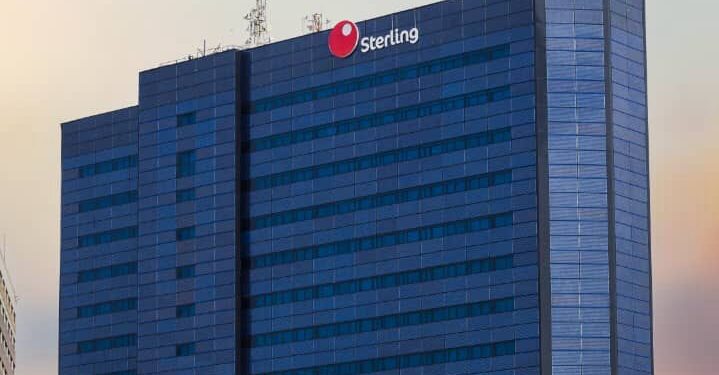
Sterling Financial Holdings Company Plc has successfully recapitalized its banking subsidiaries, Sterling Bank and The Alternative Bank, meeting the Central Bank of Nigeria’s stringent minimum capital requirements with months to spare before the 2026 deadline.
The financial services group announced that both institutions received final regulatory approvals in January 2026, following an ambitious capital-raising program that injected a total of N153 billion into the banks’ equity base.
The recapitalisation effort, which unfolded across multiple phases throughout 2024 and 2025, demonstrates the group’s commitment to strengthening its financial position amid Nigeria’s evolving regulatory landscape. The Central Bank of Nigeria had revised minimum capital requirements for deposit money institutions, prompting banks across the country to shore up their capital bases.
Sterling Financial Holdings’ fundraising strategy comprised three distinct offerings, each attracting robust investor interest. The group commenced with a N75 billion private placement in December 2024, followed by a N28.79 billion rights issue in 2025. The initiative culminated with an N88 billion public offer in October 2025, which the company said recorded strong participation from investors.
The Securities and Exchange Commission, Nigeria’s capital markets regulator, approved the allotment of over 13.8 billion shares resulting from these exercises. Meanwhile, the Central Bank of Nigeria granted recognition to N96.69 billion as additional qualifying capital, bringing both Sterling Bank and The Alternative Bank into full compliance with regulatory thresholds.
“The successful recapitalisation strengthens the institution’s capacity to expand credit, support businesses and households, and sustain its dual-bank structure across conventional and non-interest banking segments,” said Yemi Odubiyi, Group Chief Executive Officer of Sterling Financial Holdings.
Odubiyi’s statement underscores the strategic importance of the capital injection beyond mere regulatory compliance. The enhanced capital base is expected to position the group to increase lending to the real economy, supporting Nigeria’s business community and retail customers at a time when access to credit remains a critical constraint for economic growth.
Sterling’s dual-bank model—operating both conventional banking services through Sterling Bank and Sharia-compliant products through The Alternative Bank—represents a distinctive approach in Nigeria’s competitive financial services sector. The successful recapitalisation ensures both entities can continue serving their respective market segments while meeting heightened prudential standards.
The completion of this exercise places Sterling Financial Holdings among Nigerian banks that have met the Central Bank’s revised capital requirements well ahead of the regulatory deadline, signaling financial strength and operational readiness in an increasingly demanding regulatory environment.
The banking sector’s recapitalisation drive forms part of broader efforts by Nigerian monetary authorities to ensure the resilience and stability of deposit money institutions, particularly as the country’s economy navigates inflationary pressures and currency volatility.
With regulatory approvals now secured, Sterling Financial Holdings can redirect management attention toward business expansion, product innovation, and deepening its market presence across Nigeria’s diverse banking landscape.
WHAT YOU SHOULD KNOW
Sterling Financial Holdings has successfully raised N153 billion through a combination of private placement, rights issue, and public offering to meet the Central Bank of Nigeria’s new minimum capital requirements—completing the recapitalisation ahead of the 2026 deadline.
This positions both Sterling Bank and The Alternative Bank to significantly expand lending to businesses and households while maintaining their dual conventional and non-interest banking operations in Nigeria’s competitive financial sector.