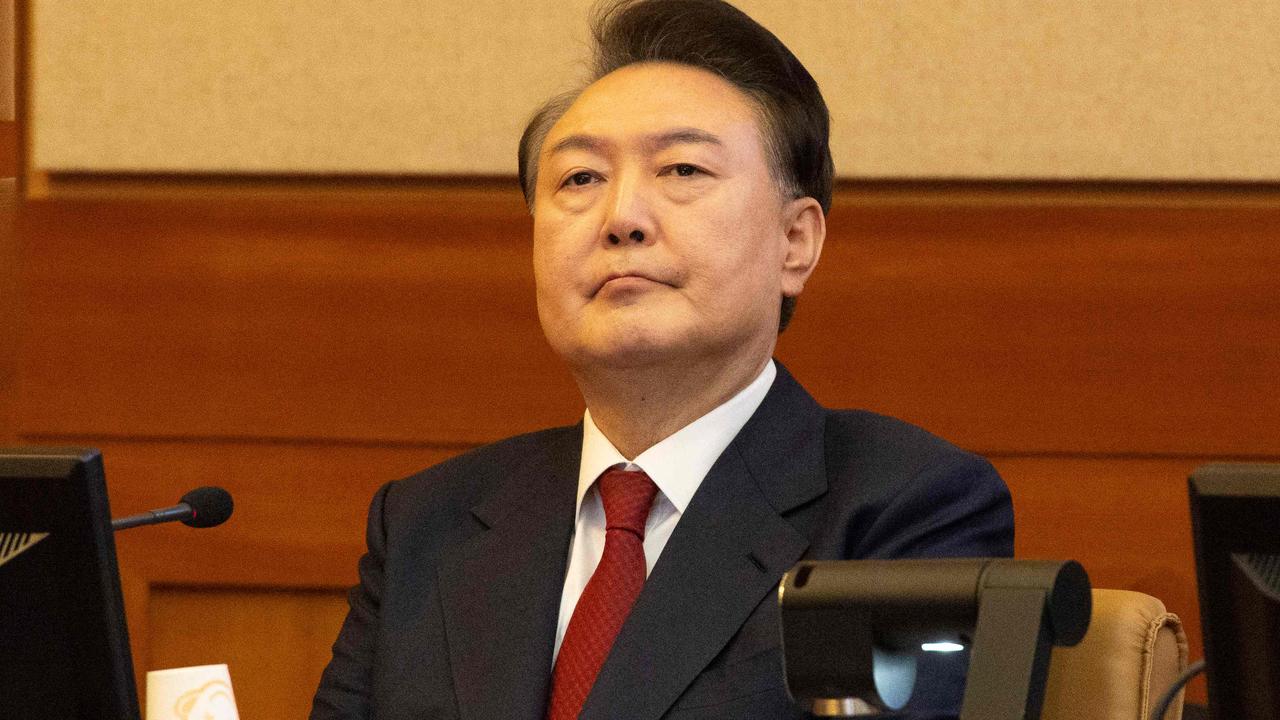
A South Korean court on Friday sentenced former President Yoon Suk Yeol to five years in prison after finding him guilty of obstructing justice and other offences connected to his controversial declaration of martial law and the disorder that followed.
The ruling marks the first verdict in a series of legal battles confronting the disgraced former leader, whose brief suspension of civilian governance on December 3, 2024 triggered widespread public protests and a tense confrontation within the National Assembly.
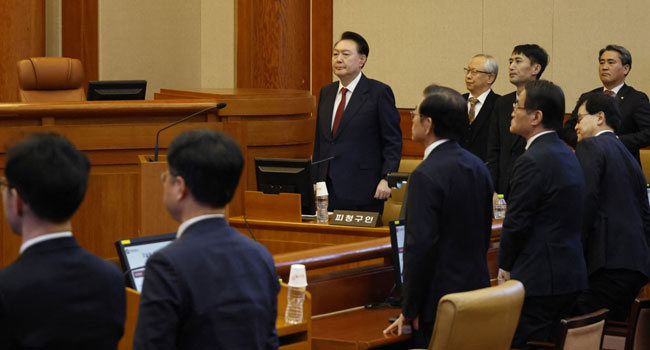
Since being removed from office, Yoon has been facing multiple prosecutions tied to decisions taken during that turbulent period and its aftermath.
Delivering judgment at the Seoul Central District Court, Judge Baek Dae-hyun said Yoon was guilty of obstruction of justice for preventing investigators from carrying out his detention. The court also found that the former president unlawfully excluded cabinet members from a key meeting where the imposition of martial law was discussed.
“Despite having a duty, above all others, to uphold the Constitution and observe the rule of law as president, the defendant instead displayed an attitude that disregarded the… Constitution,” Baek said while reading the verdict. He added that “the defendant’s culpability is extremely grave.”
However, the court cleared Yoon of charges related to the forgery of official documents, citing insufficient evidence. Judge Baek noted that Yoon has seven days to file an appeal against the ruling.
Prosecutors had earlier pushed for a 10-year prison sentence, arguing that Yoon’s actions seriously undermined democratic institutions. Yoon, on his part, maintained throughout the trial that he did not violate any law.
The sentencing comes shortly after prosecutors, in a separate case, demanded the death penalty for Yoon, accusing him of being the “ringleader of an insurrection” for orchestrating the martial law declaration. They argued that the former president showed “no remorse” for actions that endangered “constitutional order and democracy.”
Although capital punishment was sought, it is widely understood that any such sentence would not be carried out, as South Korea has observed an unofficial moratorium on executions since 1997.
During the proceedings, Yoon appeared unfazed, at one point smiling in court as prosecutors pressed for the harshest punishment. The former president, himself once a top prosecutor, has remained defiant, consistently arguing that the declaration of martial law fell within his constitutional authority.
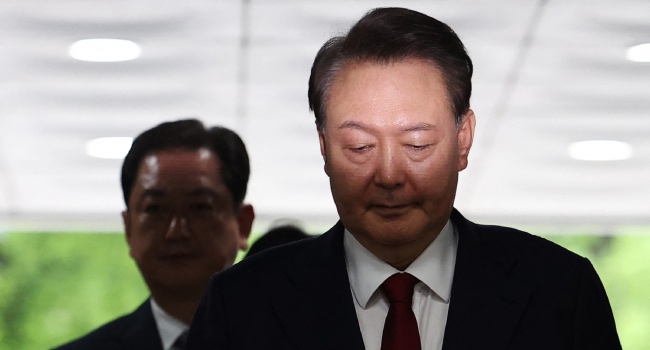
In his closing statement earlier in the week, Yoon insisted that the “exercise of a president’s constitutional emergency powers to protect the nation and uphold the constitutional order cannot be deemed an act of insurrection.” He accused the then-opposition-controlled parliament of imposing what he described as an “unconstitutional dictatorship” through its dominance of the legislature.
“There was no other option but to awaken the people, who are the sovereign,” Yoon said.
The court is expected to deliver its judgment on the insurrection charges on February 19. Separately, Yoon is also standing trial over allegations that he ordered drone operations over North Korea in an attempt to justify the declaration of martial law, a case that includes charges of aiding the enemy.
What you should know
The conviction of former President Yoon Suk Yeol represents a defining moment in South Korea’s democratic history, underscoring the legal limits of presidential power.
While Yoon argues that his actions were constitutionally justified, the courts have begun holding him accountable for decisions that disrupted civilian rule and provoked national unrest.
With multiple trials still ongoing, the outcomes will likely shape future interpretations of emergency powers, executive accountability, and the resilience of South Korea’s constitutional order.