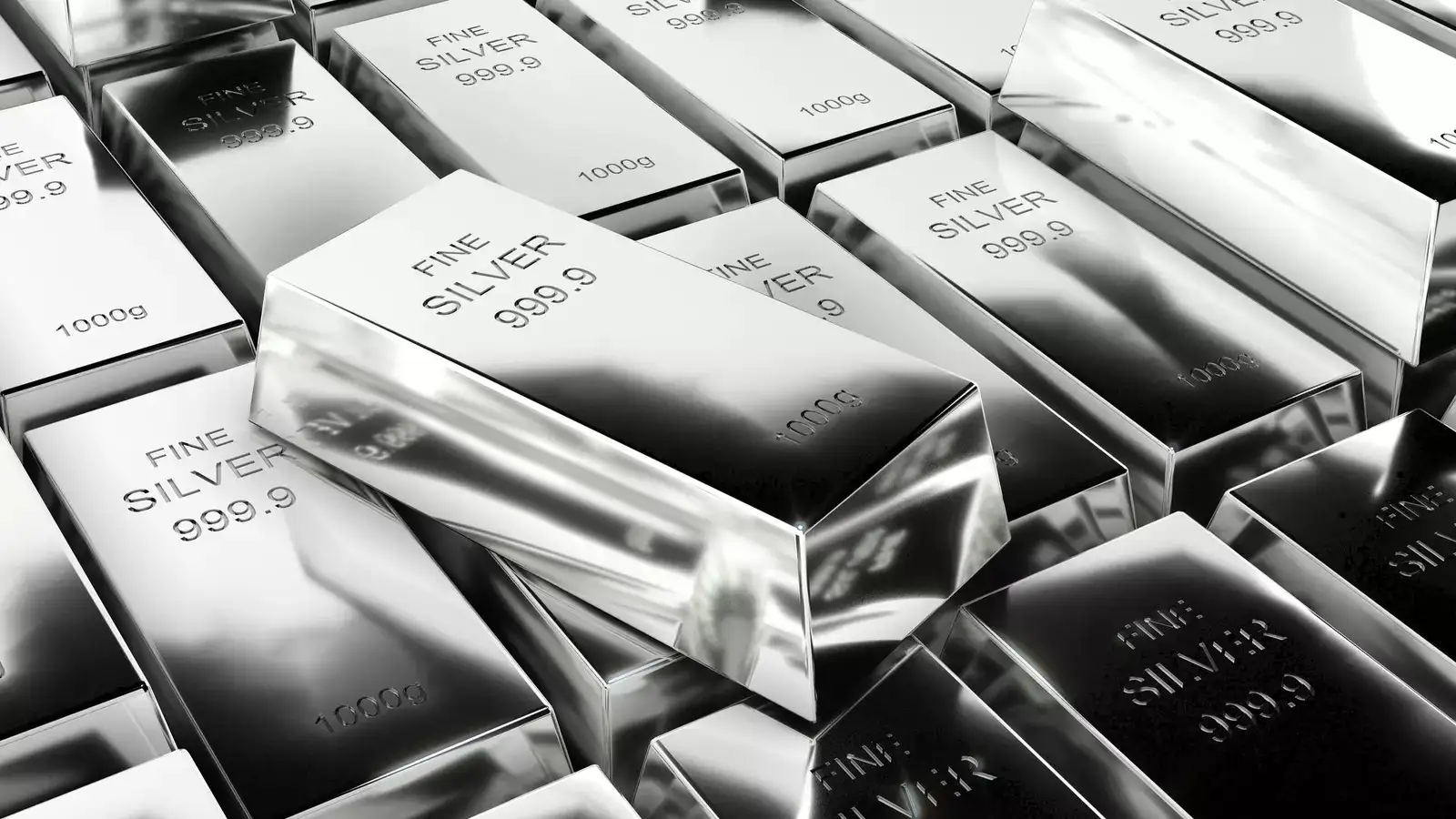
Silver’s meteoric rise continued its remarkable trajectory on Thursday, breaching the $51 mark for the first time in over forty years as investors increasingly turn to tangible assets amid mounting economic uncertainty.
The precious metal’s ascent to $51.235 per ounce represents not just a numerical milestone but a fundamental shift in market sentiment that has analysts drawing comparisons to some of history’s most dramatic commodity rallies.
The surge caps an extraordinary year for silver, which has climbed nearly 70% since January—a performance that has decisively outstripped its more prestigious cousin, gold. This divergence marks a notable departure from traditional patterns, where the two metals typically move in tandem, and suggests deeper structural forces at play in commodity markets.
A Perfect Storm of Demand
Market observers point to a confluence of factors driving silver’s resurgence. Chris Weston, head of research at Pepperstone Group Ltd., identifies the rally as part of a broader flight to safety triggered by escalating concerns about overvalued equity markets and fiscal stability in major economies.
“This rally is part of a broadening interest in precious metals, fueled by fears of an overheating equities market, fiscal pressures in the US, and threats to the Federal Reserve’s independence,” Weston explained. His analysis reflects growing unease among institutional investors about the sustainability of recent stock market gains and the long-term trajectory of government debt.
But silver’s story extends beyond mere safe-haven demand. Unlike gold, which serves primarily as a store of value, silver straddles two worlds—functioning simultaneously as a monetary hedge and an industrial necessity. This dual nature has become increasingly significant as the global energy transition accelerates.
Industrial applications, particularly in renewable energy infrastructure, now account for more than half of worldwide silver consumption. Solar panels and wind turbines require substantial quantities of the metal for electrical conductivity, and with governments worldwide committed to decarbonization targets, this demand shows no signs of abating. Analysts project that consumption will exceed production for the fifth straight year in 2025, creating supply deficits that have added upward pressure to prices.
Supply Constraints Tighten the Squeeze
Adding fuel to the fire, physical silver markets are experiencing acute stress. The London silver market—a critical hub for global trading—has witnessed borrowing costs rocket to unprecedented levels. The implied one-month lease rate, which measures the cost of short-term metal borrowing, surged again on Friday, reflecting genuine scarcity in available inventory.
These supply constraints stem partly from logistical disruptions and partly from strategic positioning. Fears surrounding potential US tariffs have triggered a preemptive rush to relocate inventory across the Atlantic, further draining readily accessible stockpiles and exacerbating the supply-demand imbalance.
Gold Pulls Back from Record Territory
While silver soars, gold has entered a period of consolidation. The yellow metal retreated to $3,963 per ounce in Friday trading, extending a 1.6% decline from the previous session. This pullback follows an impressive four-day winning streak that culminated on Wednesday with gold touching an all-time high of $4,059.31.
Technical analysts note that gold had remained in overbought territory for much of the past month, correcting almost inevitably. “The strong momentum that had delivered new highs day after day gave way, with some traders keen to reduce exposure from extended positions and lock in performance,” Weston observed.
Friday’s Asian session saw spot gold dip 0.4% to $3,963.09 in Singapore trading, while the Bloomberg Dollar Spot Index edged down 0.1% after reaching a 10-week high. Other precious metals presented a mixed picture: platinum and palladium declined, while silver’s 2.4% advance stood out sharply.
Echoes of Past Manias
Silver’s volatility is nothing new. The metal has a storied history of dramatic price swings that have captivated and devastated investors in equal measure.
The most infamous episode occurred in 1980, when Texas oil magnates Nelson Bunker Hunt and William Herbert Hunt attempted to corner the global silver market. Their aggressive accumulation drove prices above $50 per ounce before regulators intervened and margin requirements shifted, triggering a catastrophic collapse that saw prices plummet below $11. The Hunt brothers’ scheme ended in personal bankruptcy and criminal charges, becoming a cautionary tale about market manipulation.
More recently, silver rallied sharply in 2011 amid sovereign debt crisis fears, and again in 2020 when retail investors, coordinating through social media platforms like Reddit’s WallStreetBets, launched the #silversqueeze campaign aimed at forcing short-sellers to cover positions.
While Thursday’s price represents a nominal record, it remains far below silver’s inflation-adjusted peak from 1980, which economists estimate would translate to nearly four times today’s value when accounting for dollar depreciation.
The Debasement Trade Gains Momentum
Silver’s resurgence forms part of a broader phenomenon market participants have dubbed the “debasement trade”—a wholesale shift away from fiat currencies into alternative stores of value. This movement encompasses not only traditional precious metals but also digital assets like Bitcoin, as investors seek protection against currency dilution resulting from expansive monetary policies and mounting sovereign debt burdens.
The trend reflects deeper anxieties about the long-term purchasing power of paper currencies and the ability of central banks to maintain price stability while navigating competing political pressures. With the Federal Reserve’s independence increasingly subject to public scrutiny and political commentary, investors are hedging against scenarios once relegated to the fringes of economic discourse.
What Lies Ahead
As silver trades at levels not seen since the early Reagan administration, the question becomes whether this rally has staying power or will prove another chapter in the metal’s boom-bust history.
Bulls argue that, unlike previous speculative episodes, current price levels are underpinned by genuine structural demand from industrial users facing limited supply alternatives. The energy transition alone could support elevated prices for years to come, regardless of monetary policy shifts or financial market conditions.
Skeptics counter that silver’s volatility makes it inherently unstable and that speculative positioning could unwind rapidly if risk appetite returns to equity markets or if supply constraints ease through increased mining output or recycling.
For now, silver’s remarkable run continues to capture market attention, serving as both a barometer of economic anxiety and a bet on the world’s energy future. Whether Thursday’s high marks a new plateau or merely another peak in silver’s perpetually turbulent journey remains to be seen.
What is certain is that after years of languishing in gold’s shadow, silver has reclaimed its place at the center of the commodity conversation—and investors worldwide are taking notice.
WHAT YOU SHOULD KNOW
Silver has hit $51.235 per ounce—its highest level in over 40 years—driven by a powerful combination of factors that set it apart from previous rallies. Unlike past speculative bubbles, this surge is backed by genuine structural demand.
Industrial applications, particularly in solar panels and wind turbines, now consume over half of the global silver supply, with demand projected to outstrip production for the fifth consecutive year in 2025.
Add to this severe supply constraints in physical markets, inflation fears, and growing distrust in traditional currencies, and silver has transformed from a speculative bet into a strategic asset straddling two critical roles: industrial necessity and monetary hedge.
While the metal’s 70% year-to-date gain has outpaced gold’s performance, investors should remember silver’s notorious volatility. The 1980 Hunt brothers’ manipulation and subsequent crash serve as a stark reminder that what goes up can come down just as dramatically.