Nigeria’s top military commanders have arrived in Maiduguri following deadly bomb attacks that left at least 23 people dead and over 100 others injured.
The deployment comes after President Bola Ahmed Tinubu directed the nation’s service chiefs to relocate to Borno State to take charge of the worsening security situation.
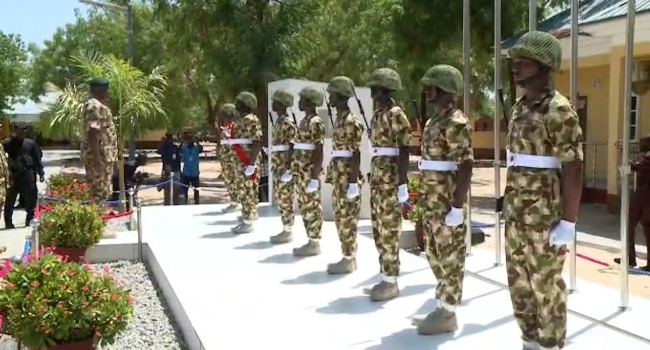
Leading the team are the Chief of Defence Staff, Olufemi Oluyede, and the Chief of Army Staff, Waidi Shaibu, who arrived at the Air Force Base in Maiduguri and were received by the Theatre Commander before proceeding to the headquarters of Operation Hadin Kai.
During the visit, the defence chief inspected a quarterguard mounted in his honour, while the team is expected to engage frontline troops, government officials, and key stakeholders to address the renewed wave of attacks linked to Boko Haram insurgents.
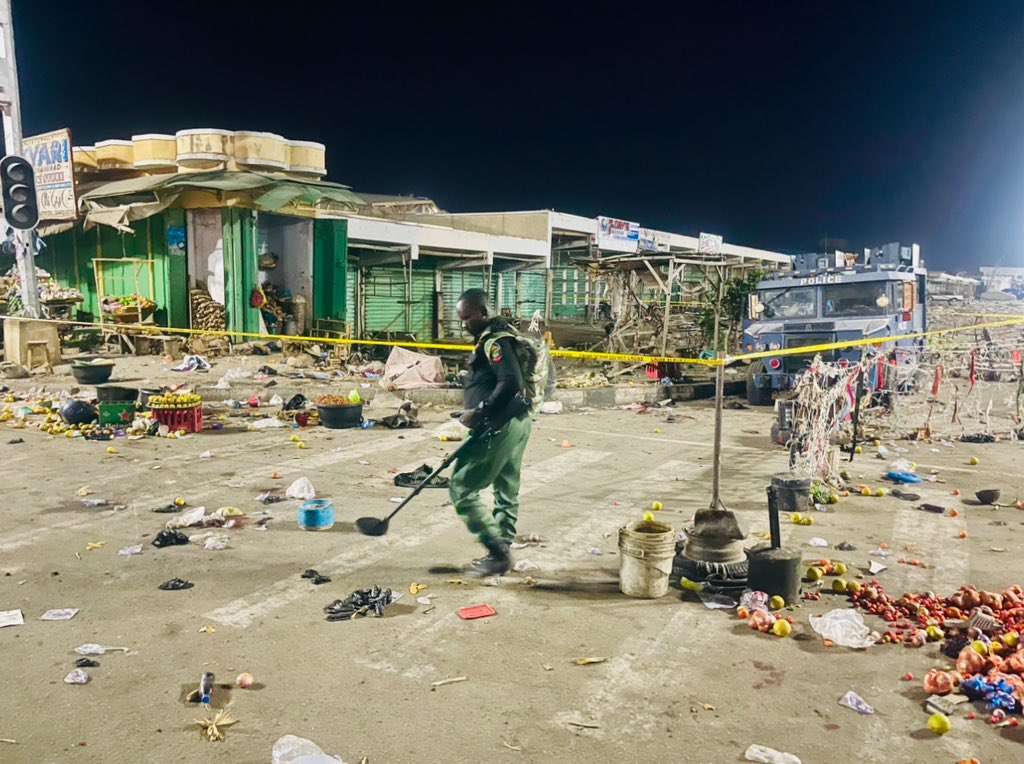
The coordinated explosions, which occurred on Monday evening, targeted a busy market, the entrance of a major teaching hospital, and a post office area in the city of about 1.2 million residents. The attacks have sparked fear among residents, especially after a period of relative calm in recent years.
Military authorities blamed suspected Boko Haram militants for the bombings and warned of an increased risk of suicide attacks as the holy month of Ramadan draws to a close.
President Tinubu described the incident as a desperate move by террорист elements attempting to spread panic, stating, “I want to make it categorically clear that these acts of terror are the final desperate and frantic attempts by criminals and terrorist elements trying to instil and spread fear.”
The service chiefs are expected to remain in the state to closely monitor the situation and coordinate ongoing military operations aimed at restoring stability in the region.
What you should know
The Maiduguri bombings mark a concerning resurgence of insurgent activity in northeastern Nigeria after years of relative stability.
The federal government’s decision to deploy top military leadership directly to Borno underscores the seriousness of the threat. Boko Haram and other extremist groups remain active in the region, often increasing attacks during significant periods like Ramadan.
The move aims to boost coordination, reassure residents, and strengthen security operations to prevent further violence.