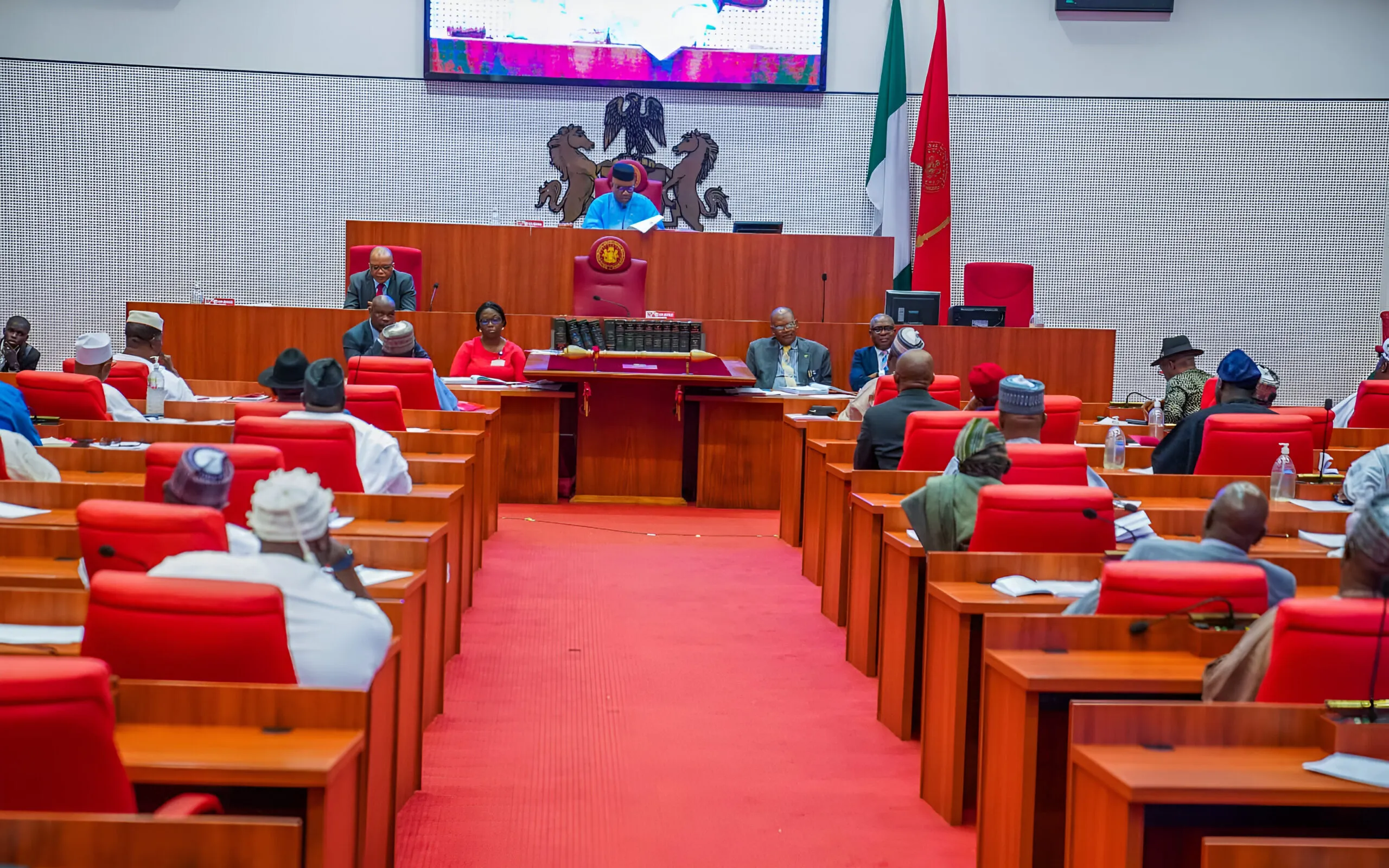
The Senate has constituted a seven-member committee to collate, harmonise, and refine the views and submissions of lawmakers on the Electoral Act Amendment Bill, 2026, with instructions to present a unified report to the chamber on Tuesday next week.
The decision followed more than two hours of intense deliberations on the bill’s provisions during a closed-door session of the upper chamber.
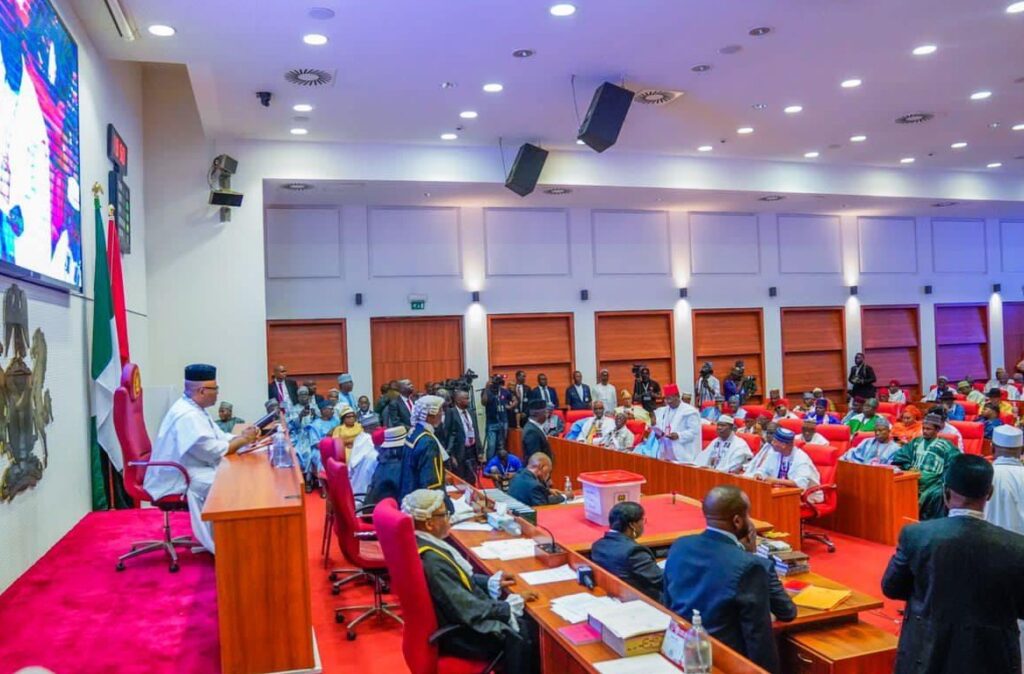
The panel is chaired by the Chairman of the Senate Committee on Judiciary, Human Rights and Legal Matters, Senator Niyi Adegbomore. Other members of the committee include Senators Adamu Aliero, Aminu Tambuwal, Adams Oshiomhole, Danjuma Goje, Tony Nwoye and Titus Zam.
The committee has been given a three-day window to complete its assignment and submit its consolidated report for consideration at the next plenary sitting scheduled for next week.
On Thursday, the Senate formally commenced consideration of the Electoral Act 2022 (Repeal and Re-enactment) Bill 2026 and immediately resolved into a closed session to scrutinise documents presented by the Chairman of the Senate Committee on Electoral Matters, Senator Simon Lalong.
The decision to hold the session behind closed doors was aimed at allowing senators to carefully study the proposed amendments and accompanying documents before resuming open legislative debate on the bill.
This step followed the Senate’s decision on Wednesday to defer consideration of the bill, granting lawmakers additional time to prepare for a comprehensive review.
Although the House of Representatives has already passed the bill, Senate President Godswill Akpabio emphasised the importance of subjecting it to detailed examination, considering its far-reaching impact on Nigeria’s electoral framework.
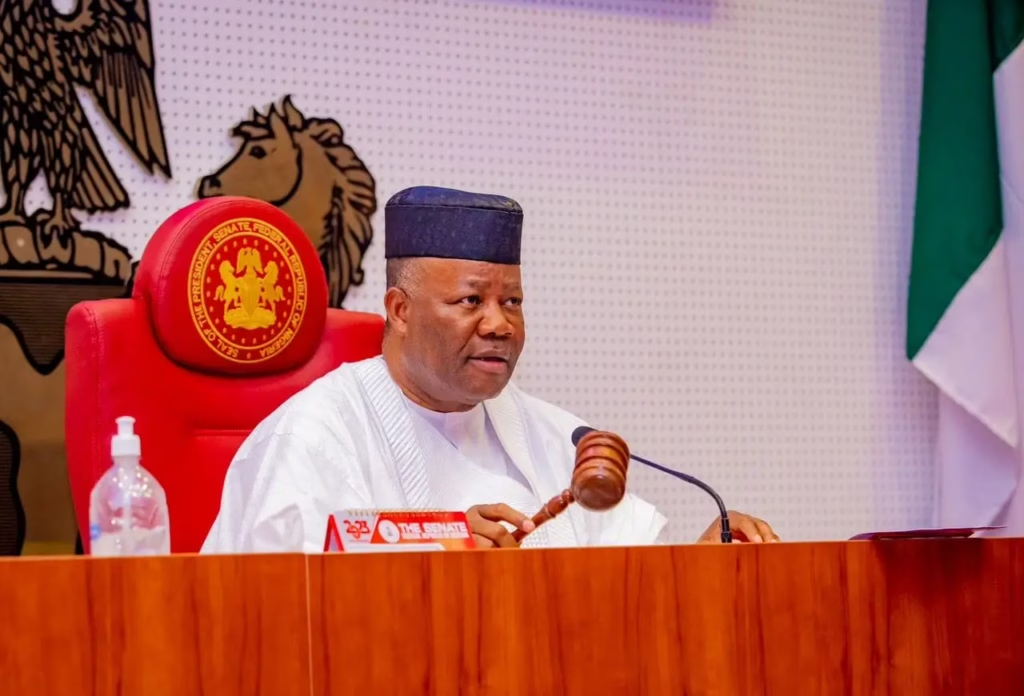
“This is a very important bill, especially as it is election time. We must take our time to ensure justice is done to all, so that we do not end up at the tribunal,” he said.
Findings by the relevant committee indicate that a clause-by-clause review of the bill suggests that its passage would strengthen electoral integrity, improve transparency and reinforce public trust in the country’s electoral system.
What you should know
The Electoral Act Amendment Bill, 2026, is seen as a critical piece of legislation ahead of future elections in Nigeria.
Lawmakers believe that refining the existing Electoral Act will address loopholes that have previously led to disputes, litigation and public distrust in election outcomes. By setting up a harmonisation committee, the Senate aims to ensure that diverse opinions from senators are carefully aligned into a single, coherent position.
The process reflects the legislature’s intention to balance speed with thoroughness, ensuring that any amendments passed enhance transparency, fairness and confidence in the electoral process while reducing post-election conflicts.