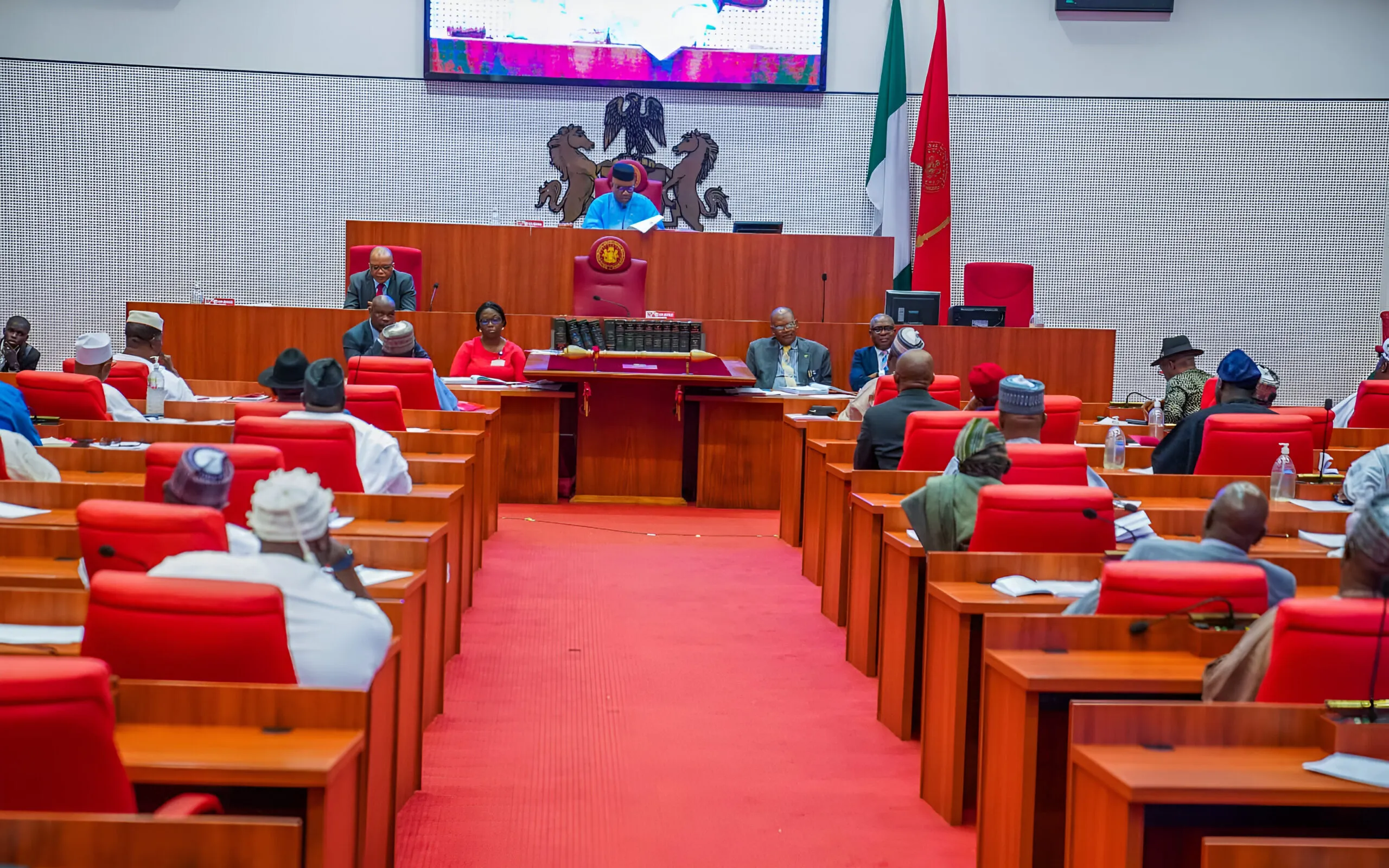
The Nigerian Senate has opened a sweeping investigation into the operations of Ponzi schemes across the country, with a particular focus on the collapse of Crypto Bullion Exchange (CBEX), a platform accused of swindling Nigerians out of over ₦1.3 trillion—approximately $847 million.
The resolution to begin the probe was passed during Tuesday’s plenary following a motion tabled by Senator Adetokunbo Abiru (APC, Lagos East), co-sponsored by Senator Osita Izunaso (APC, Imo West).
The motion, which received unanimous support, mandates a joint committee drawn from four Senate panels—Banking, Insurance and Other Financial Institutions; Capital Market; Anti-Corruption and Financial Crimes; and ICT and Cybercrime—to carry out the investigation. The committee is expected to conduct public hearings across Nigeria’s six geo-political zones and deliver its findings within four weeks.
Leading the debate on the floor, Senator Abiru outlined the staggering damage caused by the unchecked spread of fraudulent investment platforms in Nigeria. From the infamous MMM Nigeria in 2016 to MBA Forex in 2020, and now the far-reaching collapse of CBEX, the senator said these scams have left a trail of personal and economic devastation.
He expressed deep concern that the CBEX case stands out not only because of its sheer scale but also due to the platform’s brazen promises of unsustainable profits, which drew in millions of unsuspecting Nigerians before its sudden collapse. The fallout, according to him, has included financial ruin, family disintegration, psychological trauma, and even loss of life.
Abiru laid part of the blame on the apparent indifference of key regulatory agencies—including the Securities and Exchange Commission (SEC), Central Bank of Nigeria (CBN), Economic and Financial Crimes Commission (EFCC), and Nigerian Financial Intelligence Unit (NFIU)—which he said failed to act swiftly despite the platform’s widespread and visible activities.
According to the senator, the current surge in digital Ponzi schemes stems from multiple vulnerabilities plaguing Nigerian society, including soaring youth unemployment, widespread poverty, low levels of financial literacy, and inadequate access to legitimate investment platforms. He called on the government to initiate urgent reforms to curb the trend and safeguard citizens from falling prey to fraudulent schemes.
Other senators echoed his sentiments. Chief Whip of the Senate, Senator Tahir Monguno (APC, Borno North), said the financial and social implications of these scams are “alarming” and insisted that the Senate must compel regulatory bodies to account for their failure to act.
Senator Sadiq Umar (APC, Kwara North) reinforced the urgency of the probe, arguing that regulatory negligence has eroded public trust in Nigeria’s financial institutions. He urged the Senate to do everything possible to restore confidence and protect Nigerians from future scams.
Chairman of the Senate Committee on Appropriations, Senator Olamilekan Adeola (APC, Ogun West), was particularly scathing in his remarks. He said the lack of regulatory action emboldened Ponzi operators to exploit Nigerians at will. “It is unacceptable that billions of naira are lost while regulatory agencies remain passive. We must act decisively,” he said.
Beyond the CBEX case, the Senate vowed to use its oversight authority to uncover how such operations were able to flourish in the face of existing financial regulations. The goal, lawmakers said, is not only to determine the cause of regulatory failure but also to recommend strong preventive measures that would close loopholes and hold financial watchdogs accountable.
The resolution is seen as a step toward addressing systemic weaknesses that have allowed pyramid schemes to thrive in Nigeria’s largely informal and vulnerable economic landscape. It also signals a rare moment of bipartisan consensus on an issue that has touched every corner of the country.
What you should know
The Senate is investigating the collapse of CBEX, a crypto-based Ponzi scheme that defrauded Nigerians of over ₦1.3 trillion.
The probe, driven by public outcry and mounting pressure, aims to expose regulatory failures and recommend solutions. CBEX’s collapse follows a disturbing pattern of financial scams in Nigeria, many of which flourish amid economic hardship and poor oversight.