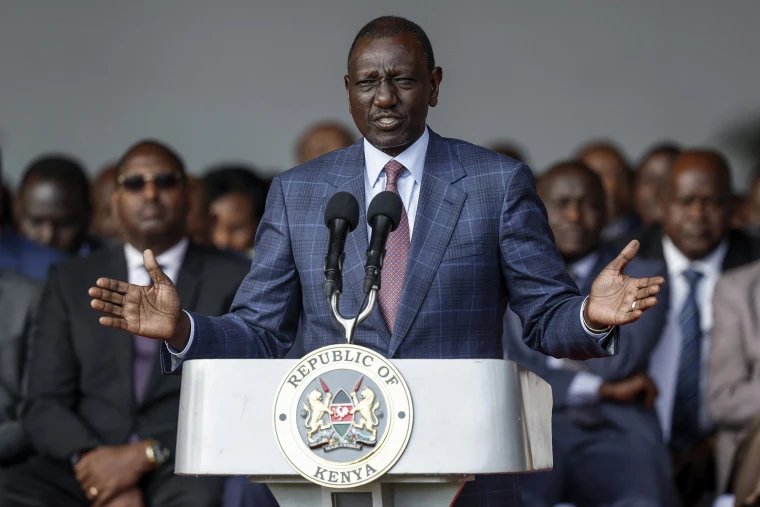
Kenyan President William Ruto has issued his sternest warning yet amid a growing wave of anti-government protests sweeping across the country.
Addressing a crowd in Nairobi on Wednesday, Ruto condemned what he described as efforts to forcibly remove his government through “unconstitutional means” and authorized police to shoot violent demonstrators in the leg as a measure of containment.
The embattled president’s remarks come on the heels of a violent chapter in Kenya’s ongoing unrest, which last week saw 31 people killed during nationwide demonstrations. The protests, sparked by economic discontent, police brutality, and widespread frustration with the government, have now evolved into a broader rejection of Ruto’s leadership just two years after his election in 2022.
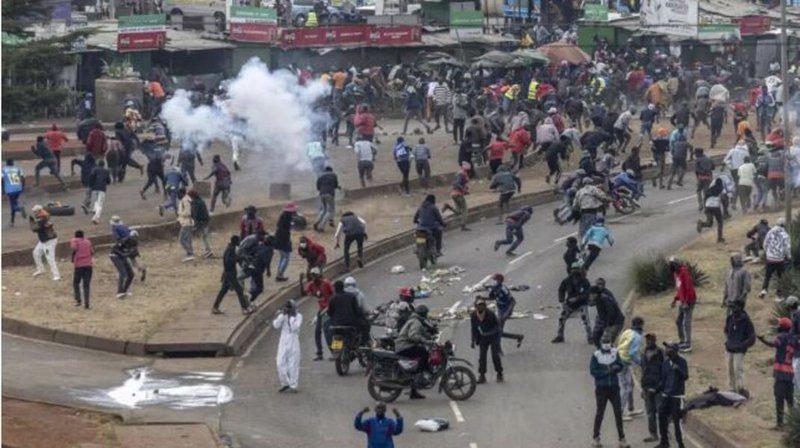
Speaking in Swahili to his supporters, Ruto accused opposition figures and protest organizers of stoking violence with the intent of destabilizing the country and toppling the elected government before the next general elections in 2027. “They want to start chaos, organise protests, burn people’s property, bring disaster so as to overthrow the government before 2027… This is a democratic country,” Ruto said.
He emphasized that the government would not permit a few “impatient” individuals to destroy the nation’s democratic structures, vowing that violent protest will not be tolerated. “You cannot sponsor violence and go scot-free,” he warned, declaring that any attacks on law enforcement officers would be interpreted as acts of war.
Ruto further said that protesters who engage in violence “should be shot in the leg, be taken to hospital and taken to court,” marking a sharp escalation in the rhetoric from the presidency.
What began last year as a largely youth-led protest movement opposing harsh taxation has morphed into a sustained national outcry over entrenched corruption, inflation, economic stagnation, and deadly police crackdowns. Although the controversial finance bill that initially triggered the protests was eventually withdrawn, the underlying discontent has only deepened.
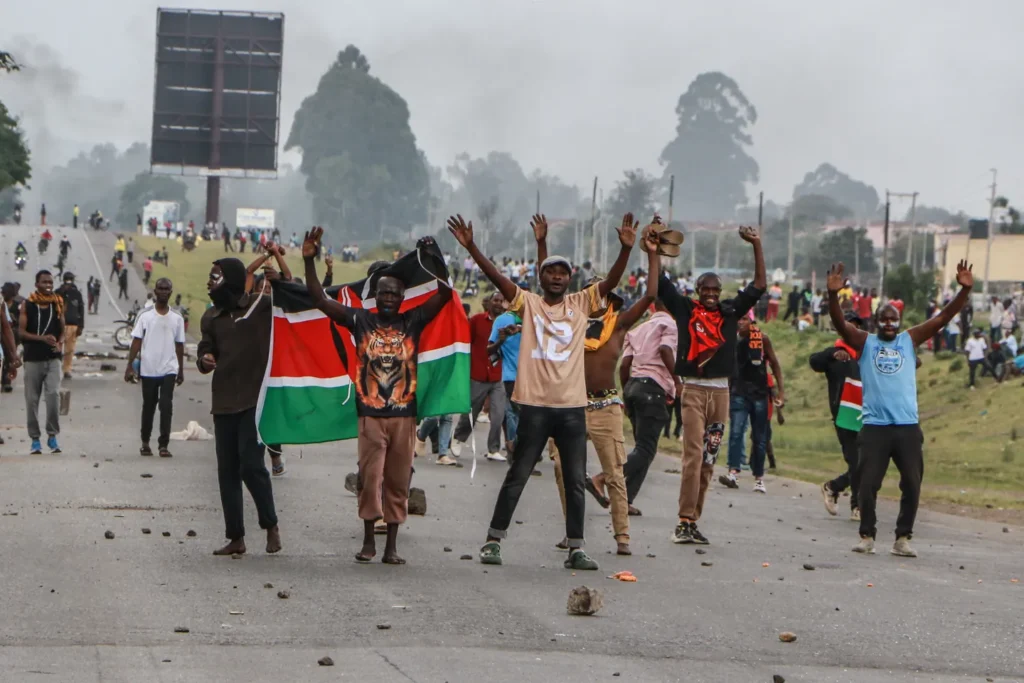
Recent demonstrations turned deadly and chaotic, with some degenerating into looting and the destruction of thousands of businesses. Among the grievances voiced by demonstrators is the recent death of a teacher in police custody, further fueling public anger over security force abuses.
According to tallies by rights organizations cited by AFP, 51 people have been killed in protest-related violence over the past two months. This week’s protests, which coincided with Saba Saba Day—a national commemoration of the 1990 pro-democracy uprising against former President Daniel arap Moi—resulted in the deaths of 31 individuals, widespread injuries, and the arrest of hundreds.
Protesters have accused the government of deploying armed agitators to infiltrate and discredit peaceful movements, while state officials likened one of June’s massive demonstrations to an attempted coup.
The situation has exposed deep political fractures within Kenya’s leadership. Former Deputy President Rigathi Gachagua, once Ruto’s ally during the 2022 elections, has emerged as one of the government’s fiercest critics, accusing it of perpetrating violence against citizens. Gachagua, who was impeached following his fallout with Ruto, joined other opposition leaders on Tuesday in urging the public to boycott any businesses or institutions linked to the current regime.
In response, Ruto’s allies have accused Gachagua of financing violent activities and even called for his arrest—allegations he has firmly denied.
The demonstrations have also spotlighted economic despair among Kenya’s youth, who remain trapped in informal, low-paying jobs despite rising costs and heightened expectations. Many are turning to social media to mobilize, express outrage, and demand accountability from their leaders.
Internationally, the violence has raised alarms. The United Nations expressed serious concern over the state-sanctioned response to the protests, stressing that the use of deadly force by security personnel must be reserved only for instances where there is a direct threat to life. “Intentional lethal force by law enforcement officers, including with firearms, should only be used when strictly necessary to protect life from an imminent threat,” the UN stated.
The situation remains tense as Kenyans brace for the next steps in what has become one of the most volatile episodes in the nation’s recent democratic history.
What you should know
President William Ruto has taken a hardline stance against rising anti-government protests, authorizing security forces to use targeted force against violent demonstrators.
The protests—initially tax-related—have expanded into broader demands for economic justice, accountability, and an end to state violence. With dozens already killed and political tensions deepening, Kenya faces a critical moment for both its democracy and social stability.