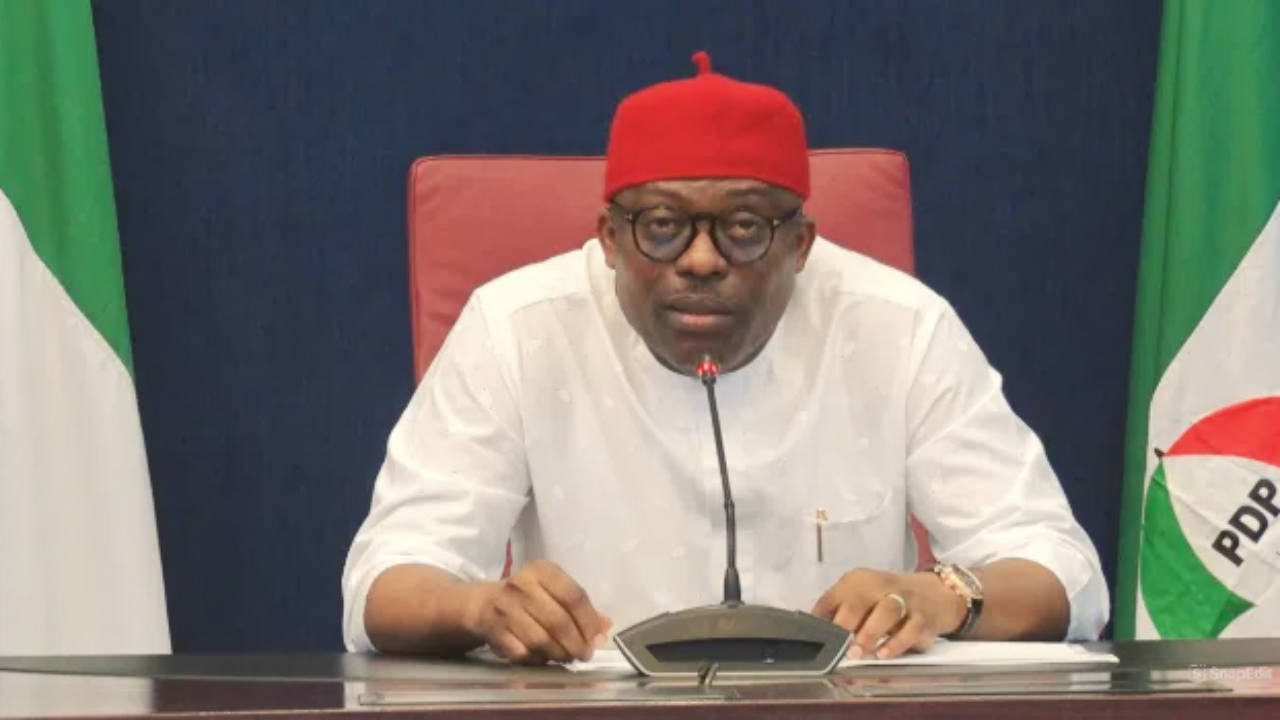
A High Court sitting in Oyigbo Local Government Area of Rivers State has intervened in the deepening political turmoil in the state, issuing an interim order that temporarily stops all actions connected to the impeachment proceedings against Governor Siminalayi Fubara and his deputy, Ngozi Nma-Odu.
In its ruling delivered in Port Harcourt, the court placed restraints on the Speaker of the Rivers State House of Assembly, Martin Amaewhule, and thirty-two other defendants, including the Clerk of the House and the Chief Judge of Rivers State, preventing them from taking any further steps aimed at pushing forward the impeachment process.

The order specifically restrained the Chief Judge, Justice Simeon Chibuzor-Amadi, from receiving, transmitting, reviewing, or acting on any request, resolution, or document linked to impeachment proceedings for the purpose of setting up an investigative panel. The court ruled that this restraint would remain in effect for a period of seven days, pending further legal consideration.
Justice Florence Fiberesima granted the interim injunction after hearing a motion ex parte filed separately by Governor Fubara and his deputy. In the two suits, numbered OYHC/7/CS/2026 and OYHC/6/CS/2026, the court also authorised substituted service on the first to the thirty-first defendants by allowing the court papers to be pasted at the entrance of the Rivers State Assembly residential quarters.
The court further directed that the Chief Judge, named as the thirty-second defendant, should be served through any judicial staff available at his chambers within the court complex.
Justice Fiberesima subsequently adjourned the matter to January 23, 2026, for the hearing of the motion on notice, effectively shifting the impeachment dispute from the political space into the judicial arena.

The court action followed recent developments at the Rivers State House of Assembly, where lawmakers on Friday unanimously called on the Chief Judge to constitute a panel to investigate allegations of gross misconduct against Governor Fubara and his deputy. The legislators had pledged to press ahead with impeachment proceedings despite growing controversy surrounding the process.
Earlier, the lawmakers had addressed a press conference in Port Harcourt, accusing the governor of allegedly resorting to blackmail. Speaking at the briefing, Deputy Speaker Dumle Maol asserted that Fubara no longer enjoyed the confidence required to resolve the political crisis affecting the oil-producing state.
The assembly members alleged that the governor breached the 1999 Constitution, insisting that the legislature was left with no alternative but to invoke its constitutional authority to remove him from office. They also accused both the governor and his deputy of attempts to intimidate the parliament.

Despite the strong stance, the lawmakers expressed appreciation to President Bola Ahmed Tinubu for intervening in the crisis and also urged Speaker Martin Amaewhule to reconvene the House.
Their position followed weeks after impeachment proceedings were formally initiated against Fubara and Odu over allegations of gross negligence, a move that has significantly heightened political tension across Rivers State.
What you should know
The Rivers State political crisis has now entered a decisive legal phase, with the court’s interim injunction temporarily shielding Governor Siminalayi Fubara and his deputy from impeachment actions.
While the House of Assembly insists it is exercising constitutional powers over alleged misconduct, the court’s intervention underscores the judiciary’s role in checking legislative actions.
The outcome of the January 23, 2026 hearing will be critical, as it may determine whether the impeachment process proceeds or is halted entirely, shaping the political stability and governance direction of Rivers State in the coming months.