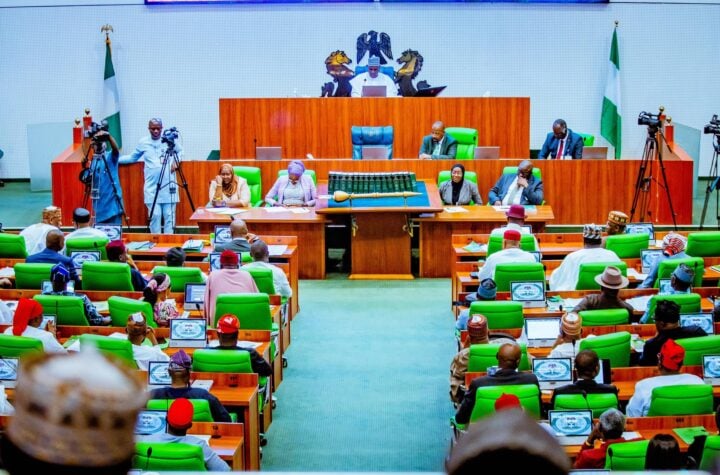
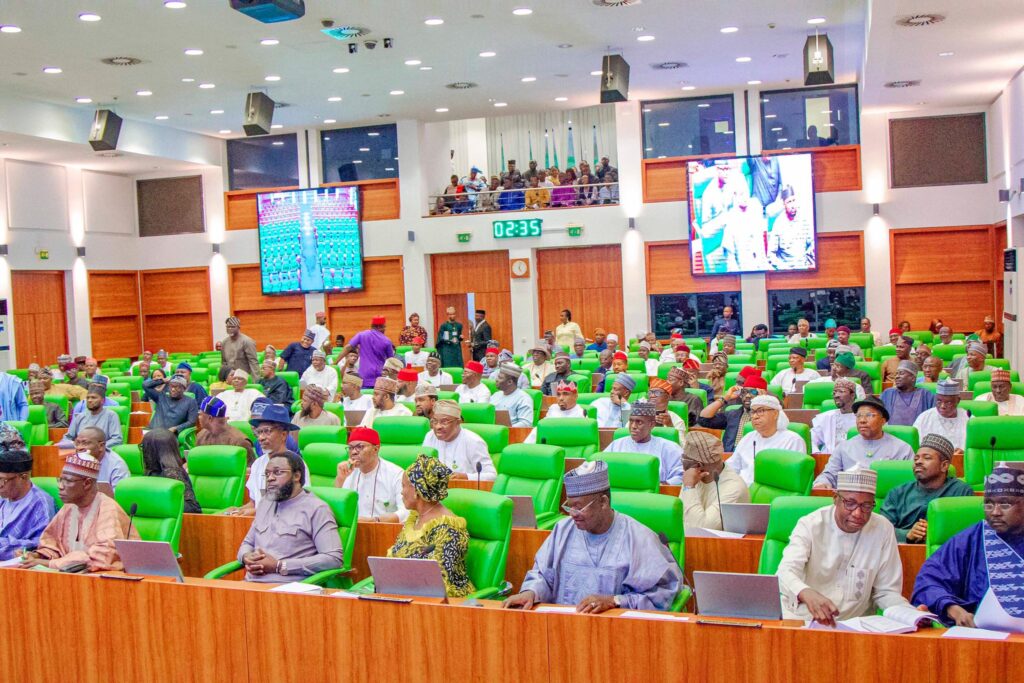
Nigeria’s House of Representatives has urged the Federal Government to withdraw its blanket invalidation of degree certificates obtained from the Republics of Benin and Togo.
The decision was reached after the green chamber considered and adopted reports presented by its Committee on Public Petitions, which examined complaints that arose following the Federal Government’s earlier move to stop recognising university degrees issued by institutions in the two neighbouring West African countries.
Lawmakers advised the Federal Government to replace the sweeping sanction with a case-by-case verification approach that would allow authorities to investigate confirmed instances of academic fraud without penalising legitimate graduates.
The House also recommended that the Federal Ministry of Education collaborate with education authorities in Benin and Togo to reinforce verification systems, prevent academic fraud, and properly authenticate foreign academic qualifications obtained by Nigerians.
In addition, the lower chamber urged the Federal Government to use the Ministry of Information and the National Orientation Agency to sensitise Nigerians on the importance of verifying the accreditation status of foreign institutions and ensuring they obtain homologation or equivalence certification where necessary.
Lawmakers further stressed that future government actions on foreign qualifications should align with Nigeria’s bilateral, regional, and international treaty obligations.
The recommendation by the House comes after the Federal Government in January 2024 suspended the evaluation and accreditation of degree certificates issued by universities in the Republics of Benin and Togo.
The move followed a report revealing how a degree certificate was obtained from a university in the Benin Republic in less than two months.
Reacting to the development at the time, the spokesperson for the Ministry of Education, Augustina Obilor-Duru, stated that the incident confirmed long-standing suspicions about fraudulent academic practices.
“This report lends credence to suspicions that some Nigerians deploy nefarious means and unconscionable methods to get a degree with the end objective of getting graduate job opportunities for which they are not qualified,” she said.
She added that the Federal Ministry of Education strongly condemned the practice and announced the suspension of evaluation and accreditation of degree certificates from Benin and Togo starting from January 2, 2024, pending the outcome of a broader investigation.
“The Federal Ministry of Education vehemently decries such acts and, with effect from 2nd January 2024, is suspending evaluation and accreditation of degree certificates from Benin and Togo pending the outcome of an investigation that would involve the Ministry of Foreign Affairs of Nigeria, the ministries responsible for education in the two countries, the Department of State Security Services (DSS), and the National Youth Service Corps (NYSC),” the statement said.
The ministry also appealed to Nigerians to support the investigative process by providing information that could help authorities develop lasting solutions to prevent similar occurrences.
“FME has been contending with the problem, including illegal institutions located abroad or at home preying on unsuspecting, innocent Nigerians and some desperate Nigerians who deliberately patronize such outlets,” the statement added.
At the time, the then Minister of Education, Tahir Mamman, defended the government’s decision, arguing that Nigerians who obtained degrees from illegal institutions abroad were damaging the country’s reputation.
Speaking during an appearance on Sunday Politics on Channels Television, he said the measure to invalidate degrees from unapproved universities in Benin Republic and Togo was justified because authorities in those Francophone countries had also identified the institutions as fraudulent.
The controversy surrounding the ban gained national attention after a 2023 undercover investigation by a journalist revealed how he was able to obtain a university degree from an institution in Benin Republic in under two months and was subsequently mobilised for the National Youth Service Corps.
What you should know
Nigeria’s decision in 2024 to suspend recognition of degrees from Benin Republic and Togo triggered widespread debate about academic fraud and cross-border education.
While authorities argued that the ban was necessary to curb the activities of illegal universities, critics maintained that the blanket policy unfairly affected legitimate graduates who studied in accredited institutions.
The House of Representatives is now advocating a more targeted verification process that focuses on identifying fraudulent certificates while protecting genuine qualifications obtained by Nigerians from recognised institutions in the two neighbouring countries.