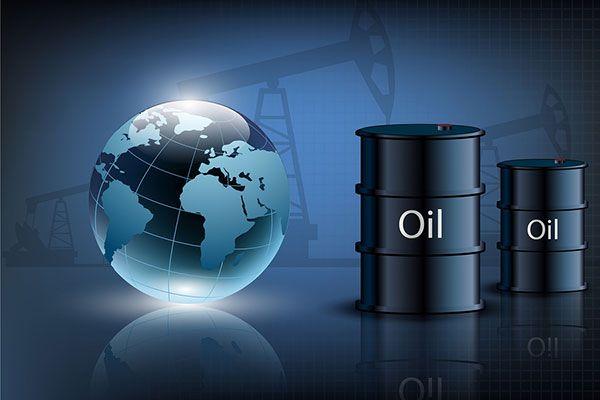
Oil prices jumped sharply on Monday, with traders once again fixating on the fragile state of Middle East energy infrastructure after a weekend of U.S. and Israeli strikes on Iranian targets reignited fears of a full-blown supply shock.
The surge came despite fresh calls from President Donald Trump for international help to protect the Strait of Hormuz, the narrow chokepoint through which roughly one-fifth of the world’s seaborne oil normally flows.
By 04:00 GMT, benchmark Brent crude futures had climbed $1.27, or 1.2 percent, to $104.41 a barrel. U.S. West Texas Intermediate crude rose 54 cents, or 0.6 percent, to $99.25.
Both contracts had already settled higher on Friday, Brent up $2.68 and WTI nearly $3, capping a breathtaking rally of more than 40 percent so far this month. Prices are now at their highest levels since 2022, the last time geopolitical turmoil sent energy markets into a frenzy.
The trigger for the latest leg higher was crystal clear: the dramatic escalation between the United States, Israel, and Iran. After American and Israeli forces struck Iranian targets over the weekend, Tehran responded by effectively shutting down shipping through the Strait of Hormuz, choking off what analysts describe as the biggest single disruption to global oil supply in history. With Iranian crude—now virtually the only oil still moving through the strait—suddenly off the table, the market’s nerves were already frayed.
That tension ratcheted even higher after fresh U.S. strikes targeted Kharg Island, Iran’s primary oil export hub. “U.S. strikes over the weekend on Kharg Island raised supply concerns, as most of Iran’s oil exports pass through it,” ING commodity strategists wrote in a note Monday.
While the attacks appeared aimed at military rather than energy facilities, the analysts warned the distinction may be academic: “They still pose supply risks since Iranian oil is about the only oil moving through the Strait of Hormuz for now.”
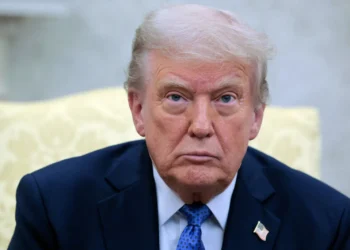
President Trump, speaking Sunday, issued a blunt warning and a plea. He threatened additional strikes on Kharg Island—which handles roughly 90 percent of Iran’s exports—and demanded that other nations step up to help police the vital waterway. “We are in talks with several countries about protecting the Strait of Hormuz,” Trump said, while expressing skepticism that Tehran was ready for serious negotiations to end the conflict. Washington, he added, remains in contact with Iranian officials but sees little sign of compromise.
Iran wasted no time in retaliating. Shortly after the Kharg strikes, Iranian drones slammed into a key oil terminal at Fujairah in the United Arab Emirates. Loading operations there have since resumed, according to four industry sources, but it remains unclear whether volumes have returned to normal.
Fujairah, located outside the Strait of Hormuz, serves as the export point for about 1 million barrels per day of the UAE’s flagship Murban crude—roughly 1 percent of global demand. Even a temporary outage at such a facility underscores how quickly the conflict can ripple beyond the Persian Gulf.
The potential for far more drastic escalation is now openly discussed in market circles. SEB analyst Erik Meyersson laid out the high-stakes menu reportedly under consideration in Washington: “The U.S. is weighing high-risk ground options, including raiding nuclear sites for Iran’s enriched uranium, seizing the Kharg Island oil hub, and occupying southern Iran to protect the Strait of Hormuz. All of these imply significant escalation and require a tolerance for substantially higher risk.”
As the conflict enters its third week, that sense of an uncontrollable spiral is weighing heavily on markets. “The lack of a clear denouement has left global markets increasingly worried,” Meyersson noted.
Yet not everyone is sounding the alarm. The International Energy Agency moved swiftly on Sunday to reassure markets, announcing the immediate release of more than 400 million barrels from emergency reserves—the largest coordinated draw in history. Stocks held in Asia and Oceania are already flowing; those from Europe and the Americas will hit the market by the end of March. The move is explicitly designed to blunt the price spike triggered by the Middle East war.
U.S. Energy Secretary Chris Wright struck an even more optimistic tone. Speaking Sunday, he predicted the conflict would end “within the next few weeks,” after which oil supplies would rebound, and energy costs would fall.
For now, however, traders are not betting on a swift resolution. With Iranian exports paralyzed, Kharg Island under threat, and the world’s most important oil artery in the sights of multiple warring parties, the message from the trading pits is unambiguous: supply security in the Persian Gulf is no longer an abstract risk; it is the dominant driver of prices, and the meter is still running.
WHAT YOU SHOULD KNOW
The key factor driving today’s oil market is the escalating U.S.-Iran conflict and the near-total shutdown of shipping through the Strait of Hormuz — the world’s most critical oil chokepoint.
With Iranian exports largely halted, Kharg Island under repeated threat, and retaliatory strikes already hitting UAE terminals, global supply security has become the dominant force pushing Brent above $104 and WTI near $100, levels not seen since 2022.
Despite emergency reserve releases and official hopes for a quick resolution, the risk of further escalation remains the single most important reality investors and consumers should focus on right now.