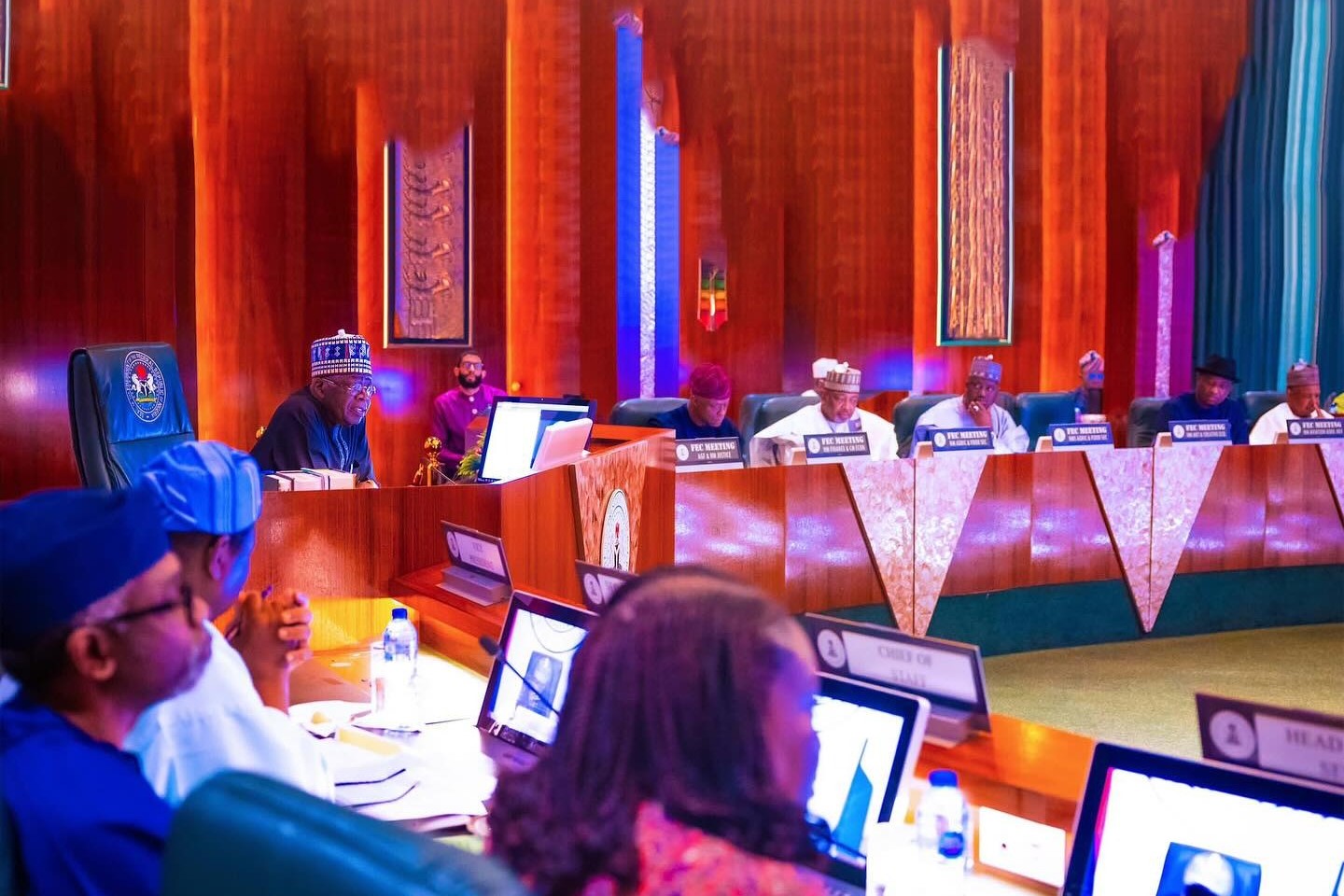
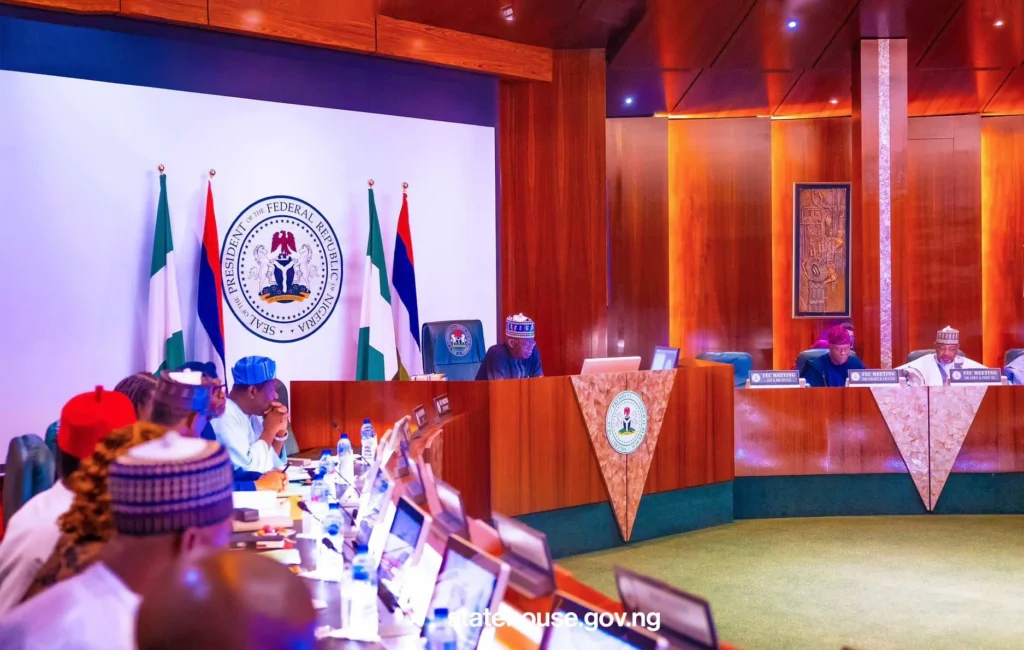
The Federal Executive Council has given its approval to the 2026–2028 medium-term expenditure framework, setting the tone for Nigeria’s projected economic direction, revenue expectations, and government spending priorities over the coming three years.
Speaking to journalists after Wednesday’s meeting in Abuja, the Minister of Budget and National Planning, Atiku Bagudu, explained that the government adopted an oil price benchmark of $64 per barrel and an exchange rate assumption of ₦1,512 to the dollar for the 2026 fiscal year.
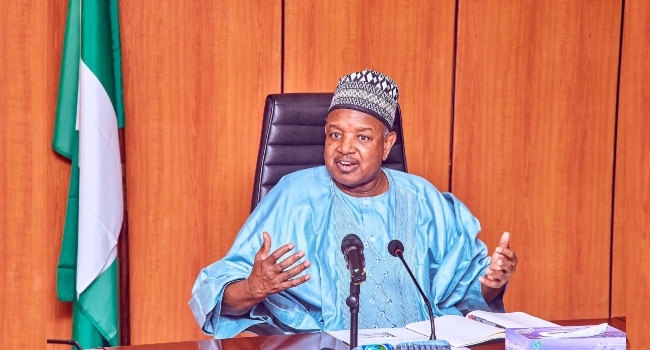
Bagudu noted that although the council’s benchmark for crude oil production was placed at 2.06 million barrels per day, the fiscal design remains conservative, relying instead on a lower assumption of 1.8 million barrels per day.
He further stated that the projected exchange rate reflects the fact that 2026 will be immediately ahead of a general election year, stressing that all parameters were guided by in-depth macroeconomic and fiscal reviews carried out by the budget office in collaboration with relevant agencies.
According to Bagudu, inflation for 2026 is forecast to average 18 percent.
He explained that, based on the adopted assumptions, total federation revenue for 2026 is estimated at N50.74 trillion, with the amount to be distributed across the federal, state, and local governments.
Bagudu said, “From this projection, the federal government is expected to receive ₦22.6 trillion, states ₦16.3 trillion, and local governments ₦11.85 trillion.”
He added that when every federal revenue source is combined—including “₦4.98 trillion from government-owned enterprises”—total federal earnings for 2026 are expected to amount to ₦34.33 trillion. This figure represents a ₦6.55 trillion reduction, or roughly 16 percent, when compared with the revenue estimates in the 2025 budget.
The minister also disclosed that statutory transfers are anticipated to reach about ₦3 trillion, while debt servicing obligations are projected at ₦10.91 trillion.
He said recurrent non-debt spending, which covers personnel-related expenses and overheads, has been estimated at ₦15.27 trillion. Additionally, the fiscal deficit for the year is projected at N20.1 trillion, amounting to 3.61 percent of the country’s gross domestic product.
The expenditure framework also projects that the nominal GDP will exceed ₦690 trillion in 2026 and rise further to N890.6 trillion by 2028, with the economy expected to grow at a rate of 4.6 percent in 2026.
Furthermore, the outlook anticipates that non-oil GDP will increase from ₦550.7 trillion in 2026 to ₦871.3 trillion in 2028, while oil GDP is expected to expand from ₦557.4 trillion to ₦893.5 trillion within the same timeframe.
What you should know
The newly approved medium-term expenditure framework sets Nigeria’s financial roadmap for 2026 to 2028, outlining government revenue expectations, spending projections, and broader economic assumptions.
The plan reflects cautious forecasting shaped by election-year dynamics and volatile oil market conditions. Key elements include a conservative oil production benchmark, inflation expectations, a drop in federal revenue compared to the previous year, and rising debt servicing commitments.
The framework also reflects optimism about GDP growth and expanding non-oil economic activity, reinforcing the administration’s long-term objective of strengthening productivity while managing fiscal pressures across all levels of government.