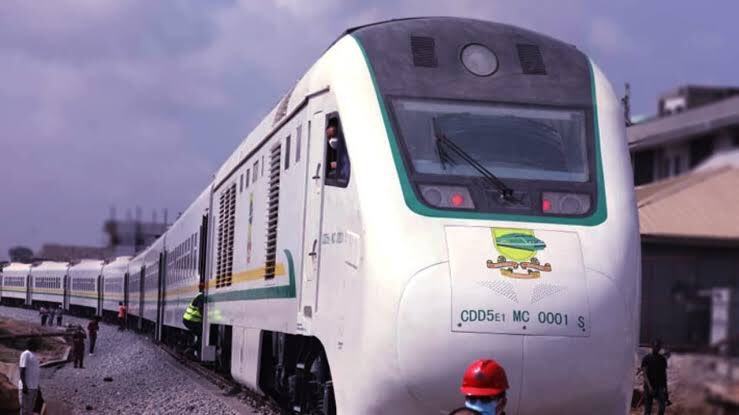
Nigeria’s railway sector continues its robust upward trajectory, with the Nigerian Railway Corporation (NRC) recording ₦1.95 billion in passenger revenue during the first quarter of 2025, according to fresh data released by the National Bureau of Statistics.
The 37.36 percent year-on-year increase from the ₦1.42 billion generated in Q1 2024 underscores a remarkable resurgence in the country’s rail transport sector, which has long been viewed as critical to easing Nigeria’s notorious road congestion and providing safer, more affordable travel options for millions of citizens.
Passenger Numbers Jump Nearly 40 Percent
The NBS Rail Transportation Data Report, published October 5, reveals that 929,553 passengers traveled by train between January and March 2025—a substantial 37.65 percent rise from the 675,293 passengers recorded during the same period last year. This surge in ridership reflects growing public confidence in rail as a viable alternative to road transport, particularly along major corridors such as the Lagos-Ibadan and Abuja-Kaduna routes.
Industry observers attribute the increase to several factors, including improved service reliability, enhanced security measures along rail corridors, and the continued expansion of routes connecting major commercial centers. The Nigerian Railway Corporation has also benefited from modernization efforts that have introduced more comfortable coaches and more frequent train schedules.
Cargo Transport Shows Steady Growth
Beyond passenger services, Nigeria’s rail system is also making gains in freight transport. The NBS data shows that 181,520 tons of goods and cargo were moved by rail during Q1 2025, compared to 160,650 tons in the corresponding quarter of 2024. Revenue from this segment climbed 8.19 percent to ₦657.03 million, up from ₦607.32 million.
While the cargo growth rate lags behind passenger increases, transportation analysts note that developing robust freight rail capacity remains a priority for reducing the wear on Nigeria’s highway network and lowering logistics costs for businesses.
Ancillary Revenue Skyrockets
Perhaps the most striking figure in the report concerns “other receipts”—revenue derived from services such as station leasing, access fees, and miscellaneous income streams. This category soared by an eye-popping 355.39 percent, reaching ₦115.68 million in Q1 2025 compared to just ₦25.40 million in Q1 2024.
This dramatic increase suggests the NRC is successfully diversifying its revenue base and capitalizing on commercial opportunities within railway stations and along its network. Such ancillary income could prove vital for sustaining operations and funding future expansions without relying solely on government subsidies.
Context From Previous Quarter
The Q1 2025 performance builds on momentum from the final quarter of 2024, when the railway system transported 1,037,113 passengers—a 54.29 percent increase from Q4 2023—and generated ₦1.92 billion in passenger revenue, nearly double the ₦1.07 billion recorded a year earlier.
However, the previous quarter’s data also highlighted challenges in the cargo segment, where revenue declined 7.46 percent to ₦391.64 million from ₦423.22 million in Q4 2023. The Q4 2024 report also noted that ₦8.93 million was earned from transporting 1,260 tons of goods through pipelines, indicating some diversification in freight handling methods.
Other receipts for Q4 2024 stood at ₦434.44 million, representing a 10.34 percent increase from ₦393.72 million in the corresponding quarter of 2023, though well below the explosive growth seen in Q1 2025.
Infrastructure Investment Paying Dividends
The NBS attributed the sustained growth in passenger traffic and revenue to “growing confidence in Nigeria’s rail transport system, supported by ongoing investments in infrastructure and service expansion by the NRC.”
In recent years, the federal government has prioritized railway development as part of broader efforts to modernize national infrastructure. Projects such as the Lagos-Ibadan standard gauge line and the Abuja-Kaduna route have become showcase examples of what modern rail can offer Nigerian commuters—faster journey times, improved safety, and relief from highway gridlock.
The latest statistics suggest these investments are beginning to yield tangible returns, both in terms of ridership and revenue generation. As Nigeria grapples with fuel price volatility and the economic pressures facing road transport, railways are emerging as an increasingly attractive option for both passengers and freight customers.
Looking Ahead
While challenges remain—including the need for further route expansion, maintenance of aging infrastructure on older lines, and ensuring consistent service quality—the Q1 2025 figures paint an encouraging picture of a sector on the rise.
Transportation sector analysts will be watching closely to see whether the NRC can maintain this growth trajectory throughout 2025, particularly as the government continues to signal its commitment to making rail a cornerstone of Nigeria’s transportation future.
For now, the numbers tell a clear story: more Nigerians are choosing trains, and the railway corporation is reaping the benefits.
WHAT YOU SHOULD KNOW
Nigeria’s railway sector is experiencing a dramatic revival, with passenger revenue jumping 37% to ₦1.95 billion in Q1 2025 as nearly one million Nigerians chose trains over congested roads.
This surge—driven by infrastructure investments and improved service—signals that rail transport is finally emerging as a credible alternative in a country dominated by road travel. Most remarkably, the railway corporation is diversifying beyond ticket sales, with ancillary revenue from station leasing and fees skyrocketing 355%.
After decades of neglect, Nigeria’s railways are not just surviving—they’re thriving, offering citizens a safer, more reliable way to move around the country while generating sustainable income for continued expansion.