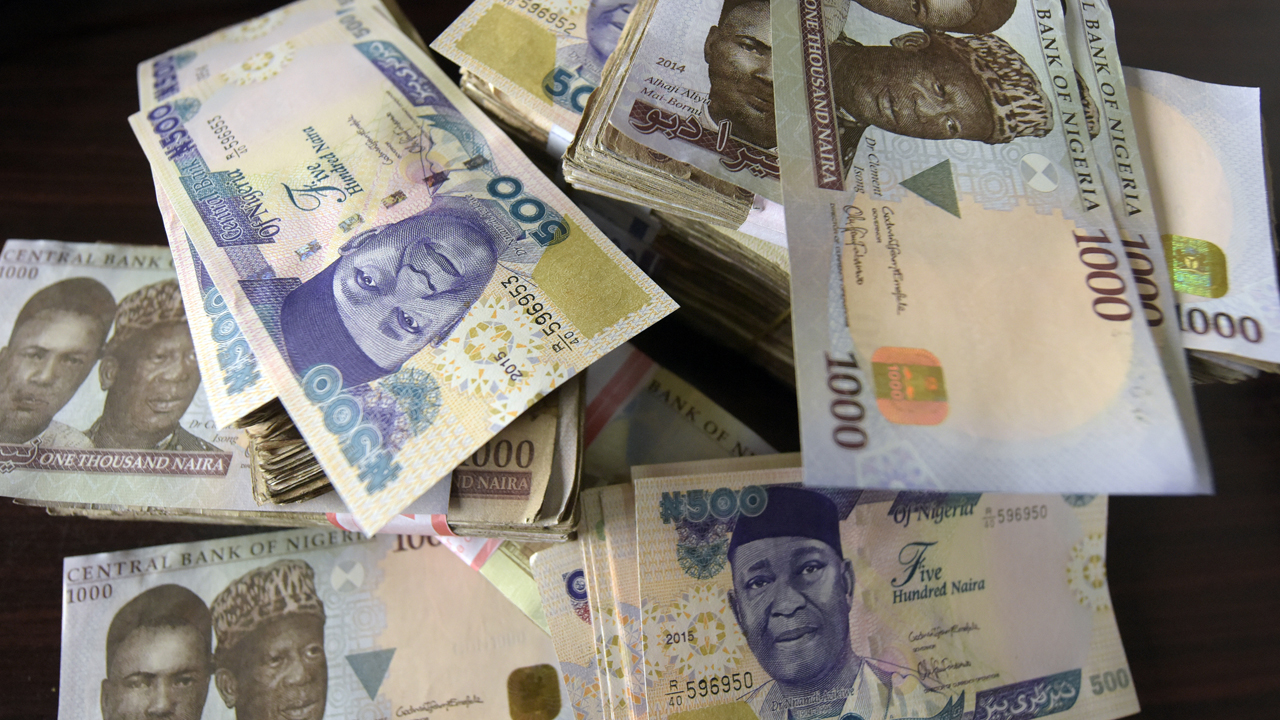
The Nigerian naira is staging a remarkable comeback in foreign exchange markets, capitalizing on a broad-based weakening of the U.S. dollar to post its strongest performance in months and target a crucial technical milestone.
Trading data shows the naira has strengthened to approximately N1,488 against the dollar in mid-September, representing a gain of more than 7% from recent lows and marking a decisive break below the psychologically important N1,500 threshold. Market analysts are now eyeing the N1,440 level as the next target, a monthly support zone that could signal further appreciation if breached.
The currency’s current trajectory represents a dramatic reversal from its earlier struggles this year. In April, the naira hit a concerning peak of N1,600 per dollar, the culmination of sustained depreciation pressures that began building in February. The sharp decline had raised concerns among economists and policymakers about Nigeria’s monetary stability and the broader health of Africa’s largest economy.
However, what followed was an equally impressive recovery that began gaining traction in May and has shown remarkable staying power through the third quarter. The turnaround appears to be driven primarily by external factors, particularly the U.S. dollar’s retreat across global markets.
“The naira’s resilience in recent months demonstrates its ability to benefit from favorable global currency dynamics,” said market observers, noting that the recovery has been both steady and sustainable rather than driven by short-term speculation.
The Nigerian currency’s performance is part of a broader continental trend that has seen African currencies capitalize on dollar weakness. Ghana’s cedi has emerged as a standout performer, surging more than 13% from its April closing levels. Meanwhile, South Africa’s rand has posted gains exceeding 6% over the same period, reflecting the widespread nature of the dollar’s decline across emerging markets.
This regional currency strength comes against the backdrop of significant global dollar weakness that reached a crescendo this week. On Tuesday, the greenback fell to a four-year low against the euro, underscoring the depth and breadth of the U.S. currency’s current struggles.
The dollar’s weakness has been attributed to a combination of factors, including shifting monetary policy expectations, concerns about U.S. fiscal dynamics, and a general rotation away from dollar-denominated assets as investors seek opportunities in other markets.
For Nigeria, the naira’s appreciation provides welcome relief after months of pressure on the country’s import-dependent economy. A stronger naira helps reduce inflationary pressures by making imported goods more affordable, while also easing the burden on businesses and consumers who rely heavily on foreign products.
As September winds down, currency traders and analysts will be closely watching whether the naira can maintain its momentum and push through the N1,440 support level. Such a move would not only represent a technical victory but could also signal that Nigeria’s currency has entered a new phase of stability after weathering the storms of earlier this year.
The broader implications extend beyond Nigeria’s borders, as the performance of African currencies in recent months suggests that the continent’s economies may be better positioned to benefit from global currency realignments than in previous cycles. This resilience, coupled with improving global risk sentiment, could provide a foundation for sustained economic recovery across the region.
WHAT YOU SHOULD KNOW
The Nigerian naira has surged over 7% to N1,488 per dollar, recovering strongly from April’s low of N1,600, primarily due to broad U.S. dollar weakness affecting global markets.
This recovery is part of a continent-wide trend, with Ghana’s cedi up 13% and South Africa‘s rand gaining 6% since April. The naira’s resilience demonstrates Nigeria’s ability to benefit from favorable global currency conditions, with analysts targeting the N1,440 support level as the next milestone in what appears to be a sustainable recovery rather than temporary speculation.